

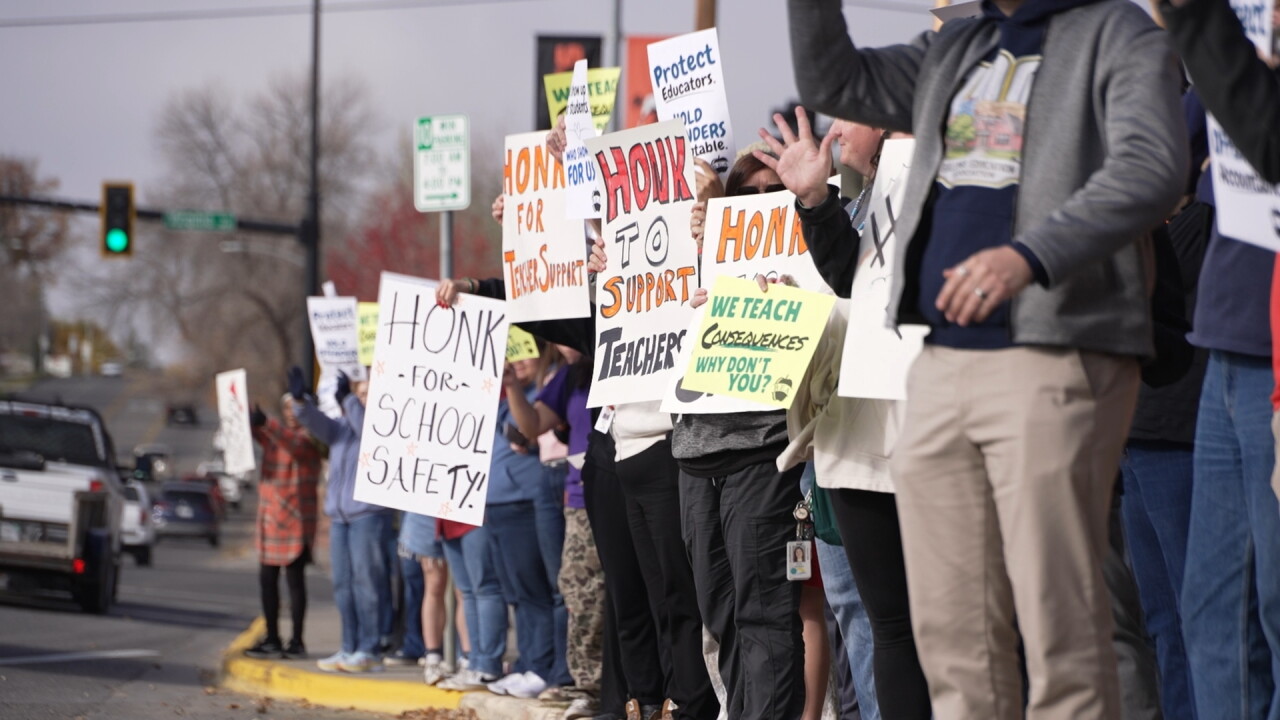


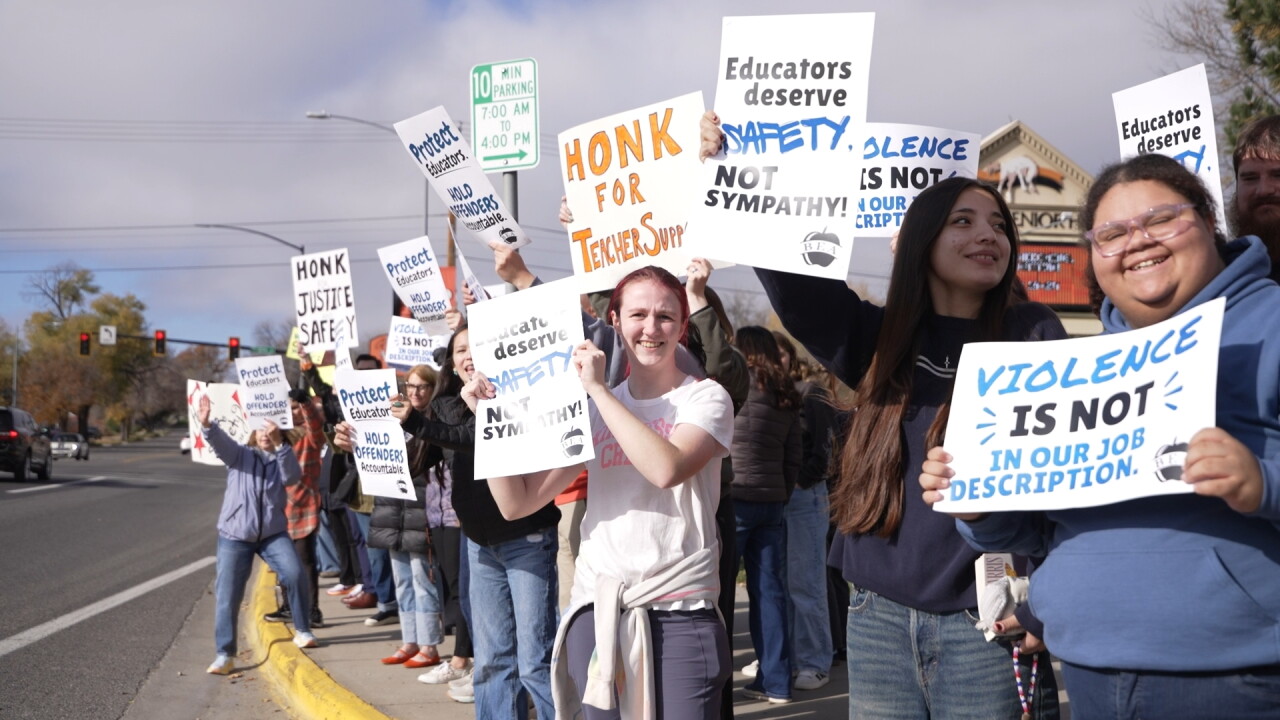
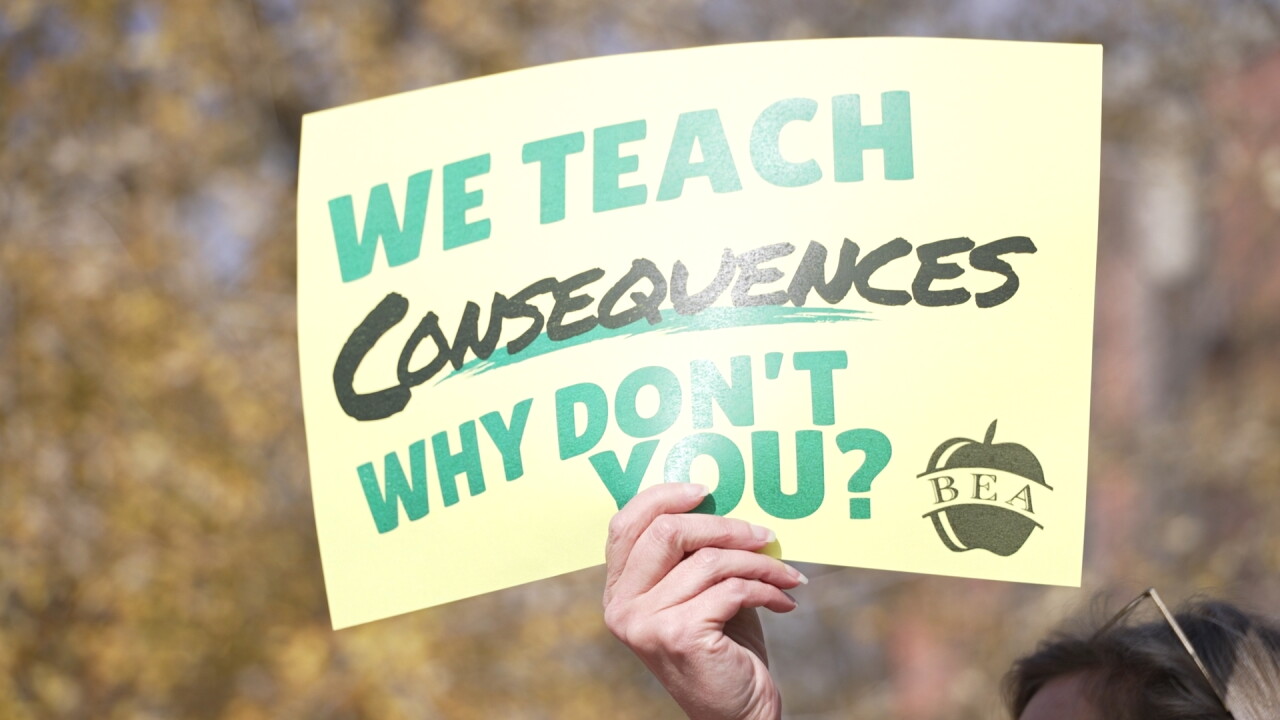
BILLINGS — More than 100 current and former staff members and students gathered outside Billings Senior High School on Monday, using their lunch hour to demand accountability and stronger protections for educators after Yellowstone County prosecutors declined to file felony charges in a January stabbing involving a teacher and a student.
Watch the full story below:
The picket, organized through the Billings Education Association, came three days after the Yellowstone County Attorney’s Office confirmed it would not pursue felony charges and referred the case to the Billings city attorney’s office for an independent review.
Related: No felony charges filed in Billings Senior stabbing as case moves to city attorney's office
For teachers McKenzie Waterson and Jake Music, the decision raised concerns about how the school community can respond to violence against educators.
“We're here to take a stand against violence in schools,” Waterson said. “We were distraught, and we wanted to step into action to take care of one another and to take care of teachers around our community."
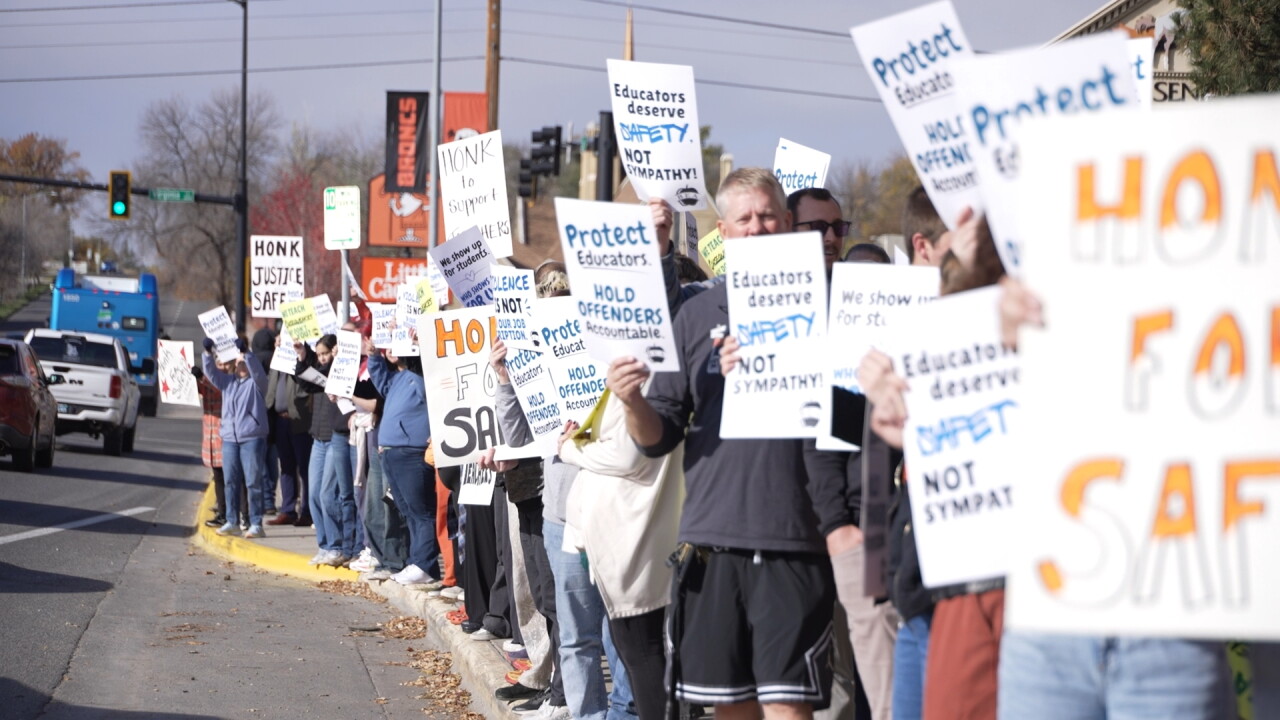
Waterson and Music, both English teachers at Senior High, said the announcement left staff shocked and relying on one another for support.
"It was emotional," Music said. “The predominant feeling was anger. We were upset, and we were really relying on our brother and sisterhood as teachers to pull us through."
The teachers said their frustration centers on the outcome of the criminal investigation, not the school district. They want accountability for the incident and changes that make staff and students safer.
“I think we want to see accountability from up high,” Music said. “Some of the decisions really do make the precedent that violence against teachers is some level of acceptability.”
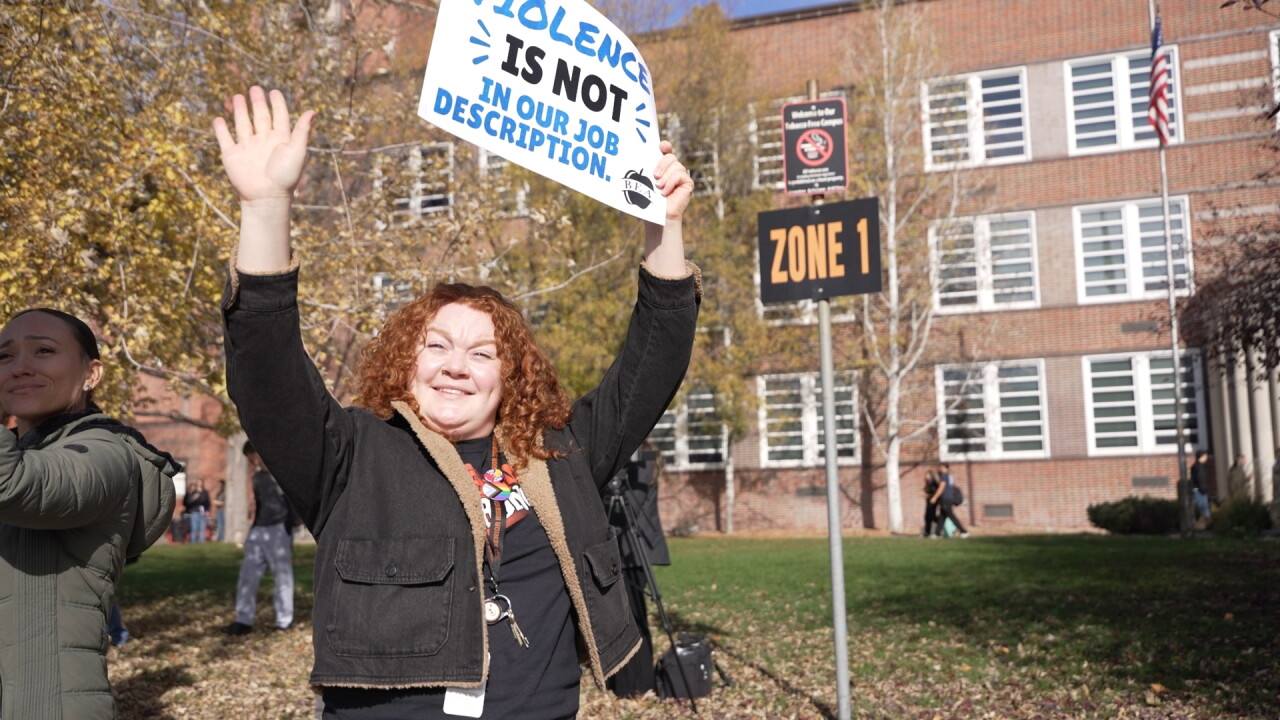
“I think the sign says it all: violence is not in our job description," Waterson added. "We're here to educate and protect kids, not to put our lives on the line.”
Students also joined the picket, saying they wanted to support their teachers and push for a safer school community.
“I just think it's a good thing to step out here and go for what's right,” said freshman Jonnie Carter.
“They had a chance to take charge, and they didn’t,” student Danielle Calley said.
The demonstration followed an announcement that left the district and community asking why the investigation did not result in felony charges.
In a statement Friday, Billings Public Schools Superintendent Erwin Garcia expressed frustration with the decision, saying the incident had been painful for the community, particularly teachers and students.
Garcia said the district plans to conduct its own investigation now that law enforcement’s work is complete. The district also intends to seek access to additional information, including criminal justice records, through the court.
The stabbing occurred Jan. 13, 2026, after school hours while a wrestling meet was taking place. The incident happened on the school’s third floor and prompted an evacuation during the meet.
The district reported the incident to police and cooperated with investigators. An initial district statement said a teacher had been stabbed, but police did not corroborate that description in their subsequent reporting.
Related: 'Frustrating:' Family, district react to lack of felony charges in Senior High stabbing case
What does moving the case to the city attorney mean?
The referral raised questions from the community about why county prosecutors declined to pursue felony charges and whether charges remain possible.
George Brauchler, district attorney for Colorado’s 23rd Judicial District, has handled multiple high-profile school violence cases, including Columbine High School, Arapahoe High School in 2013, and Mountain Vista High School in 2015.
He said prosecutors generally must meet two ethical requirements before pursuing a criminal case: They need a good-faith basis to believe the accused committed the crime, and they must believe there is a reasonable likelihood of success at trial.
“It tells me they feel like whatever charges they're best suited to prosecute, they no longer feel like they can ethically pursue,” Brauchler said.
That does not necessarily mean prosecutors concluded no criminal conduct occurred. Rather, the evidence may not support a particular charge to the standard required in court. Brauchler said conflicting witness accounts can complicate a case, particularly when investigators lack other evidence to establish what happened.
“In every case where you believe something criminal happened, it doesn't mean you end up having the evidence necessary to prove up that crime beyond a reasonable doubt,” he said. "You might have two witnesses who you find to be equally credible and equally supported or unsupported by the evidence saying different things."
Brauchler said prosecutors must assess whether the evidence can support a conviction. He also cautioned against filing charges simply to let a jury sort out conflicting evidence.
“You have to believe you have a reasonable likelihood of success at trial,” Brauchler said. "If you leave all the evidence that you've gotten, including your interviews with these people, and you're not sure yourself, you can't really ethically move forward and say, 'I'm going to try to convince 12 people in the community of something I'm not entirely sure of either.'”
The transfer does not necessarily mean felony charges are permanently off the table, according to Brauchler.
The Billings city attorney’s office can consider charges within its authority, including qualifying misdemeanor offenses. Whether a felony charge could be pursued later depends on the applicable law, the status of the case, and whether prosecutors obtain sufficient evidence.
“As long as the statute of limitations exists and it hasn't expired, the (county) attorney's office will always maintain the ability to file charges in this case until that ends,” he said. “I'm not aware of any procedure that says that the (county attorney) is divested of their authority simply because they refer a case to the city attorney's office."
He noted that new evidence, a witness coming forward or a subsequent statement that changes the understanding of events could affect a prosecutor’s assessment.
“You don't ever want a prosecutor to bend to the mob,” Brauchler said. “You want a prosecutor to do what they think is right and just, given the ethical limitations that they have.”
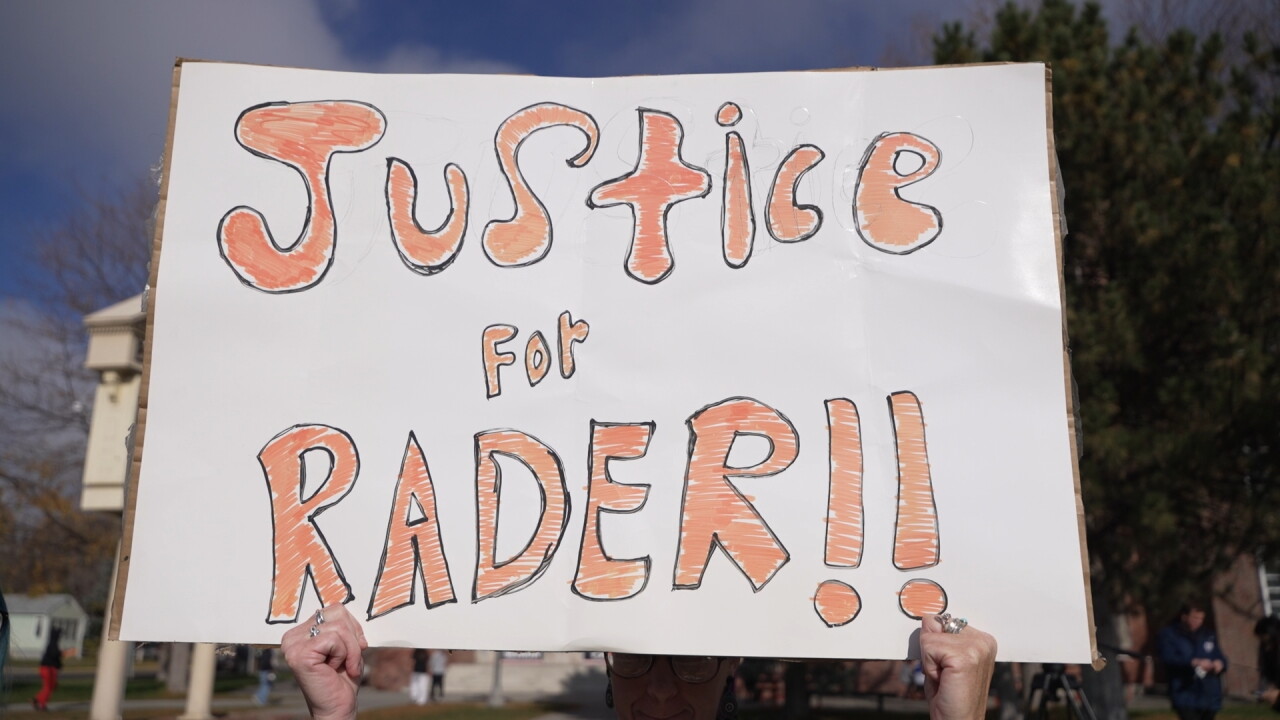
For the educators who gathered outside Senior High, the legal questions have not changed their concerns about school safety. The teachers said they will keep pushing for long-term changes to protect their school community.
“We assumed the worst. We presumed some really dark things on Friday when we got the decision about what our community stood for," said Music. "Seeing people come out like this reminds us that there is a whole community behind us."
Related:
Witnesses recount 'scary' scene inside Billings Senior after stabbing
Billings police finish investigation into Senior High stabbing, forward documents to prosecutors
Teacher, student suffer stab wounds during altercation at Billings Senior High School
