

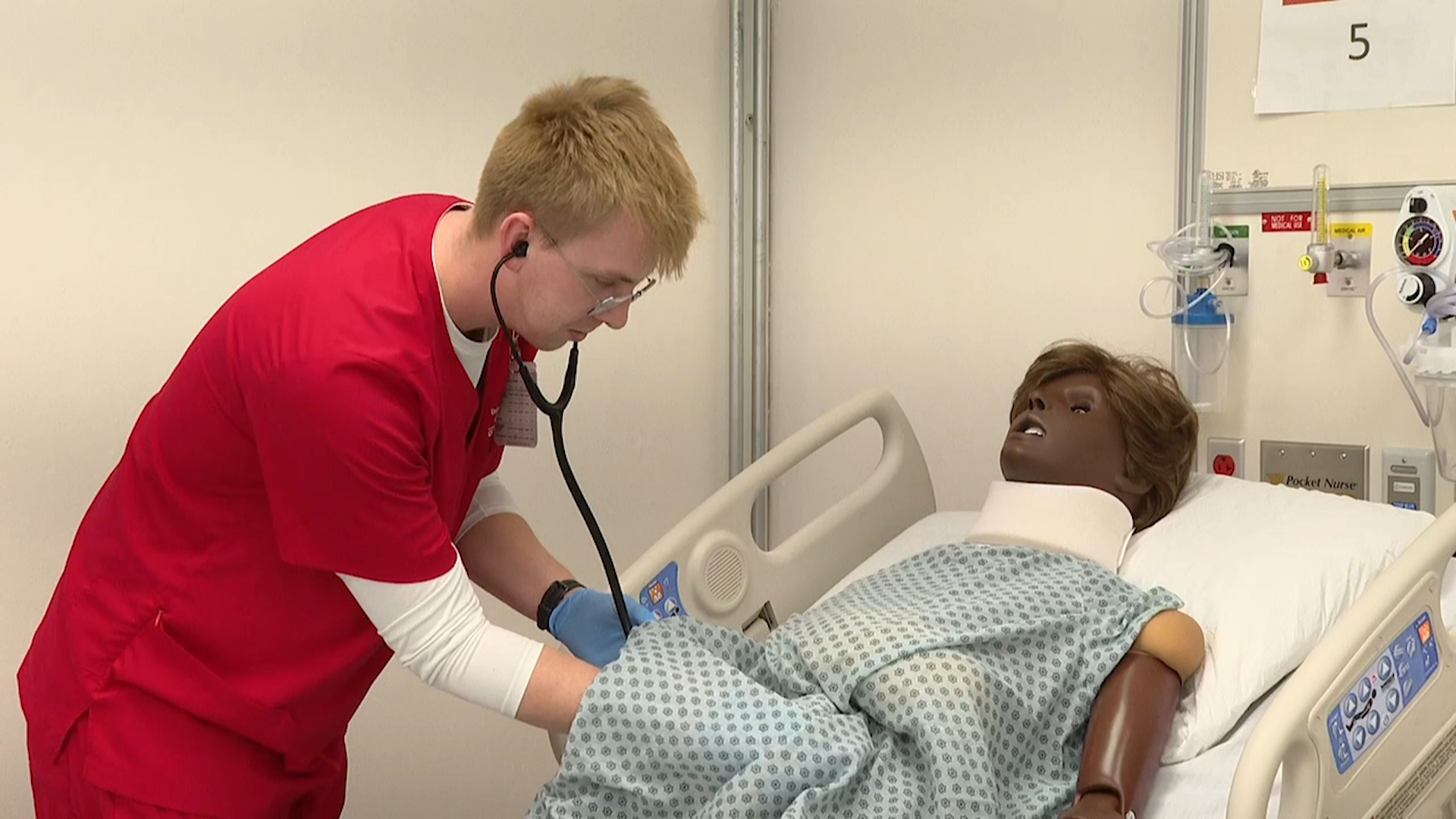


The U.S. labor market is showing signs of strain, but the health care industry is experiencing a hiring boom and carrying much of the load.
Recent data shows that while hiring across the board is cooling, health care workers are still very much in demand, and more Americans are answering the call to work in the field. The U.S. economy added 76,000 jobs in health care in March, accounting for 43 percent of all new jobs. Last year, the sector added nearly 700,000 jobs, helping balance an otherwise weak hiring market.
"It's a really tricky time if you don't work in health care," Heather Long said.
Long is the chief economist at Navy Federal Credit Union.
"Hiring for health care is in strong demand. It's number one on our hiring list consistently at Monster," Vicki Salemi said.
Salemi is a career expert at Monster. The surge in health care jobs is driven in part by a shortage in the field that was heightened by the pandemic.
RELATED STORY | March job gains outshine forecasts amid inflation pressures
"The pandemic just kind of heightened what we already have projected, which was the increasing in retirement of the nurses in the workforce," Donna Green said.
Green and Lindsay Davis are associate professors at the University of Cincinnati’s College of Nursing. They say the field offers opportunities for growth.
"I think one of the most important things is that the new graduates understand that there are options out there, they can really find where they feel that they fit best," Davis said.
The pay is increasingly becoming a big draw, with the median pay for a registered nurse topping $93,000. The field is also viewed as safer from the impacts of artificial intelligence wiping out jobs.
"They're more AI-proof because you need to be in person to do these types of jobs, especially nursing and therapy. You need to in person with the customer, in this case, the patient," Salemi said.
RELATED STORY | Study reveals workers are burned out and not getting paid for taking on extra duties
The health care trade is expected to remain strong. The Labor Department projects that employment of health care workers will increase by eight percent from 2024 to 2034, compared to just three percent growth for all jobs.
Some employers are getting creative to find workers. In Virginia, one healthcare center hosted a March Madness-style "draft day" last month.
Marquita Gardner is a nursing student graduating soon who already has a position lined up. Gardner sees healthcare as a stable career choice and one that makes a difference.
"I’m very excited," Gardner said.
"We need more people, we need more caring people, more compassionate people. If we just have that one person that takes that initiative it'll make a world change," Gardner said.
