

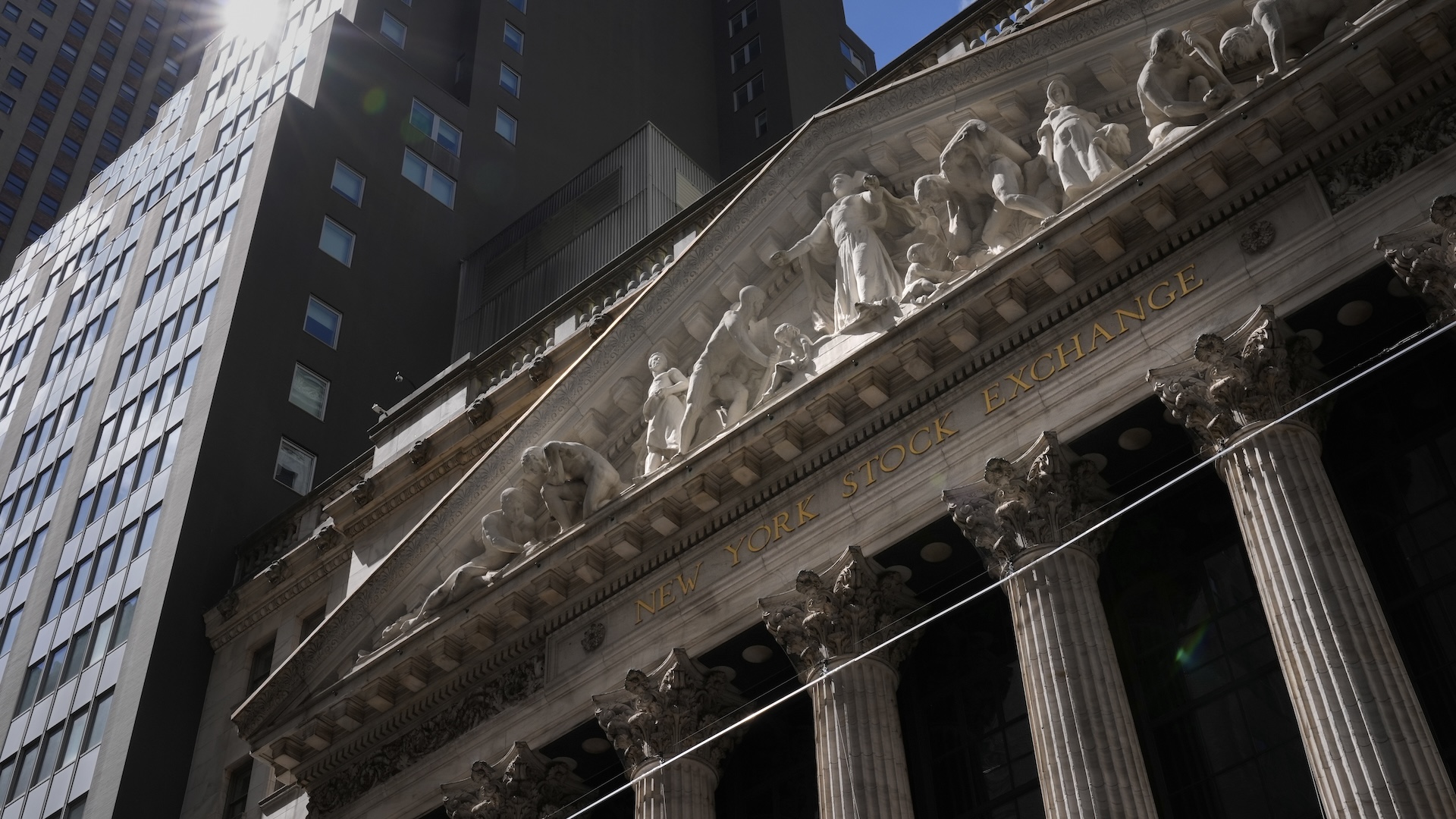


If you checked your retirement account this week, you may have whiplash. In the span of three trading days, Wall Street swung from one of its best days in more than a year to its worst since April 2025, then partly clawed back Friday after a surprisingly strong jobs report.
President Donald Trump took credit for the rally and blamed Democratic voters for the drop. But economists say the bigger story is about artificial intelligence, and about whether the AI spending boom that has powered markets this year can keep up its pace.
On Wednesday, the day after Democrats won control of the House and Senate, the Dow Jones Industrial Average surged 1,569 points, or 3%. The S&P 500 rose 1.6%, and oil prices fell.
Part of the reason, analysts say, is that Wall Street often likes a divided government.
President Trump celebrated the rally on Truth Social, writing, “Your 401(k)s are through the roof. Record Setting All!”
The good mood didn’t last. On Thursday, the Dow fell 1,833 points, the S&P 500 dropped 4.36% and the Nasdaq Composite sank 5.52%. That pushed the tech-heavy index into correction territory, more than 10% below its recent record. Chip stocks had their worst day since March 2020.
That evening, the president changed his message. “Your 401(k)s have, therefore, dropped. Remember, it wasn’t Republicans, it was Dumocrats,” he posted. Less than an hour later, he added, “So sad to see, you only have yourselves to blame!”
Analysts say Thursday’s selloff had less to do with which party won and more to do with what the winners promised to do about AI.
RELATED STORY | Voters elected governors to curb data centers. Lowering bills for gas and groceries is harder
Data centers became a flashpoint in many midterm races, as voters raised concerns about rising utility bills, water use and tax breaks for tech companies. In Texas, voters opposed building data centers in their communities 75% to 25%, according to a CNN voter poll, and elected Democrat Gina Hinojosa as governor after she promised a temporary moratorium on new data centers.
“It is not that I hate data centers,” Hinojosa told CNN’s Jake Tapper on Thursday. “I hate the way they are taking advantage of Texas, and that stops when I’m governor.”
Investors fear leaders like Hinojosa could slow an AI buildout that has propped up both the economy and the stock market. According to a Columbia Business School study, AI-related infrastructure investment was driving nearly all observed U.S. GDP growth by the end of 2025.
Heather Long, chief economist at Navy Federal Credit Union, said the election accelerated a correction that was already coming.
“The midterm election definitely sped up the reset on these AI stocks,” Long said in an interview with Scripps News. “Make no mistake, Wall Street was also eager for a little bit of a reset, tap the brakes on this amount of investment.”
Long said both investors and voters had grown uneasy.
“Investors were nervous that we were in a bubble, and Main Street America was nervous that this AI was going to take jobs and possibly electricity and water,” she said.
She argued that the reset could be healthy. Unlike the 1990s tech boom, which lifted many corners of the economy, she said the 2026 economy had become “too narrowly focused on AI.” She’s already seeing investors rotate money out of tech and into healthcare and consumer-facing stocks.
Friday brought a surprise. Employers added 165,000 jobs in October, more than double what economists expected, and the unemployment rate dipped to 4.1%. Job gains for August and September were also revised higher.
“This was a blowout jobs report. It was strong on every level,” Long told Scripps News. There’s a catch for workers, though. Wages rose 3.1% over the past year, better than expected but still behind inflation.
“That’s that squeeze that voters felt as they went to the midterm elections,” Long said.
Long also pointed to what she called “two realities” in the job market: more openings overall, but close to 2 million long-term unemployed Americans who are still struggling to get hired.
RELATED STORY | Federal Reserve keeps rates unchanged despite elevated inflation, gives little signal of next move
The strong numbers make another interest rate hike more likely when the Federal Reserve meets Dec. 8 and 9. A hike would mean higher costs for credit cards, car loans and other borrowing.
“It’s basically signed, sealed, and all but delivered that we’re getting another rate hike in December,” Long said.
More swings could be ahead. October inflation data comes out Tuesday, and the new Congress and governors won’t take office until January. Until then, investors will be watching closely to see how far Democrats go in reshaping the AI buildout, and whether the market’s reset has much further to run.
