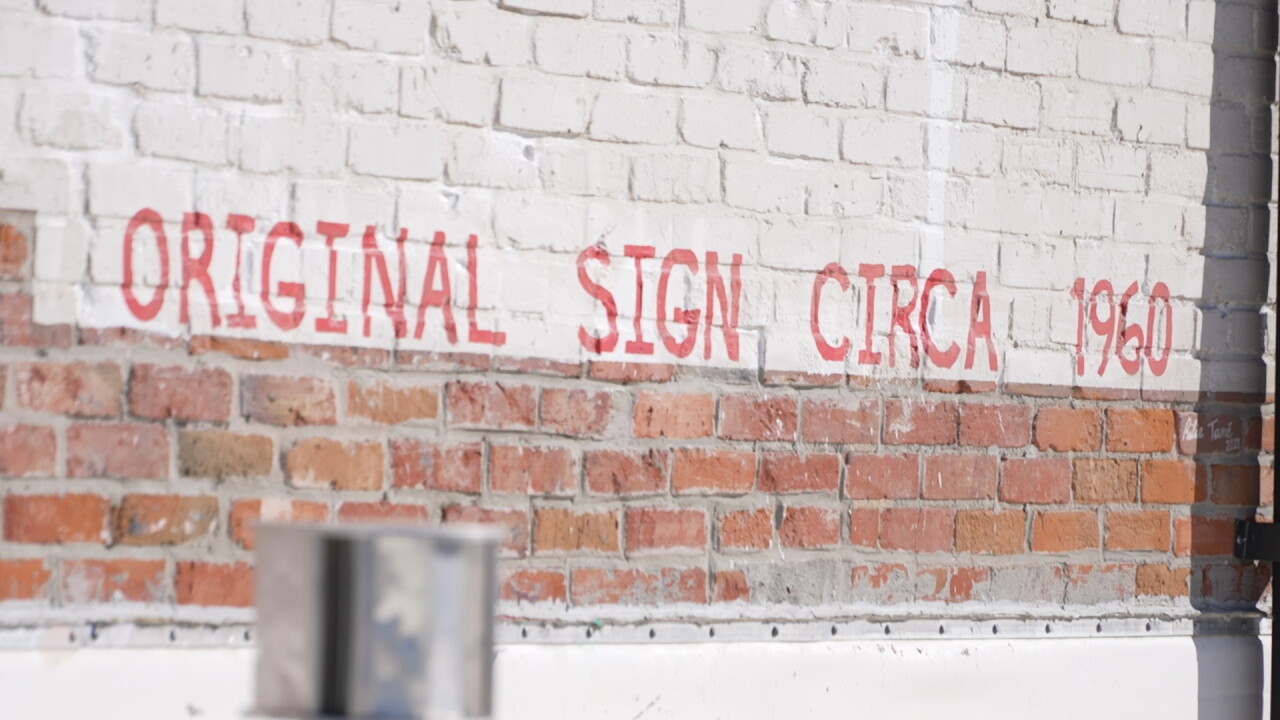
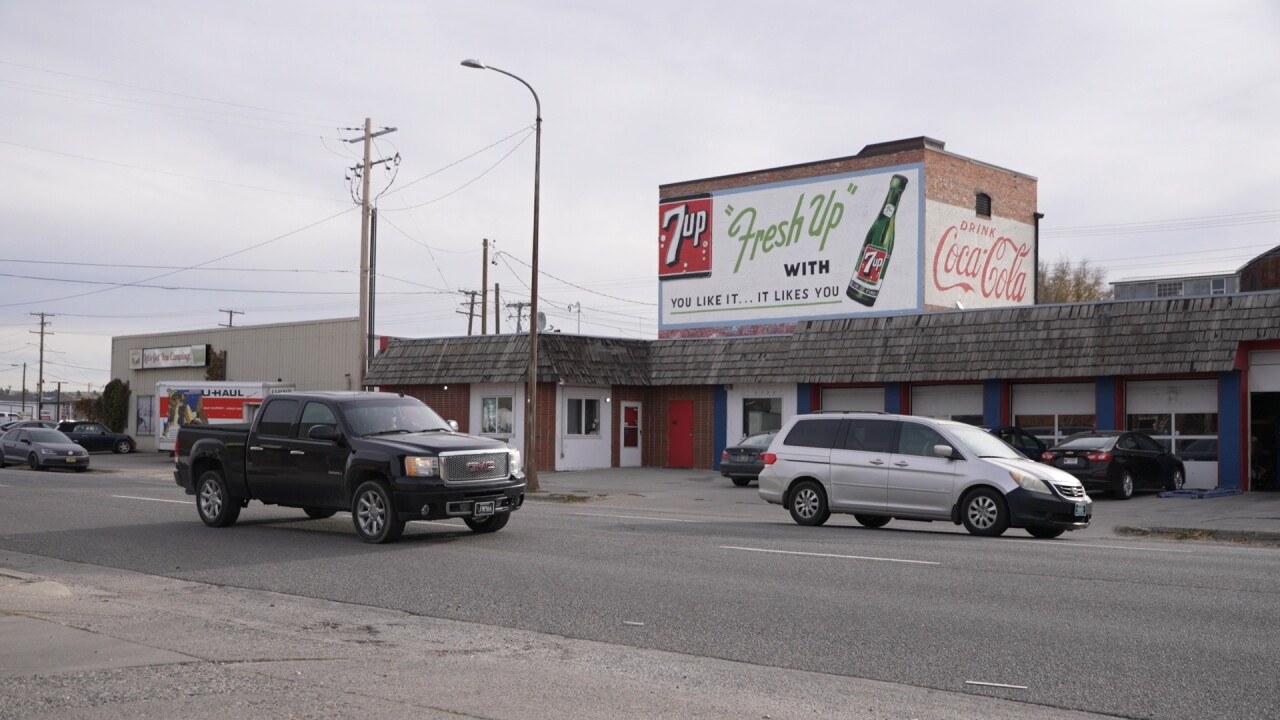
BILLINGS — Four vintage advertisements now cover the walls of a downtown Billings building, bringing decades of local business history back into view after a three-year restoration project.
Watch the full story below:
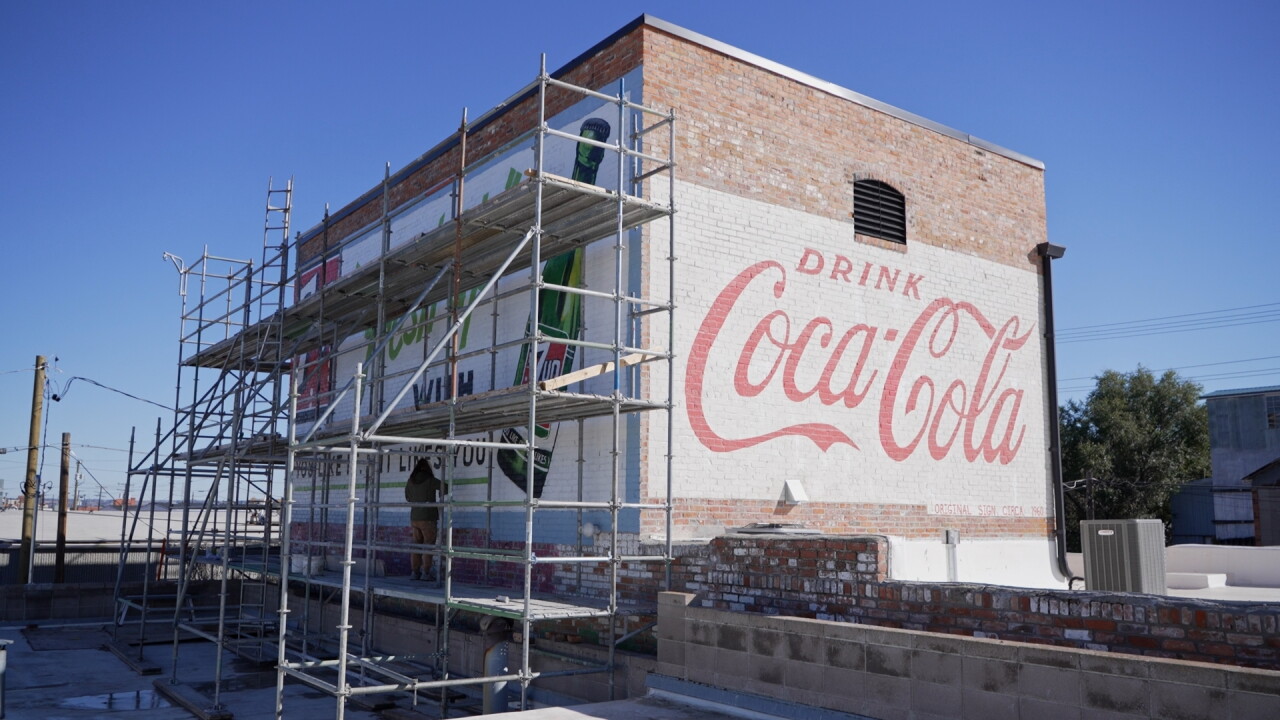
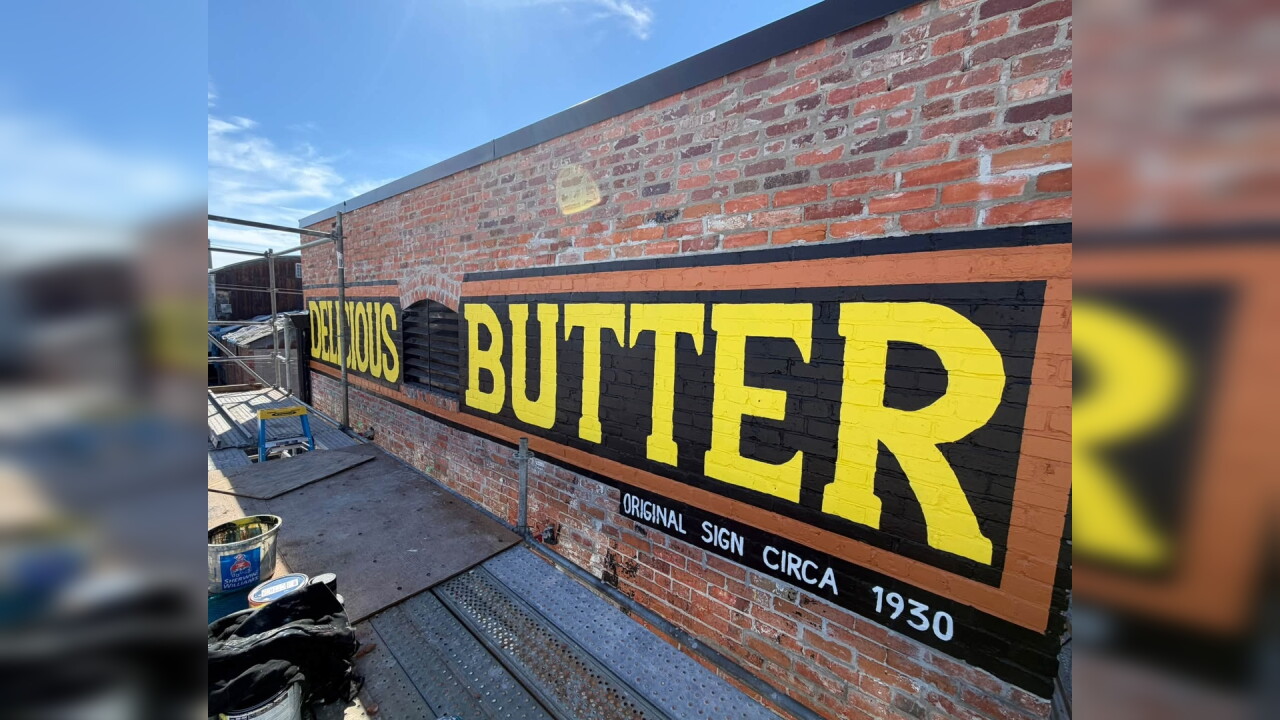
Local muralist Riley Zumbrennen recently completed the final advertisement on the building at 15 N. 22nd St., across from Thirsty Street Brewing, finishing a project that began in 2023 and brought four historic signs back to life, including advertisements for Coca-Cola, Crystal Ice and Coal, Delicious Butter and 7-Up.
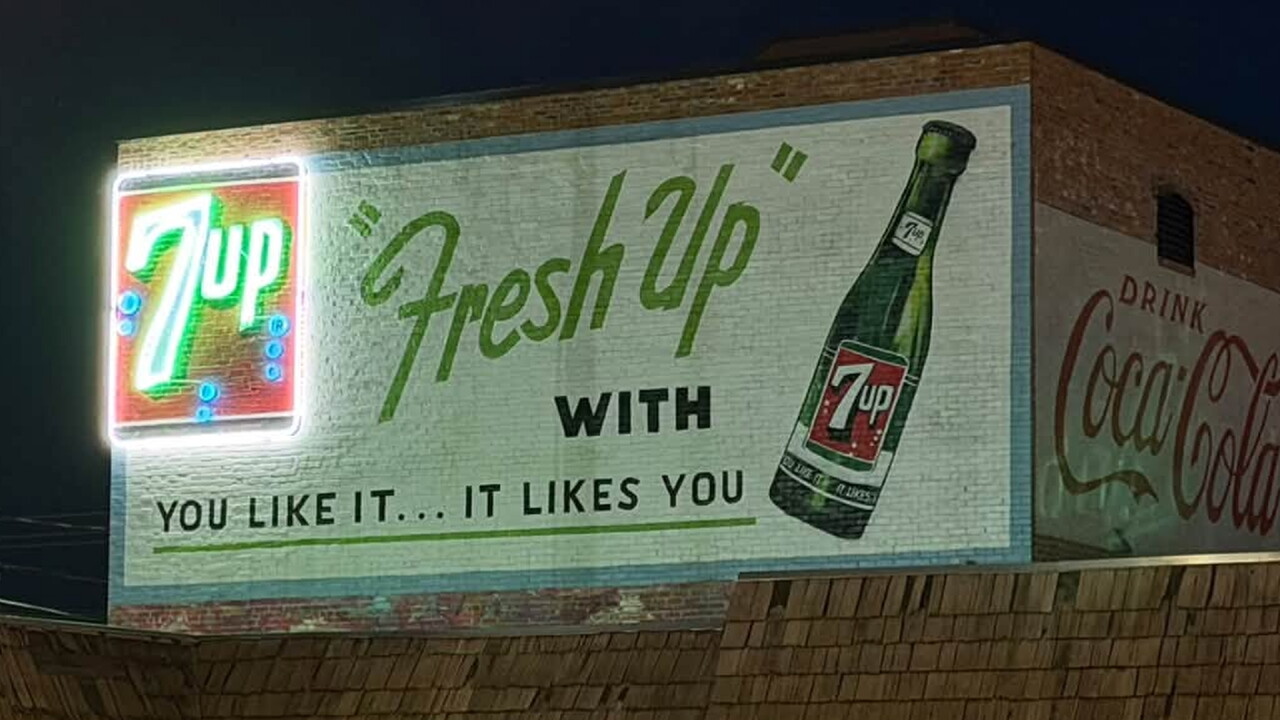
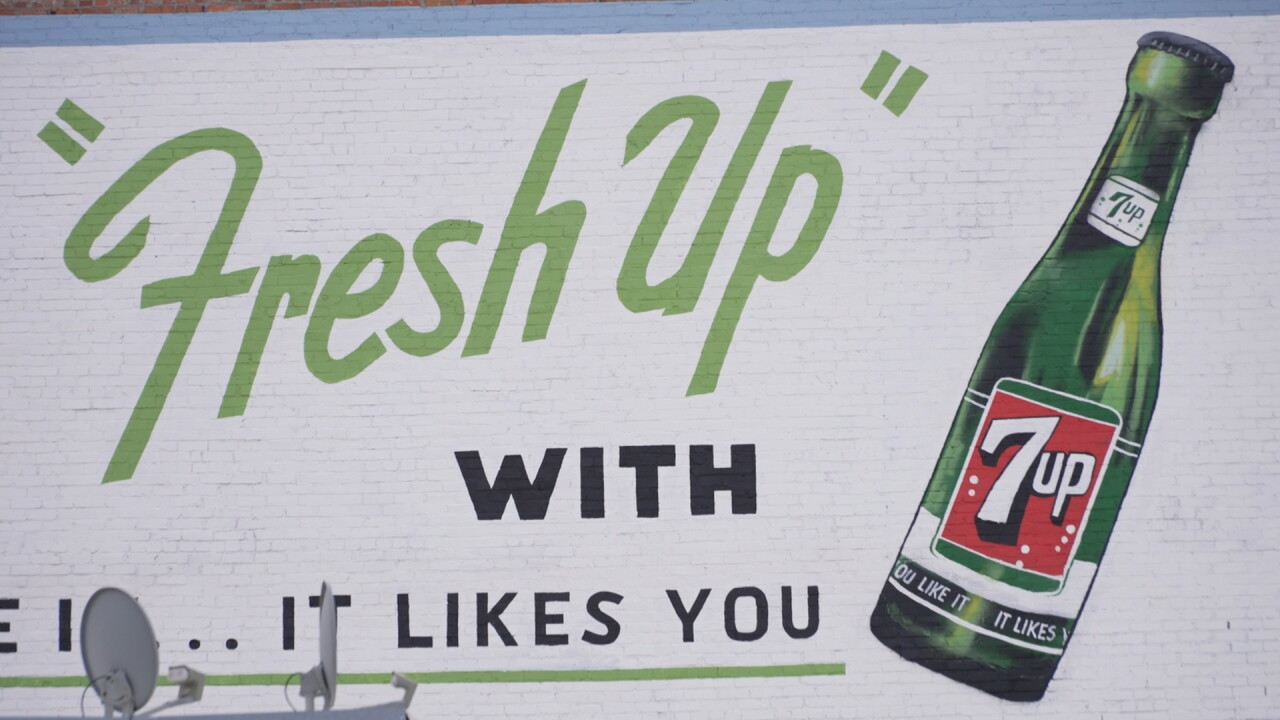
The final mural, facing First Avenue North, features a large 7-Up advertisement and a neon sign by local artist John Nyman that illuminates the building after dark.
But restoring the advertisements required more than paint. The project brought together Zumbrennen's artistic skills, historical research from historian and anthropologist Tim Urbaniak, and extensive masonry work from fourth-generation stonemason Duff Sweeney.
Together, their work helped preserve not only the advertisements but also the building's history.
Zumbrennen, a Billings-based mural and wood-burning artist, has painted throughout Montana and beyond. Her artwork and wood burnings have reached customers across the United States and internationally.
“I really enjoy shading and making things look dimensional, realistic,” she said.
Although she has experience creating murals in a variety of styles, the downtown project instead gave her a chance to paint a picture of the past.
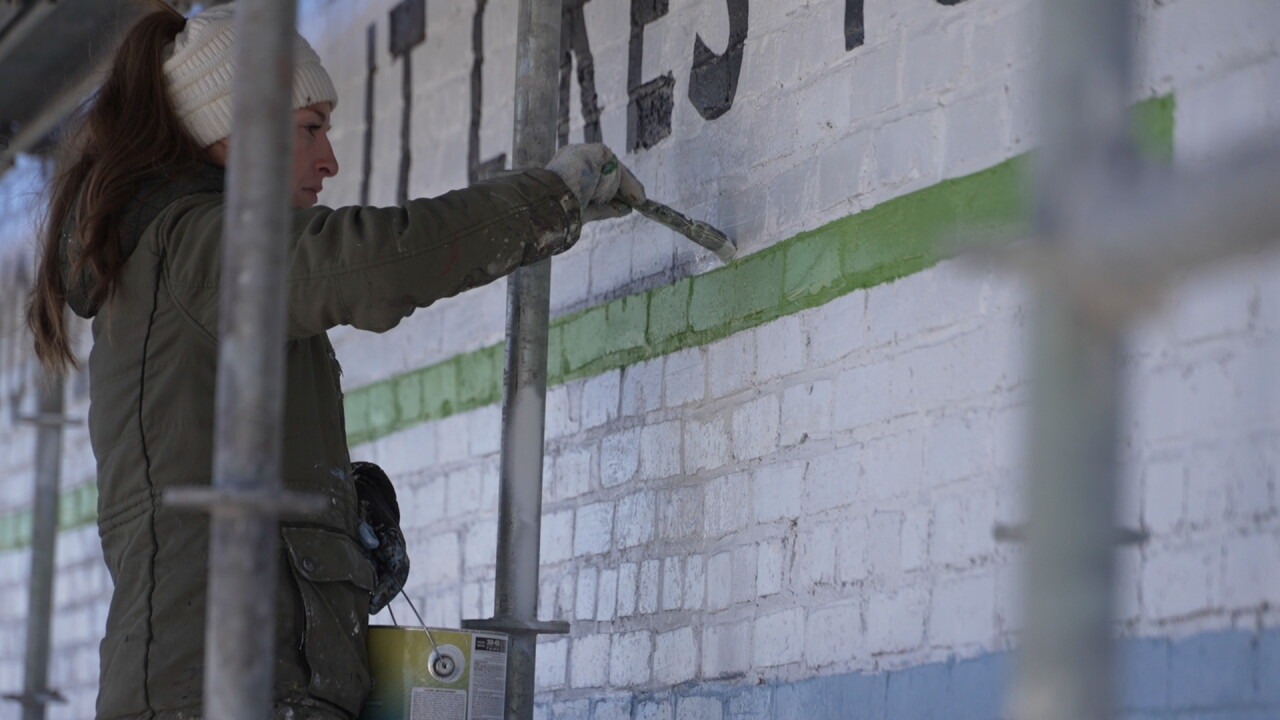
The project began in 2023, when the building's owner approached her about restoring the old advertisement signs. She started with the Coal and Crystal Ice and Coca-Cola advertisements before returning this year to complete the remaining two sides.
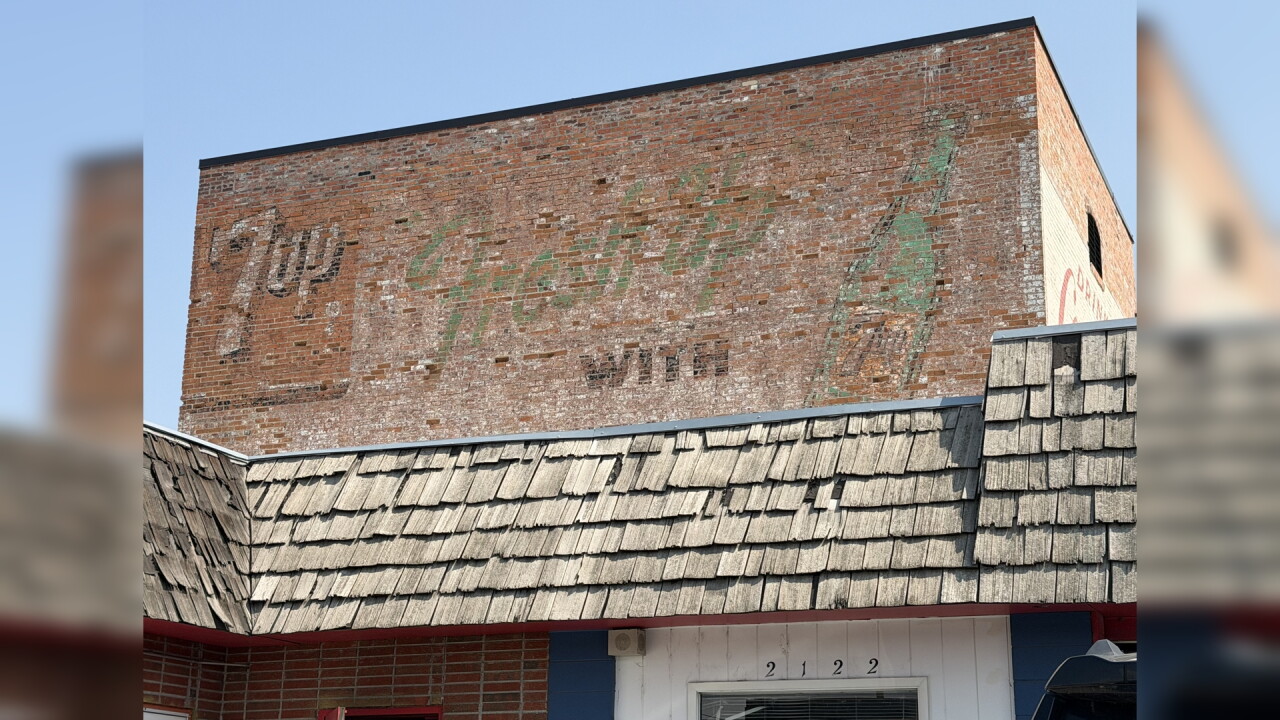
The advertisements had faded over time, leaving behind remnants of lettering, images, and colors. Zumbrennen had to study what remained and use those details to recreate the original designs.
Some sections were especially difficult to identify. She used different shades of primer to help distinguish the remaining images and lettering before repainting them.
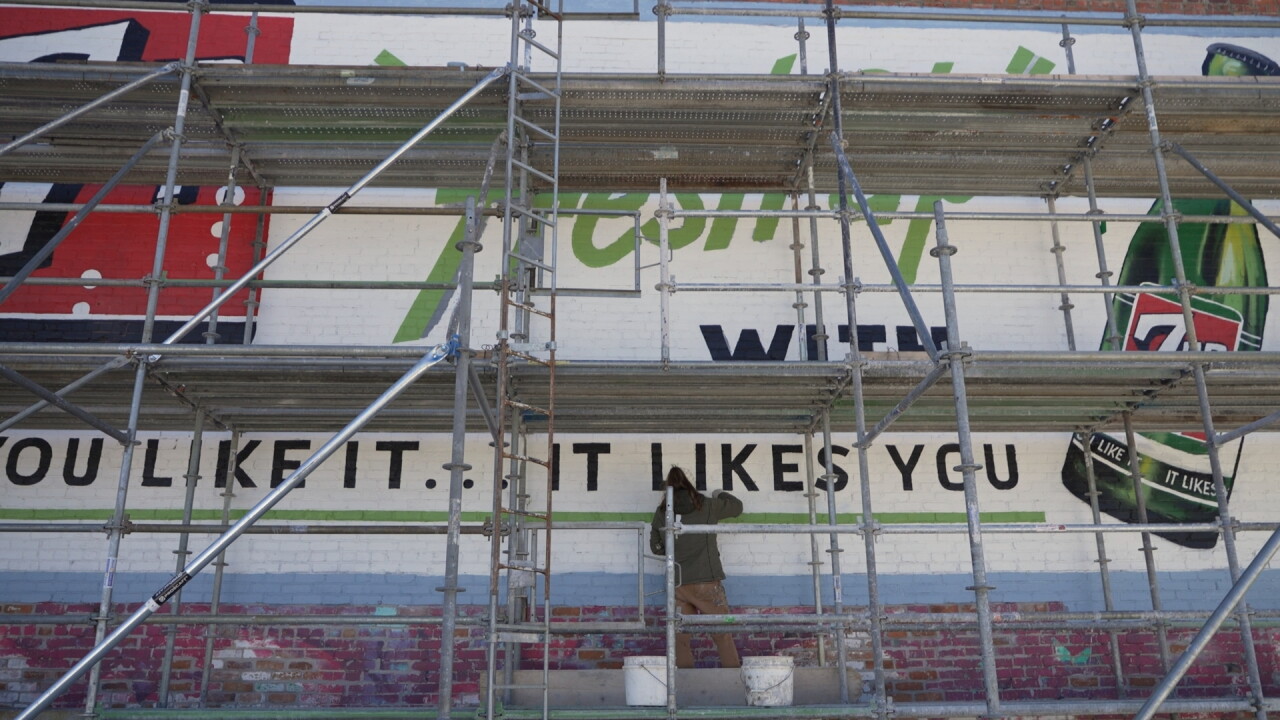
“There is so much history there, just knowing how long a mural does last, and then someone painted another one," said Zumbrennen. "It's just so fun to learn the history of an area."
The final 7-Up advertisement presented its own challenges. Zumbrennen said it was difficult to make out what remained of the original bottle while working so close to the wall. She used an old bottle as a reference, paying attention to its original labeling and shading while using spray paint to recreate its dimensions.
Working high above First Avenue North on scaffolding, Zumbrennen said the height was not much of a concern.
"It's kind of fun to be up there and see the view of Billings from different angles," she said.
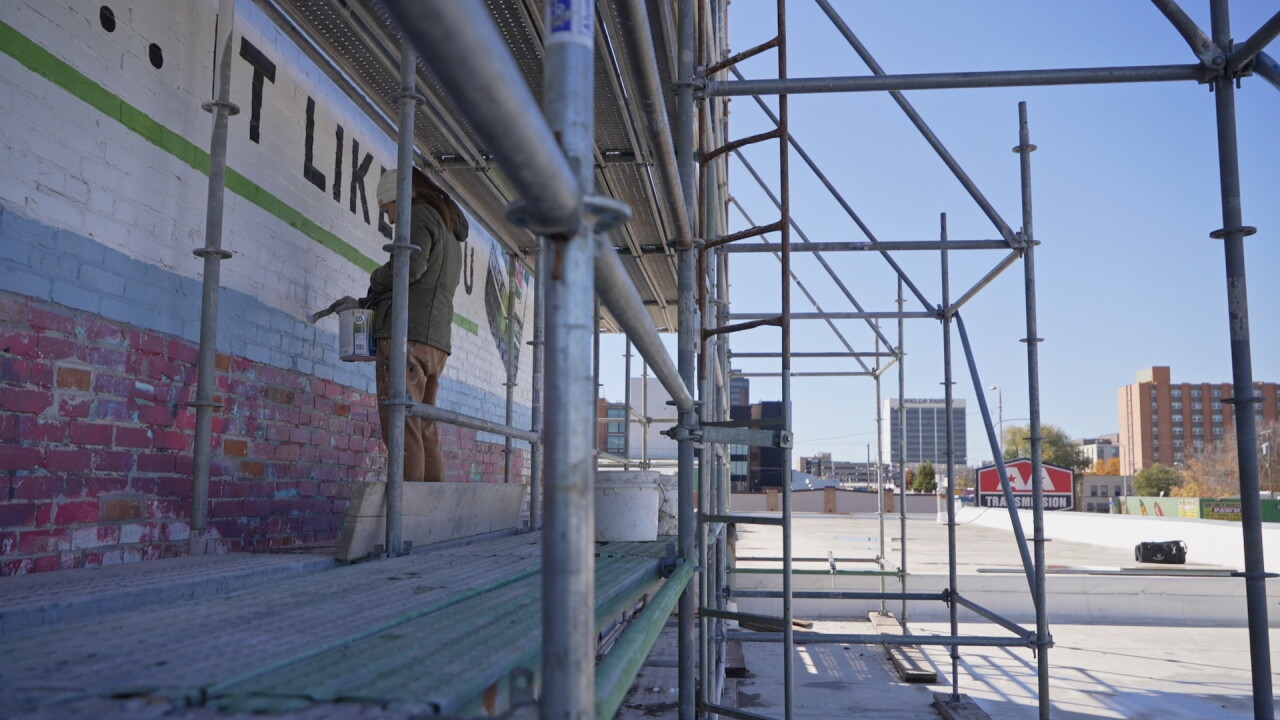
Seeing all four sides completed after three years of work was especially rewarding.
"It's been a long time of doing all four sides, and pretty crazy that it seemed so far away," Zumbrennen said. "And now, yes, it's all finished."
The advertisements represent different periods in the building's history, which now houses Topel Printing. Urbaniak, an anthropologist and historian who has written more than a dozen National Register nominations, helped research and document the building's past.
"They say in order to understand the future, take a look at the past and I think there's a tremendous amount of truth in that," he said.
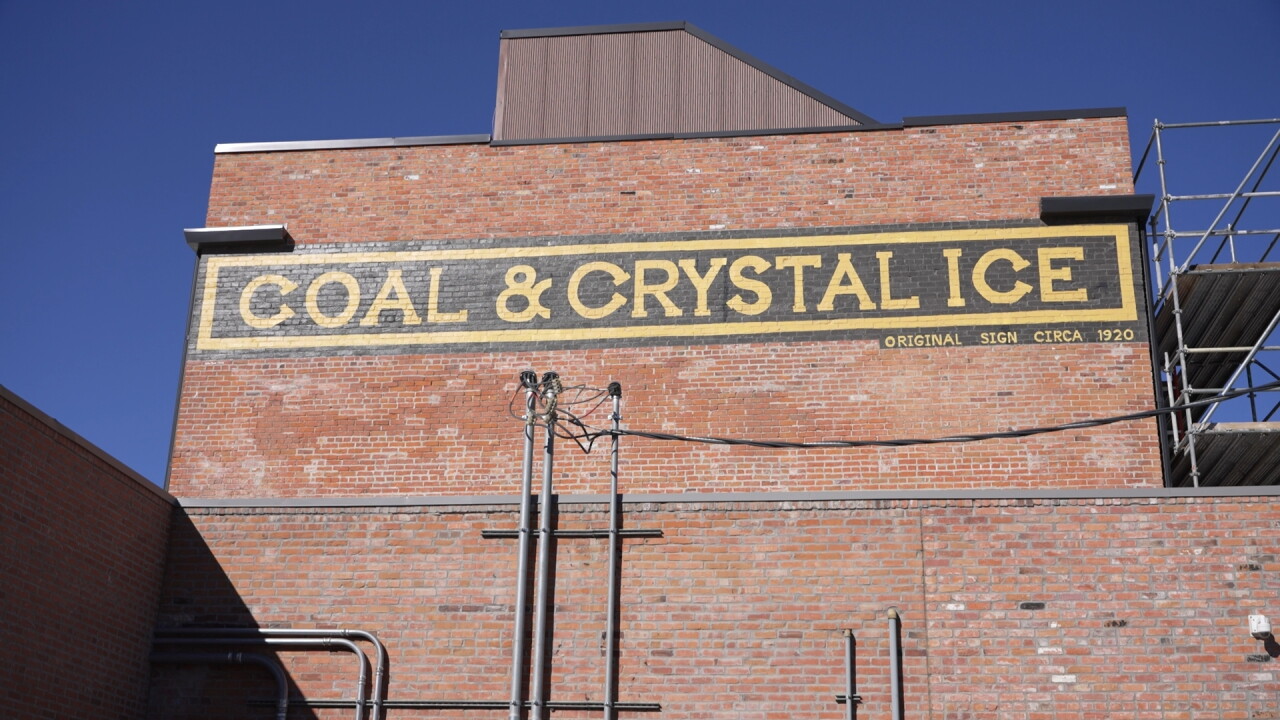
The original Coal and Crystal Ice business occupied the building in the early 20th century. It later became home to a dairy cooperative before transitioning into a bottling plant in the 1950s and continuing into the 1960s and early 1970s, according to Urbaniak.
“This was a great insight into downtown Billings, and I know more now about the ice industry in the turn of the century than I ever really set out to know," he said. "The ice, the dairy, and then the bottling all took advantage of the refrigeration equipment that was in the building that was central to all of their functions."
Urbaniak used digital imaging software often used to enhance historical rock art, including pictographs and petroglyphs, to help bring out the faded advertisements.
The research also grew out of a National Register nomination for the building.
The restoration required permission from the companies whose advertisements were being recreated. With assistance from Tease Law, the project received approval to restore the branded signage.
"They supplied all of the templates and standards from their different signage and everything so that what was put back up there would be accurate," said Urbaniak.
Before Zumbrennen could finish the murals, the building itself needed extensive attention.
Sweeney, a fourth-generation stonemason who specializes in historic restoration, has worked on the building on and off for more than a decade.
The restoration involved repairing damaged brick, replacing sections where needed, and matching the mortar to the original material. Sweeney said matching the mortar's hardness was important to account for how the materials expand and contract.
The east and north walls alone required about two and a half months of work.
"When we first started that, I just looked at it, and I said, I don't know if this is salvageable or not," he said. "We just started plugging away and working on it. Turned out great. Old building is in great shape."
Sweeney said he appreciates the building owner investing in the restoration rather than tearing down the structure.
"These old buildings, they're just timeless," he said. "You just drive around and look at these, and you think, wow, that's cool."
For Zumbrennen, the project also offered a different perspective on the growing art scene around downtown Billings. From the top of the building, at least three large murals can be seen throughout the area, with several more tucked in various areas downtown, reflecting how much public art has expanded across the city in recent years.
"It's definitely going to bring people here if we keep having more great art in the area," she said. "It's a good feeling like to just see that it looks cleaner in the town and seeing people taking pictures by those murals."
The completed advertisements now serve as reminders of the businesses and industries that once occupied the building, while adding to the collection of public art throughout downtown. As businesses continue to change and buildings find new uses, Urbaniak said preserving those pieces of history can help the community understand where it has been while continuing to grow.
"It really is a gift to Billings to not let this part of our history slip away," Urbaniak said. “Businesses will continue to evolve, buildings will continue to change uses, and that the community, you know, hopefully will continue to grow.”