



HELENA — In Montana, legislators aren’t the only ones in the state with the power to make law. The Montana Constitution guarantees the people the right to propose laws or constitutional amendments through the ballot initiative process. However, the sponsors of Constitutional Initiative 133 say, in recent years, the Legislature has been making it harder to exercise that right.
“The process has existed for over 100 years, it's gotten us some of our most valuable policy accomplishments in Montana, and Montana voters are very interested in ensuring that it stays intact,” said SK Rossi, campaign manager for CI-133.
Rossi presented arguments for CI-133 to an audience in Helena Wednesday night, as the League of Women Voters of the Helena Area held a public forum on the three statewide initiatives voters are considering this year.
(Watch the video for a closer look at CI-133.)
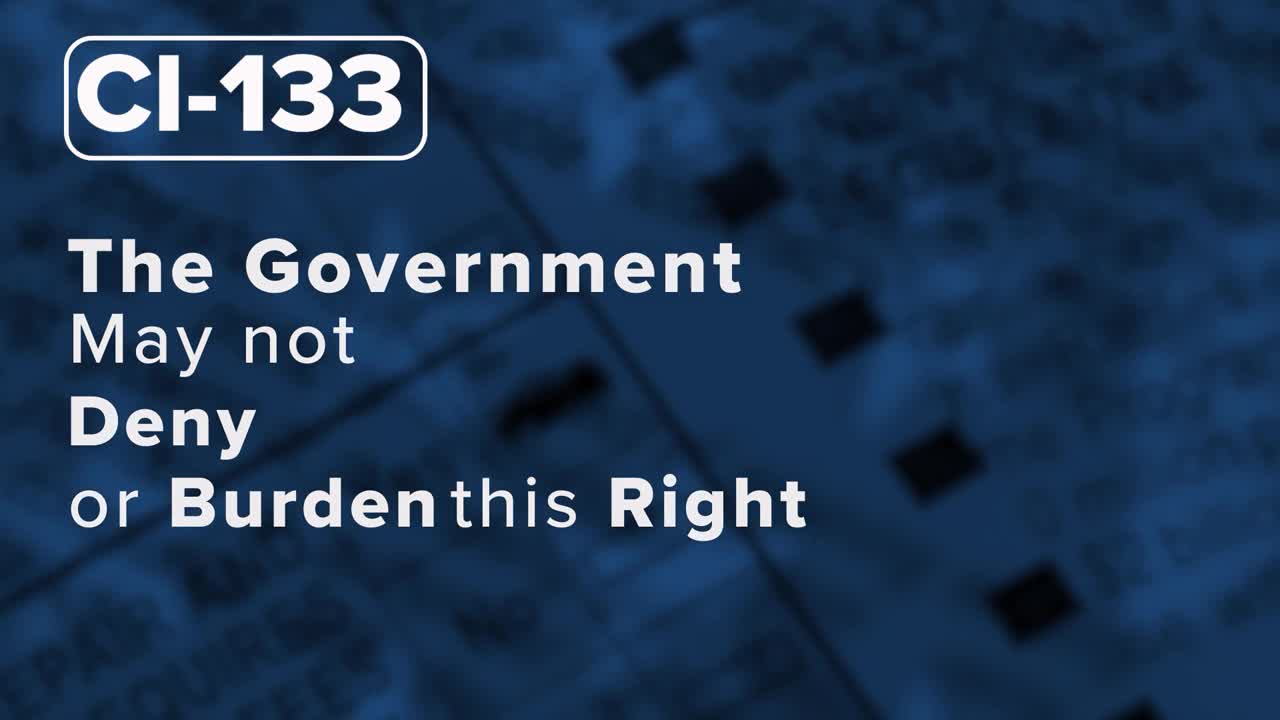
Supporters say CI-133 will reinforce the existing rights to propose initiatives and to request referendums on laws passed by the Legislature. The measure would amend the state constitution, to say the government “may not deny or burden this right unless justified by a compelling government interest achieved by the least restrictive means.” It would also guarantee “impartial, predictable, transparent, and expeditious processes” for bringing a ballot measure.
CI-133 lists a number of specific aspects of the rights that would be protected. For example, it says initiative sponsors should have “reasonably ample time to gather signatures,” that officials should change their proposed ballot language “only if they are not a true and impartial explanation expressed in plain, easily understood language,” and that petition signatures should not be excluded “due to a technical or minor deficiency.”
Rossi told attendees at the Helena event that Montana lawmakers introduced more than 20 proposed bills during the 2025 legislative session that would have put additional restrictions on the initiative process, including attempts to raise the number of signatures required to qualify and limiting the time available for collecting signatures.
“What we're trying to do with CI-133 is ensure that Montanans know what to expect from their ballot initiative process, and that the Montana state government knows that there are rules about how that process has to operate,” said Rossi.
But opponents of CI-133 question whether the measure would actually make the process clearer.
“I don't think voters can tell what they're voting on,” said Charles Robison, general counsel for the Montana Chamber of Commerce. “You could ask a dozen lawyers, and each one would give you a different opinion on what it means, and I think that's an important reason to vote no. I think it's a Trojan horse trying to put untested ideas into our constitution.”
Robison is part of the group that wrote arguments against CI-133 for the state voter information pamphlet. The opponents argue the measure is too vague, and that its actual impacts will have to be decided in the courts.
Robison said CI-133 would remove checks and balances in the current system, making it too easy to get something on the ballot.
“Today, we've got three initiatives on the ballot, where people worked hard, they collected signatures, they checked all the boxes, and they put them on the ballot,” he said. “The proponents of CI-133 will tell you there's a problem with our ballot initiative system, and I don't think there is.”
This year, there’s been extra attention on ballot issues at the local level, as community groups in Butte-Silver Bow County and Yellowstone County circulated petitions to increase restrictions on data center construction. In both cases, proponents and county officials ended up in court over confusion about the timeline for gathering signatures.
MTN asked Rossi if CI-133 would be applicable to local ballot measures.
“The hope is that especially the Legislature would see that the principles in CI-133 would extend to local initiatives,” Rossi said. “Again, that argument could be made either way, and that might be something the courts have to decide.”
The Montana Supreme Court is currently hearing a case that centers on what authority the Legislature has to regulate the initiative process. A district court judge invalidated several provisions of a 2023 law, including a requirement that lawmakers take a vote on proposed initiatives with the results to be published alongside the ballot statements, as well as a rule that a ballot issue that fails to pass can’t be resubmitted for four years.
Rossi told the audience in Helena that, even if the Supreme Court upholds the judge’s decision, CI-133 would still make a difference.
“We are in a situation where we should use every tool in the toolbox to ensure that our rights under the Montana Constitution are preserved and protected,” said Rossi.
Montanans Decide is the main campaign committee backing CI-133. As of September, it has received roughly $1.2 million in contributions from The Fairness Project, $580,000 from American Opportunity Action, $200,000 from Unite America PAC and $55,000 from Global Impact Social Welfare Fund.
There is not an active ballot issue committee campaigning against CI-133.
You can find MTN's coverage of the other two statewide ballot initiatives this year, Initiative 194 and Constitutional Initiative 132, on this website.
Read the full text of Constitutional Initiative 133 here.
