



HELENA — In this year’s elections, Montana voters will be choosing two new members of the Public Service Commission, the state’s top utility regulators. However, some state lawmakers want this to be the last time PSC members are elected.
“We're still running on the pre-1970s Public Service Commission model, and we are doing, I think, the state a disservice by using this old model,” said Rep. Bob Carter, D-Missoula.
Carter and Sen. Gayle Lammers, R-Hardin, have been working on proposed legislation to convert the PSC from an elected body to an appointed one. Last week, they presented their proposal to the Legislature’s Energy and Technology Interim Committee.
“You're putting politicians into a regulatory body,” Carter said. “What we want to do is take that politics out and have these be professional folks who are very familiar with the industry and used to regulating that industry.”
(Watch the video for a closer look at the proposal.)
Public service commissioners have jurisdiction over utilities like gas, electrical and phone companies, as well as other industries like railroads and garbage hauling. Each member is elected from one of five districts across the state, to serve a four-year term.
Lammers and Carter are instead proposing a nominating committee to vet candidates with “substantial experience or significant technical qualifications.” The governor would appoint one of the committee’s nominees, and two-thirds of the Senate would need to confirm them.
“Public service commissions that are appointed, they have a little more for professional requirements and things like that,” Lammers said. “It's not just a popularity contest; they're there in the field, they have an education, they know finance, they know energy. Not to say that our current ones don’t, but it's a surety when you do it the appointed way.”
Montana has been electing utility regulators for more than 100 years. In 1907, the state created an elected Board of Railroad Commissioners. Those commissioners then became part of a Public Service Commission in 1913.
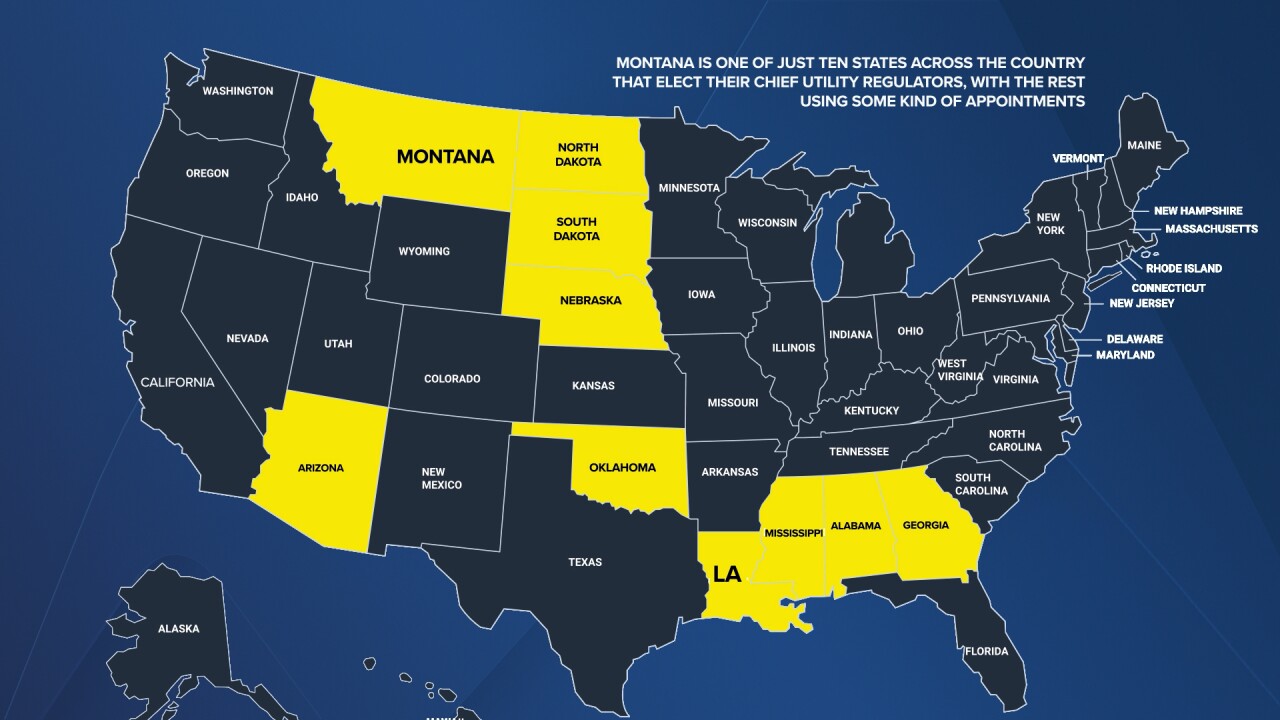
The PSC’s current structure is now unusual in the U.S. Montana is one of just ten states across the country that elect their chief utility regulators, with the rest using some kind of appointments. Most recently, New Mexico switched to an appointed commission in 2020.
There was a proposal to make the PSC partly appointed during last year’s legislative session. Senate Bill 561 passed the Senate but failed to clear the House.
Opponents of SB 561, including then-PSC president Brad Molnar, said the Legislature shouldn’t take away voters’ ability to decide. They argued, if commissioners weren’t subject to a public vote, they wouldn’t be as tough on utilities or as focused on the needs of ratepayers.
Carter and Lammers said ratepayers’ interests are important, but that should be balanced with a need to provide regulatory certainty and consistency for these utilities.
“We owe it to the ratepayers, industry and any other potential business that might be done in Montana with energy to have this conversation, and I think it's healthy to do,” Lammers said.
During the interim committee meeting, lawmakers said they wanted to keep working on some of the details, like the specific qualifications commissioners should have and whether the nominating commission is needed. However, they indicated they were interested in pursuing the idea further.
“We are giving the thumbs up that we like the direction that this is going,” said Sen. Daniel Zolnikov, the chair of the interim committee and the sponsor of SB 561.
Whatever lawmakers eventually decide, no changes would come until at least the 2027 legislative session, so they won’t impact this year’s elections. Lammers and Carter’s current proposal would let the newly elected commissioners finish out their terms before the transition begins.
