



WOLF POINT - The Roosevelt County sheriff had only met Roberto Orozco-Ramirez once.
But Jason Frederick, who has served in law enforcement for 26 years and as sheriff for the last 12, also knew about his solid reputation in the community: Orozco-Ramirez was a father of four, diesel mechanic and Little League coach. He remembered seeing Orozco-Ramirez cheering on his teenage sons during their high school football games. That, combined with his frustration over how Border Patrol had handled Orozco-Ramirez’s January arrest, was enough for Frederick to do something he’d never done before — an action that could jeopardize his professional reputation and possibly cause his colleagues and his community to doubt him.

In April, Frederick typed out a letter to a federal judge advocating for Orozco-Ramirez, an undocumented immigrant who has been detained since January, to be released under his supervision.
In an interview with Montana Free Press that same month, Frederick said it was a decision about values.
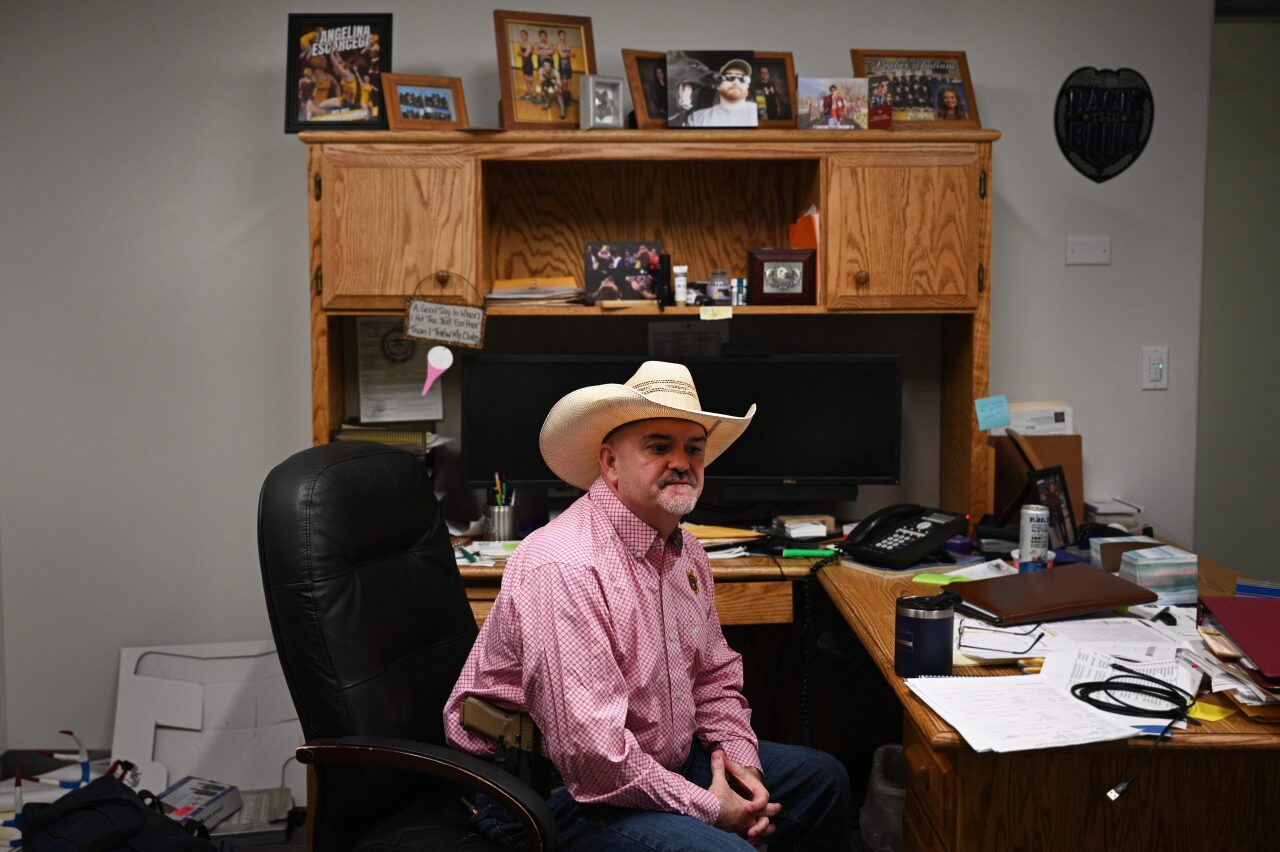
“Most people would probably think, ‘Should I do this or not?’” said Frederick, wearing a cowboy hat, pink checkered shirt and belt buckle, sitting at his office one Monday morning. “But I’m a community oriented sheriff.”
In writing the letter, Frederick became one of at least seven sheriffs nationwide who have taken a public stance against immigration policies since January. Frederick said he believed his action was worth the risk, even as he considers himself someone who is “100% for immigration laws,” and still has eight months to serve in his elected position in a county where the majority of voters supported President Donald Trump.
Frederick also shared what specifically bothered him about the approach Border Patrol took in Orozco-Ramirez’s arrest and how it contributed to his decision not to run for sheriff again in November.
On Tuesday, Chief Judge Brian Morris will consider Frederick’s letter, among other testimony, in a hearing to determine whether Orozco-Ramirez should be released or remain detained.
WHAT HAPPENED
The letter wasn’t Frederick’s first act of pushing back on recent federal immigration actions. The first came on Jan. 25 in the form of a Facebook post.
Border Patrol vehicles had, at the time, been staged outside Orozco-Ramirez’s diesel shop and home. Community members were starting to take notice.
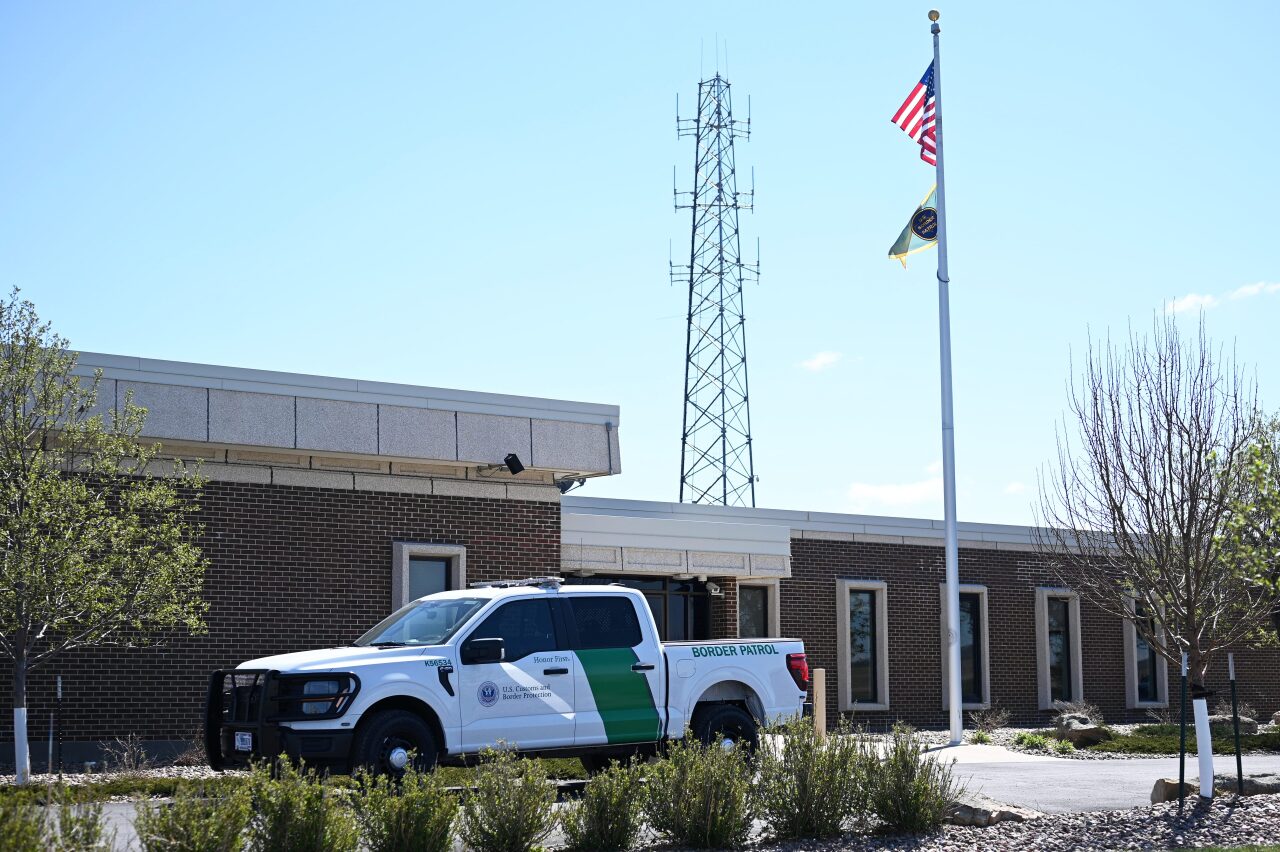
The Roosevelt County line is about 35 miles south of the U.S.-Canada border. The local sheriff’s office, Frederick said, has for years had a good working relationship with Border Patrol. The federal agency provides back up and resources in certain incidents and has helped with search and rescue efforts.
In his more than a decade as sheriff, Frederick said he’d never seen Border Patrol initiate an operation in Roosevelt County, let alone target an individual like Orozco-Ramirez, who had no criminal history.
Frederick felt tensions rise soon after Jan. 24, when federal immigration officers killed Alex Pretti, an ICU nurse with the Department of Veterans Affairs, in Minneapolis. The next day, a group of women stood by the side of the road in freezing temperatures near Orozco-Ramirez’s diesel shop holding signs that read “Stop bullying our community” and “America wants families like the Orozco’s.” Frederick’s office started fielding calls from community members who were concerned that Orozco-Ramirez might be detained or deported. Frederick said one of those callers told him something along the lines of “the community isn’t going to let him go down easy.”
“I was feeling the pressure,” Frederick said.
He called the agency to understand what was going on. That’s when a Border Patrol agent, according to Frederick, said that the agency had a warrant for Orozco-Ramirez’s arrest and planned to deploy an out-of-state tactical team to get him to surrender to law enforcement. (A spokesperson for U.S. Customs and Border Protection did not directly answer questions about the tactical team but said the action in Froid represented “a community safety priority”.)
Frederick was stunned.
“If there’s an outside tac team coming here, it’s usually because I ordered it,” Frederick said.
He added that, in his years of experience, outside federal teams “do not interfere with local sheriffs.”
“They just don’t,” he said.
Not communicating with a local sheriff about a tactical team ahead of time, he said, would put his office “in a terrible situation.” His mind flashed to the worst case scenario. He thought of the women protesting by the side of the road and of the local residents, many of whom own firearms, who said they’d stand by their neighbor. Frederick imagined receiving a 911 call for gunshots. What would happen, he wondered, if his deputies arrived at a shootout between federal agents and community members?
Mostly, he wondered why Border Patrol hadn’t reached out to his office earlier.
“Why not say, ‘Hey, how can we handle this peacefully without getting everybody in an uproar?’” he said.
Frederick was in a difficult position. Assisting Border Patrol at a time of public frustration and skepticism could risk losing community trust upon which he relies to maintain order, enforce the law and prevent crime. But not working with federal immigration enforcement entities could mean losing federal funding, straining relationships or facing political scrutiny. Having an out-of-state team initiate the arrest of a respected community member when tempers were already high, he thought, could also risk public safety.
Frederick tried to find middle ground.
To avoid the threat of Border Patrol bringing in a tactical team, Frederick said, he negotiated a verbal agreement with the federal agency: Orozco-Ramirez would surrender himself to Frederick under the condition that he would be detained in Roosevelt County Jail until he could meet with a lawyer. (A spokesperson for U.S. Customs and Border Protection did not answer a question about whether a verbal agreement was made.)
That night, Frederick took to Facebook to update the community about what had happened so far. Frederick chose his words carefully, but made it clear that he was not pleased with recent events. The Border Patrol operation, he wrote, “was conducted independently of local law enforcement.”
“It’s important to note that the man and his family have been productive members of the community and have had no negative interactions with local law enforcement since they moved here over a decade ago,” he wrote of Orozco-Ramirez. “The man posed no danger to the community at any point during this incident.”
The post gained almost 200 shares and generated a stream of online commentary. Some people thanked the sheriff for intervening. Others defended Border Patrol, saying the agency was doing its job to keep people safe.
Though Frederick describes himself as someone who strongly supports immigration laws, he said he made the post because people like Orozco-Ramirez “contribute to our community.”
“We never knew he was illegal until we got the call from Border Patrol,” he said. “Of course, on the other end of things in my job, I deal with illegals that are bringing in drugs and committing all these crimes. This guy wasn’t one of them.”
Kari Hong, a Missoula-based immigration attorney, said actions like Frederick’s, while special, are becoming more common as the Trump administration detains more undocumented immigrants without criminal histories.
In January, a Minnesota sheriff criticized U.S. Immigration and Customs Enforcement (ICE) officers for using excessive force and damaging the reputation of local law enforcement. In February, a sheriff in Maine publicly lambasted ICE after officers arrested a man from Angola who was legally working as a corrections officer. “This guy I knew was not a criminal alien,” he told the New York Times. One sheriff in Michigan declined to enter a formal agreement with ICE, telling Stateline in March that a partnership with federal immigration enforcement would weaken trust and that federal operations were hurting local law enforcement. A group of Florida sheriffs, also in March, sharply criticized the government for its mass-deportations and advocated for immigrants without criminal histories to be allowed to stay in the country.
Frederick’s actions and similar stances by law enforcement officials nationwide, Hong said, speak to a growing disconnect between the criminal justice and immigration systems.
Sheriffs, judges and prosecutors, she said, know who is dangerous and who is not in their communities. The current immigration system, she added, “is capturing people who are really not a danger at all and classifying them as the worst of the worst.” As of April 4, about 70% of people held in ICE detention had no criminal conviction, according to a recent Transactional Records Access Clearinghouse report.
“And that’s the danger,” Hong added. “The rhetoric does not match the reality.”
As sheriffs work to practice responsible policing, experts say, they are forced to navigate a highly charged political environment.
“Sheriffs are elected to keep their communities safe,” said Justin Smith, executive director of the National Sheriffs’ Association. “Now, they also have to traverse this difficult political chess game, and there’s a lot of tension, but sheriffs have to figure out what is best for their county.”
‘BACKPEDALED OUT OF THE AGREEMENT’
After surrendering to Frederick, Orozco-Ramirez was detained in the Roosevelt County Jail on Jan. 25, and according to Frederick, the meeting with his lawyer was set for three days later. But Frederick said federal immigration officials transferred Orozco-Ramirez to Cascade County Detention Center 325 miles away in Great Falls one day before that meeting was supposed to occur.
“That there kind of started the battle between I and Border Patrol,” Frederick said.
Frederick prides himself on honesty and integrity, and said he believes it’s important to participate in the community beyond his role as sheriff to foster relationships. It’s one reason why he coaches wrestling and used to referee football, and why several of his deputies are involved in youth sports as well. Framed photos of student athletes decorate the walls of his office. In one, a high school wrestler is jumping into his arms, grinning broadly after winning the state title. When Frederick first took over as sheriff in 2014, at a time when public trust in the office had faltered, he held a contest among high school students to design a new uniform patch for the agency to try to strengthen community connection.
Frederick said Border Patrol’s treatment of Orozco-Ramirez and, in his recollection, the breach of their verbal agreement violated some of those deeply held values. He thought the situation weakened trust with locals he’d worked hard to earn.

“I felt like they had backpedaled out of the agreement,” he said. “I felt like, at that point, the community probably felt that I wasn’t honest. It was very upsetting.”
Frederick, who has worked with local Border Patrol agents for years, said the way the agency handled this incident felt different.
“I believe this came from a way higher political force than our local Border Patrol,” Frederick said. He added that, since the January arrest, he has met with Border Patrol officials who attributed the disagreement to a miscommunication.
Three days after Orozco-Ramirez was taken into custody and after 26 years in law enforcement — the career Frederick had been dreaming of since kindergarten — he announced he would not seek re-election as the Roosevelt County Sheriff in November.
Plenty of factors influenced the decision, he told MTFP. He wants to spend more time with his family. Being the county coroner — a hat many local sheriffs also wear — weighed on him emotionally. He had investigated the deaths of too many former athletes he’d coached. And then there was the recent incident with Border Patrol.
“There’s so many reasons,” he said of his decision to retire. “But did this play a factor? Absolutely. Absolutely this is part of the reason.”
THE LETTER
In the three months since he surrendered to law enforcement, Orozco-Ramirez has remained in detention. In his April letter to a federal judge, Frederick advocated for his release.
He pledged that if Orozco-Ramirez were released, the Roosevelt County Sheriff’s Office would “assume responsibility” for his supervision.
“I do not take lightly writing this letter,” Frederick wrote. “I respect that the U.S. Department of Homeland Security has a job to do. But detention should be imposed upon people who deserve it, not on people like Mr. Orozco Ramirez. As a career law enforcement official, my first duty is to ensure public safety, and I take that responsibility very seriously. If I did not fully believe that Mr. Orozco Ramirez warrants release, I would not be putting my office, reputation, and title on the line.”

Marvin Qualley, a local farmer who’s been keeping up with Orozco-Ramirez’s case, said he was “very impressed” by Frederick’s decision to write the letter.
“It’s huge,” he said. “I know we’ve got a handful of people in the community that think, ‘[Orozco-Ramirez] is illegal and he deserves what he gets.’ For the sheriff to step up and back him is a big thing. It’s got to weigh on the judge’s mind.”
On Tuesday, lawyers on behalf of various law enforcement agencies involved in Orozco-Ramirez’s detention are expected to argue that Orozco-Ramirez should remain detained.
But in his letter, Frederick maintained that Orozco-Ramirez “is neither a danger to the community nor a flight risk.”
Through the years, Frederick has given second chances to those caught up in the criminal justice system. He once gave clothes to a former wrestler who had been incarcerated and tried to help him find a job when he was released. He’s also benefitted from second chances himself. Once, as a 19-year-old, Frederick said he was abruptly fired from a police department for hitting a herd of deer in his patrol car outside of his designated area.
“I think somebody who’s been here for ten years and hasn’t committed one crime here and has been more of an asset in the community — why not?” Frederick told MTFP. “Why not take a chance on him?”
In Frederick’s mind, what should happen next is “simple.” He believes Orozco-Ramirez should have a chance to obtain U.S. citizenship.
“He is keeping the farmers going with all their diesel,” Frederick said. “He’s making the economy still work. He’s trying to do the right thing. He’s just not doing it legally, and that’s what needs to be done.”
This story was supported by the Pulitzer Center.
This story was originally published by Montana Free Press at montanafreepress.org.
