

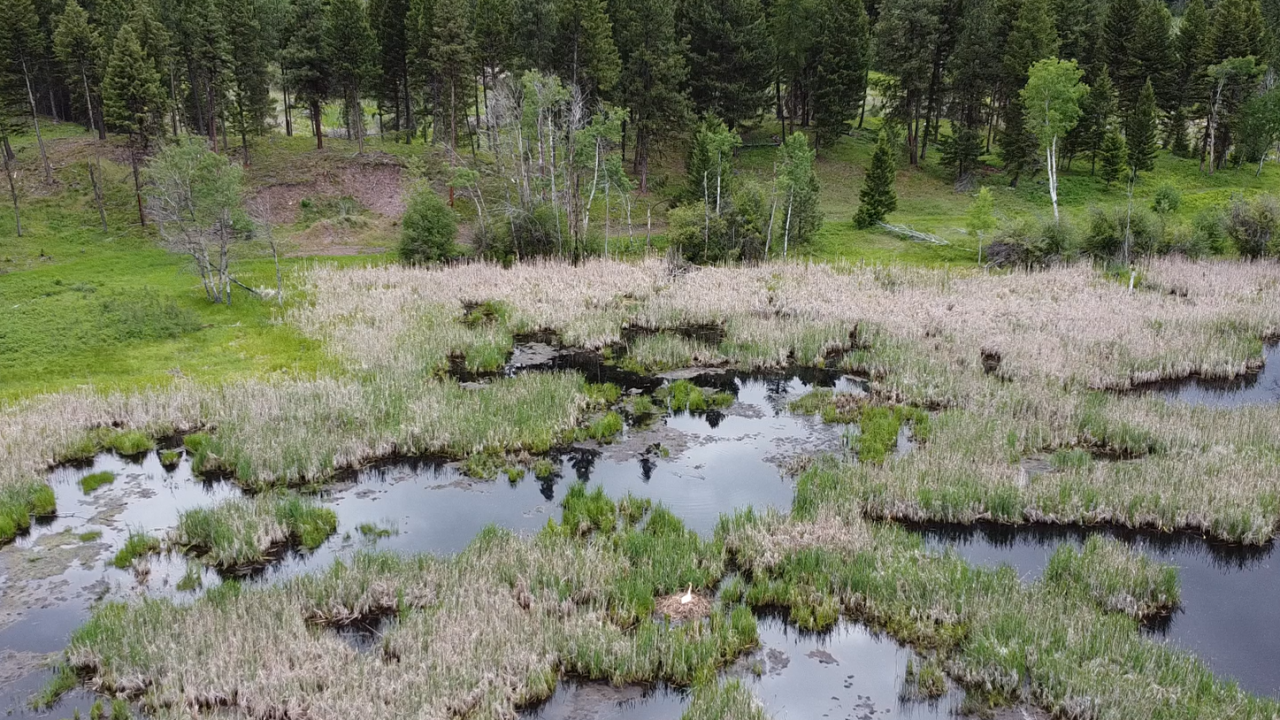


OVANDO — Between 1806 and 2003, there were no reports of trumpeter swans sticking around in the Blackfoot Valley. Then a collaborative conservation effort brought swans flocking back, releasing 218 in just over 15 years.
Since restoration efforts ended, swans are still thriving in the valley.
“It's as much a story about people as it is about swans,” said Elaine Caton, with the Blackfoot Challenge. “I think they're an icon now, which is kind of amazing to think about. Just 25 years ago, they weren't here and, now, I think it's a lot of what people think about when they think about the Blackfoot.”
Trumpeter swans were once widespread across North America, until the feather trade decimated populations. That was also the case in the Blackfoot Valley.
In 1806, Meriwether Lewis recorded seeing a pair of trumpeter swans. That was the last sighting reported until 2003, when another pair showed up to nest east of Lincoln.
Watch Story Here:
“Unfortunately, the female hit a power line during the night and was killed. But the owner of the post and pole yard where they were nesting collected the eggs. With the help of some biologists, they were transferred to a facility in the Mission Valley and three of the eggs hatched and were returned,” Caton said.
That stirred excitement and studies across the valley.
In 2005, the Blackfoot Challenge and the U.S. Fish and Wildlife Service began a swan restoration project, with lots of help from local landowners, birdwatchers and partners.
Between 2005 and 2021, they released 218 swans back into the Blackfoot. Elaine Caton, now the Blackfoot Challenge’s bird monitoring and conservation coordinator, watched the whole project unfold.
“We would get school kids from every school in the watershed to come and we would release swans here,” she said. “They're big birds. They weigh 20 to 30 pounds. They have a 7-foot wingspan. They're taller than a first grader, it's really neat to see the looks on kids' faces.”
In 2022, the project met its goal, with at least seven successful nests for at least two years in a row, and stopped releasing young swans.
Now they have switched to monitoring and stewarding the existing population.
In the summer and fall, Caton said the valley could have as many as 60 or 80 swans.
“The first few years were nerve-wracking, you know, it takes a while to bring a species back,” she said. “But it has been so rewarding in many ways. First of all, just having the swans around after 200 years, basically, of them not being around and then, also, seeing how much people love to have them in the watershed, how they welcome them.”
In the years since the project started, new opportunities for collaboration have popped up, and more people have become invested in the swans.
Caton said that, early on, some swans hit power lines, just like the first female who nested back in 2003.
“Missoula Electric Co-op, which is our power company here, they volunteered a lot of their employee time and effort to marking the lines and sometimes even burying them,” she said. “We have not had a known collision in many years, which has been great.”
Since the reintroduction phase ended, Caton still works with the U.S. Fish and Wildlife Service to monitor the swans. They look for nests throughout the watershed, track the lakes where they spend time, and they count young swans, both after they hatch in the summer and in the fall to see how many survived.
In the roughly 20 years since bringing the birds back to the Blackfoot, landowners, birders, and experts from across the valley have joined in watching over the flock.
“They are like ambassadors for wetlands. They help people realize the importance of these habitats,” Caton said. “Now, they can drive through their ranch or through the watershed and see these somewhat magical birds, not just migrating through, but actually making their homes here.”
