

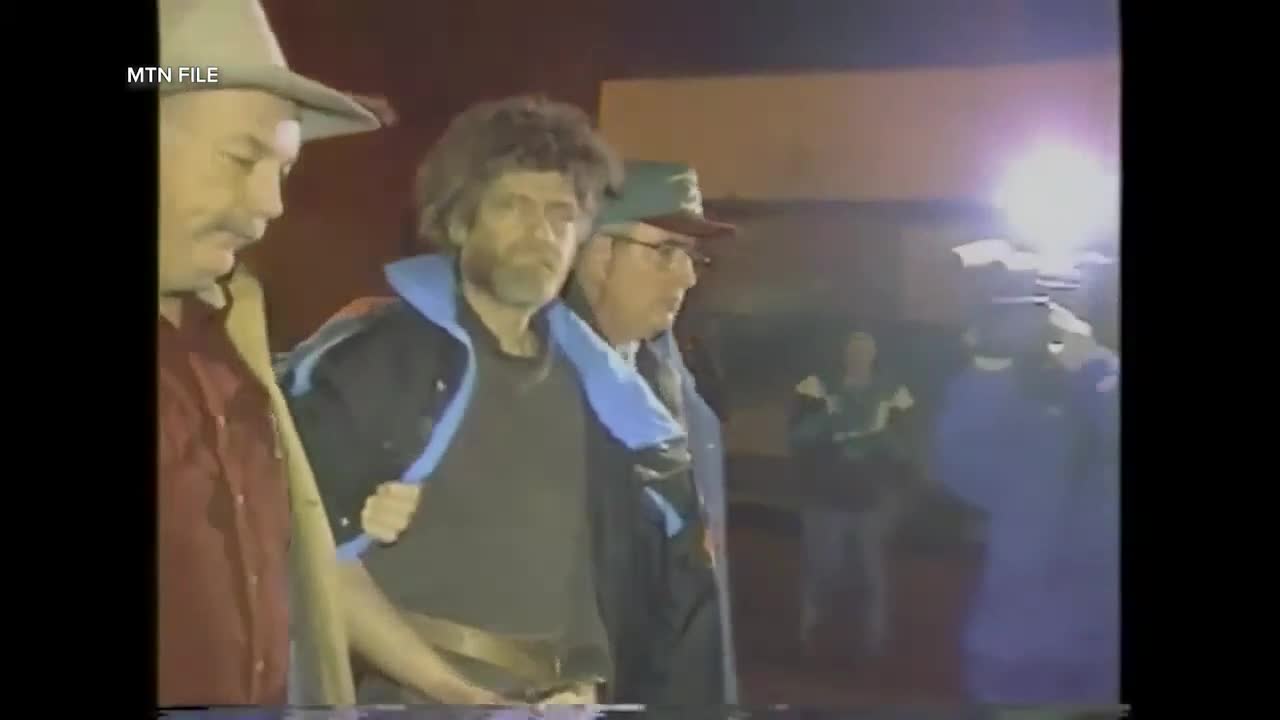


MTN NEWS — Friday marks the 30th anniversary of the arrest of Ted Kaczynski, known to the nation as the Unabomber. For two decades, he planted bombs and sent devices through the mail that resulted in serious injuries and several deaths.
(WATCH: 30th anniversary of Unabomber's arrest in Montana)
Born in Illinois, Kaczynski excelled in school at a young age and was accepted into Harvard University at the age of 15. While at the school, he was a participant in a controversial psychological study conducted by Henry Murray. In the experiment, students wrote about their personal beliefs, and an anonymous individual would respond with "vehement, sweeping, and personally abusive" attacks based on the subject’s beliefs.
Kaczynski transferred to the University of Michigan, where he earned his master’s and doctoral degrees in mathematics. He was a mathematics professor at UC Berkley, but suddenly resigned in 1969.
In 1971, Kaczynski moved to Lincoln and built a small cabin; he also became reclusive. FBI documents say Kaczynski documented committing acts of arson and setting traps to sabotage developments near his cabin. Documents found in his cabin also allege he had poisoned dogs in the area.
(WATCH: MTN reporters recall covering the arrest of the Unabomber)
Between 1978 and 1995, Kaczynski was confirmed to have sent in the mail or delivered at least 16 sophisticated bombs. Three people were killed, and 23 others were injured.
The targets of his bombings included individuals connected to industrial development, modern technology, airlines and higher education.
In 1995, Kaczynski sent letters to several national media outlets saying he would “desist from terrorism” if they published his 35,000-word manifesto. The Washington Post published the document in September 1995.
The Kaczynski family read the essay and recognized the style of writing. They worked with the FBI to provide information about Kaczynski, which ultimately led to his arrest.
On April 3, 1996, an FBI raid was conducted at Kaczynski’s cabin near Lincoln, and he was taken into custody. During the event, officials found bomb components and tens of thousands of written pages, including descriptions of bomb making and his targets.

Located in downtown Helena, 301 S Park Avenue currently houses several state departments and programs. But in 1996, it was the federal courthouse. Reporters and camera crews from around the country packed the parking lot as Kaczynski was brought to be formally charged with possessing bomb-making materials.
Kaczynski was transferred to California that June. Four of the bombings occurred in the state, and more serious charges could be brought against him. To facilitate the move, the Montana charges were dropped.
In 1998, Kaczynski pleaded guilty to thirteen federal charges and was sentenced to four consecutive life sentences. The plea deal spared him a possible death penalty.

During their investigation, the FBI found Kaczynski's cabin to be booby-trapped with explosive devices. The devices were disarmed and the building was transported to Californa as evidence after his arrest. It is now housed in Washington D.C. as an "FBI Experience."
He spent the majority of his 27 years of imprisonment at the ADX Florence Supermax prison in Colorado. He was transferred in 2021 to FMC Butner Medical Center in eastern North Carolina for cancer treatment.
On June 10, 2023, Kaczynski was found unresponsive in his cell. An investigation ruled he died by suicide.
