



HELENA — Montana’s Fish and Wildlife Commission approved new wolf regulations for the upcoming season Wednesday.
The rules allow hunters and trappers to harvest up to 300 wolves statewide, with specific quotas in different regions.
That is down from a statewide wolf quota of 450 last season.
(Watch the video below to learn about new wolf regulations)
The quota aims to maintain the statewide population above 450, with at least 15 breeding pairs.
With the regional quota structure, region 1 is set at 131 wolves, region 2 at 92 wolves, region 3 at 33 wolves, excluding wolf management units 313 and 316 that now have a reduced bag limit of one wolf per unit. Region 4 has a quota of 28, region 5 at seven wolves, region 6 at five wolves, and region 7 at four wolves, totaling the 300 statewide quota.
Montana Fish, Wildlife and Parks' latest estimates range from about 725 to more than 1,000 wolves, depending on the population model used.
The significant changes from last year's recommendations to this season's come from a newer model of the original integrated patch occupancy model, or “IPOM”.
“I mean we are always looking for ways to improve how we count wolves and you just have to admit counting wildlife is extraordinarily difficult,” Montana FWP director Christy Clark said.

The state says it uses hunter surveys, known wolf locations and other data to track wolf numbers and distribution.
In 2025, hunters and trappers harvested 264 wolves statewide. FWP also confirmed 68 livestock losses to wolves.
Under the new regulations, hunters can purchase up to 10 wolf licenses and harvest up to 10 wolves. Trappers also have a 10-wolf limit, and a person can fill both limits during the same season. This is compared to 2025, when the bag limit was 15 per person statewide for hunters and trappers.
“It is a great process,” Clark added. “It is one that Montanans certainly value, and I think it is a much stronger process in the sense that you do not have an agency making the decisions.”
The Montana Fish and Wildlife Commission is composed of seven members appointed by the governor. The new wolf regulations were approved by the commission unanimously.
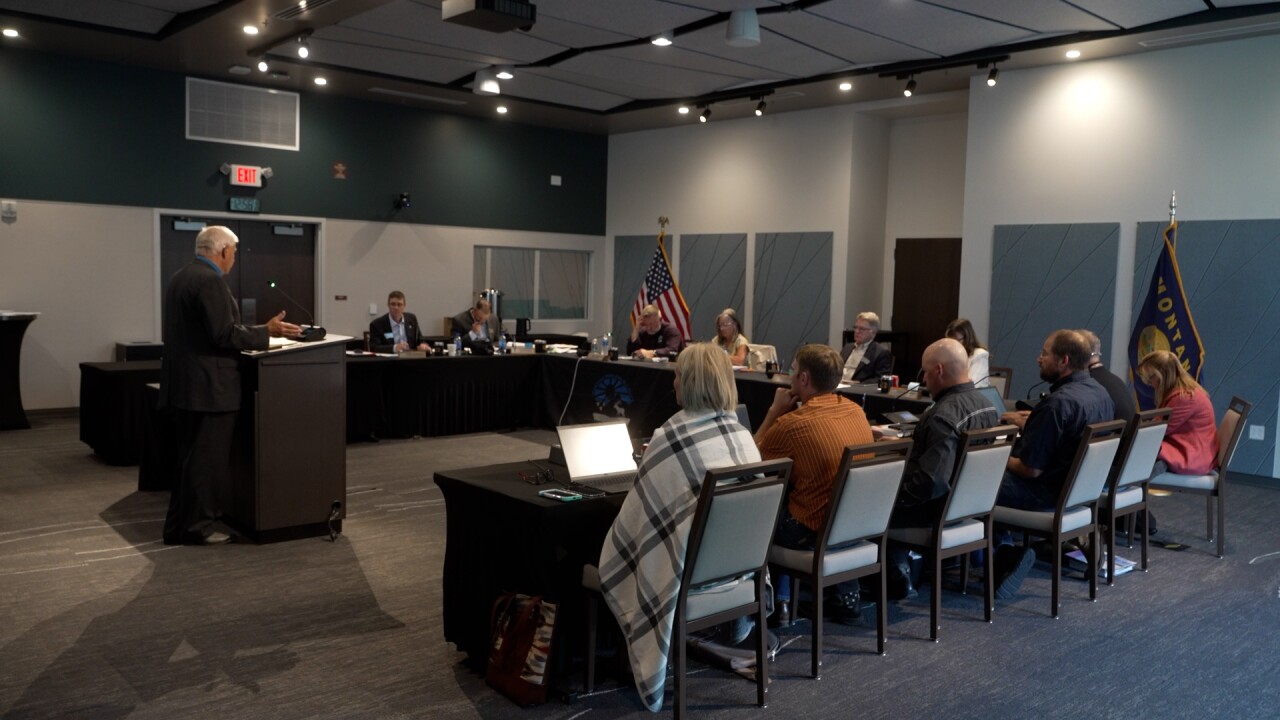
Wednesday’s discussion saw a passionate debate from the public.
“I oppose the reduction in wolf quota,” James Call said.
Kim Bean said, “Those numbers are a policy, and wolves pay the price.”
The new regulations will apply to the fall 2026 and winter 2027 seasons and will be revisited this time next year.
