


BAKER — Just outside of Baker, Montana, a sixth-generation ranching family is growing something most people would never expect to find in the state: citrus.
Todd and Molly Barkley run Barkley Ranch, located about 15 miles southwest of Baker, which has been in the family since 1922. In 2021, they constructed a geothermal greenhouse, called Barkley's Homegrown, and planted it for the first time in 2022, coinciding with the ranch's 100th anniversary.
Take a look inside this geothermal citrus greenhouse near Baker:
"We're producers through and through for six generations," Todd Barkley said.
Step inside the greenhouse, and the Montana plains feel far away.
"It is just a nice little oasis," said Todd. "It's spring in here in February."

"Smells really good in here when the blossoms are in," added Molly Barkley.
Measuring roughly 16 feet wide, 120 feet long, and dug 12 feet into the ground, the greenhouse relies on an air-to-air geothermal system to maintain a stable temperature year-round. Even as winter temperatures outside plunge well below zero, the interior typically stays above freezing, warm enough to sustain a surprising range of crops.
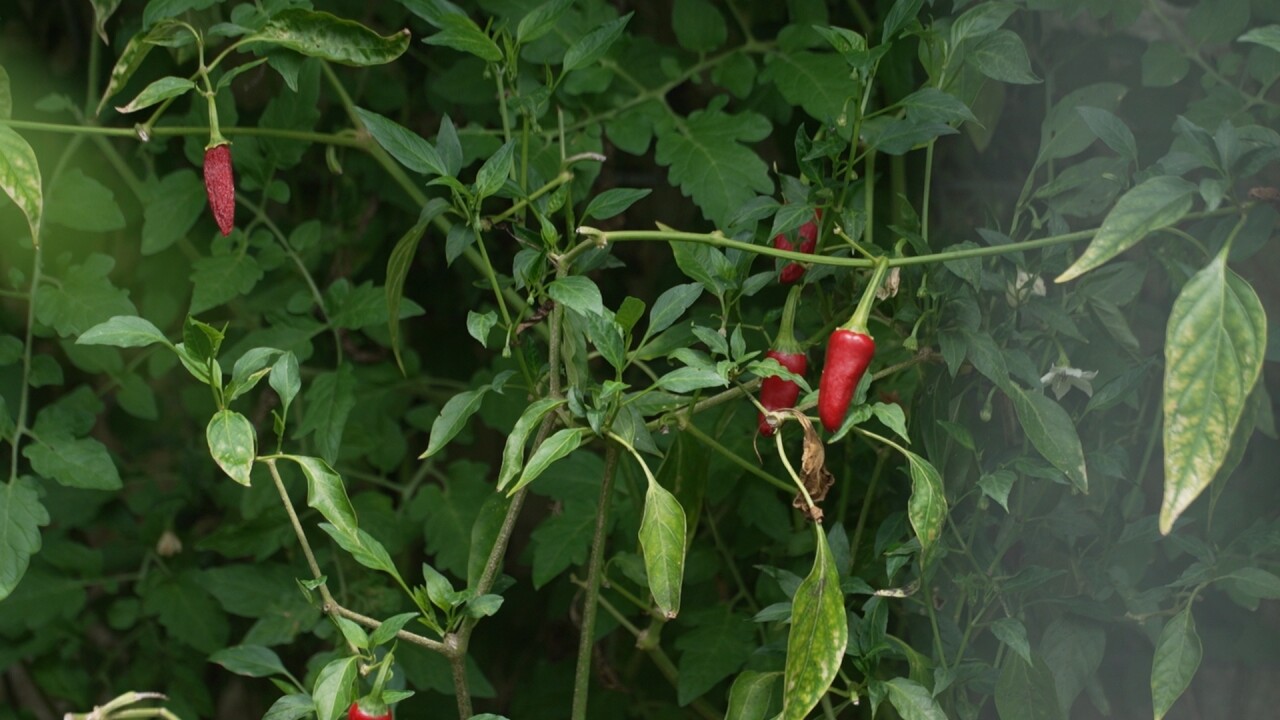
Alongside traditional garden vegetables like tomatoes, peppers, and Swiss chard, the greenhouse hosts more than 20 citrus and fruit trees, including lemons, limes, clementines, oranges, and even pomegranates — crops rarely, if ever, associated with Montana agriculture.

“It's pretty eclectic," said Todd.
The Barkleys also sell beef, pork, honey, syrup, and vegetables through their business that is all produced by the family. Todd said the decision to grow citrus was partly a business calculation and a challenge to do more.
“We thought, well, that's something we could sell that nobody else is raising around here, so we could capitalize on the market," he said. "Last year, we probably ended up with 25, 30 lemons and limes.”

Still, the project is about more than market potential. The Barkleys practice regenerative agriculture, a method focused on improving soil health and working with natural systems rather than relying heavily on chemicals or intensive tilling.
“Just trying to make things better, right? Regenerate it," said Todd. "It's basically about trying to get the soil health back to where it was."
Inside the greenhouse, that philosophy is visible. Bees have established hives and pollinate the plants. Worms are easily found throughout the space and help enrich the soil. Many plants return year after year without replanting. Because of their no-till mulch system, very few weeds are found. Nature does most of the work.

Now in its fourth year, the greenhouse is beginning to establish its roots.
“It's starting to be its own ecosystem in here," said Todd. "If you look around, there's several different varieties of bees humming around, pollinating stuff, and they actually have found their home in here.”

Related: Citrus in southeast Montana: Baker ranchers grow local options with greenhouse
"The flowers we need for the pollinators and some of them to keep the aphids, you know, they attract aphids, so that makes our other plants grow better," said Molly.

The couple summarizes their approach with a simple motto: healthy soil, healthy plants, healthy animals, healthy community.
Community has become one of the greenhouse’s most important roles.
While citrus production is still in its early stages and not yet large enough for widespread sale in Baker, the greenhouse has already become an educational hub. School groups, 4-H clubs, FFA chapters, college classes, and even Governor Greg Gianforte have visited over the years to see firsthand what’s possible in an unlikely environment.
"We've had a kindergarten class of 37," said Molly.

"We don't turn down a 4-H group or an FFA group," added Todd.
The couple says the visits carry an important message for young people interested in agriculture, and the value of what they grow goes beyond the market.
"We try to encourage these kiddos that they want to be in agriculture, that there is avenues out here that you can do, and it doesn't take a lot of land," said Todd.
“It's nicer to know that you're eating something fresh," said Molly.
Looking ahead, the Barkleys plan to offer internships and homesteading experiences for those interested in learning their methods. They are also members of the Montana Agritourism Association.
"Homesteading is becoming a big thing," said Todd. "Maybe if a person wants to try it for a couple of months or a year, (they can) come out, give it a shot."
For the Barkleys, the greenhouse stands as a testament to the possibilities of Montana agriculture, a place where resilience and community take root, and a future of locally grown abundance feels within reach.
"Things can be done, right? We can grow citrus in Montana," said Todd. "Small footprint agriculture. We need more producers producing their food, and I think this is just a great example of being able to do that, being in a controlled environment."

