


The environmental group American Prairie and Montana ranchers remain in limbo, waiting on the federal government’s decision over a controversial proposal to cancel bison grazing permits on BLM leased land in Central Montana.
Watch the video below:
That plan, unveiled in mid-January, would cut off American Prairie from grazing bison on more than 63,000 acres of field land.
Montana Gov. Greg Gianforte hailed it as a victory for local ranchers, however American Prairie CEO Alison Fox called the move “unfair, disappointing, and disruptive.”
American Prairie leaders say they’ve successfully grazed bison on federal land for decades and that history should matter in the final decision.
That proposal is just the latest twist in the debate surrounding American Prairie and its efforts to buy up farm and ranchland all across Central Montana in the name of conservation.
MTN is taking an in-depth look at both sides of this debate.

Preserving the bison and grazing on the prairie
American Prairie is working to restore the short grass prairie system and bison populations in Montana, despite a recent proposal by Interior Secretary Doug Burgum to revoke some of the nonprofit's grazing permits.
Burgum proposed revoking grazing permits for 63,000 Bureau of Land Management acres originally granted to the organization in 2022 by the Biden administration.
Opponents of bison grazing on BLM land cite the 1934 Taylor Grazing Act, arguing the land is meant for production, not conservation herds.
Scott Heiderbrink, landscape stewardship director for American Prairie, said the organization still has dozens of permits across the 600,000 acres it manages and plans to continue its work regardless of the outcome.
"That’s one of the big challenges for us is educating folks and, showing that bison do belong on the landscape and can be managed on the landscape," Heiderbrink said.
"We still have. You know, dozens of permits across the 600,000 acres that we manage. And so, that does not change with this decision, and we still plan on managing those lands just like we have for the past 20 years," Heiderbrink said.
American Prairie notes that conservation is not the only focus of its bison management.
"We've either harvested or shipped out 48% of the 2,100 bison we have raised in the past 20 years," Heiderbrink said.
Managing the herd is a full-time job for Pedro Calderon, senior bison operations manager for American Prairie. Calderon oversees 940 bison on two properties in southern Phillips County.
"We are in the field 24-7, 365," Calderon said.

Known affectionately as the "bison whisperer," Calderon previously served as the bison manager for the National Bison Conservation herd in Mexico. He came to the United States to work for a large cattle company in Oklahoma but quickly realized his passion remained with bison.
"I missed bison after the first three weeks working, with cattle," Calderon said.
Calderon said bison are highly intelligent animals that naturally benefit the ecosystem.
"They have a better memory than an elephant. And they can get super, super, super smart. So, you don't have to be over them all the time because they are so smart that they are going to remember what they learned from you," Calderon said.
"All the shedding that they do the, the wool, the hair, it's nutrients for the ground. The way that they break the ground with wallowing and just the animal impact with the hooves, that promotes a lot of grass interchange, and nutrients exchange and promotes a better, carbon and water cycles as well," Calderon said.
Heiderbrink added that the land holds nutritional value for the animals, which are naturally suited for the Montana environment.
"Bison grazed here for thousands and thousands of years. You know, they're built for the landscape. They're adapted to the landscape. Whether it's drought or severe winter. They're made to live here. They do very well here," Heiderbrink said.

Save the Cowboy: Ranchers worry bison are crowding their cattle off public lands
In Phillips County, where cattle outnumber people and ranching drives the local economy, residents are feeling the impact of the nonprofit's 3.2 million-acre prairie ecosystem plan.
The Jacobs family has owned their ranch since 1917. They share some land allotments with American Prairie and have watched neighbors move out as the nonprofit moves in and purchases surrounding properties.
"As a community, it’s getting smaller," Lee Jacobs said.

"I've seen them continue to purchase ranches in the area. And with those ranches comes those BLM permits that... increases the number of acres they have available to do their project on," Perri Jacobs said.
Perri Jacobs noted that public lands are meant to serve multiple purposes.
"That's a big premise of these BLM lands is multiple use, not just for somebody’s conservation bison herd," Perri Jacobs said.
The Montana Stockgrowers Association is fighting against allowing bison to graze on public lands, arguing the practice violates the Taylor Grazing Act.
"The main thing is that that, they're not a production herd. They're conservation herd," Lesley Robinson, president of the Montana Stockgrowers Association, said.
Robinson said she is concerned about the impact American Prairie's plan could have on rural Montana.
"That's one of the big pushbacks, is that, if they do what they want to do, then it will have a huge impact on certain rural communities economically and culturally," Robinson said.
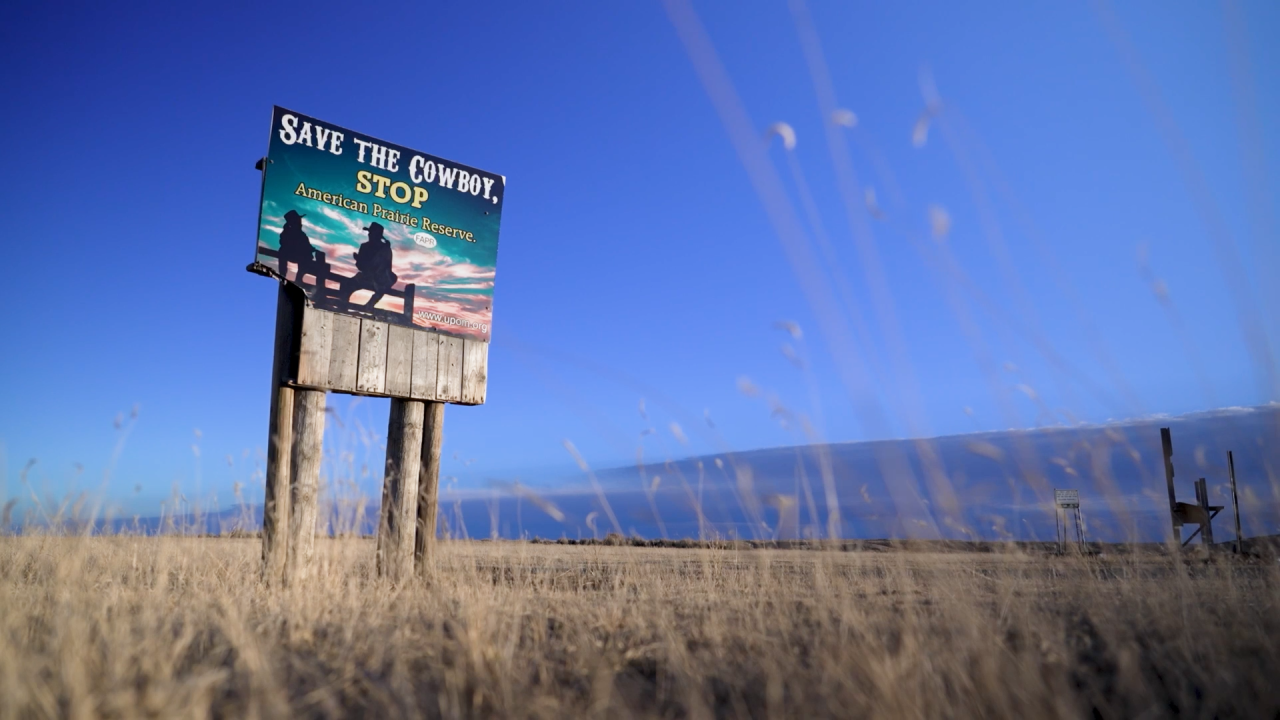
For the Jacobs family, ranching is a way of life they believe is under threat, but they refuse to leave the landscape.
"That means everything to me that I help feed the world. That's my life's purpose," Perri Jacobs said.
"This way of life is is everything for us. We have no desire to do anything else," Perri Jacobs said.
"I mean, if they really want their way, then I have to disappear from the landscape, and so do all of my neighbors. And I don't have any intention of going anywhere," Perri Jacobs said.
