


Billings — After more than two decades of measles being considered eliminated in the United States, that status is gone. And with two recent cases reported in Red Lodge, the return of the highly contagious disease is raising a local question: How well protected is Montana?
To find out why the answer to that question isn't so clear, watch below:
For One Sky Health pediatrician Dr. Kathryn Lysinger, the reversal is troubling.
"It's a sad day for a pediatrician because we're all about prevention," Lysinger said. "Knowing that we have a vaccine-preventable disease that now is spreading endemically is ... a sad day."
Measles poses a particular challenge because of how easily it spreads. Lysinger said vaccination coverage needs to be around 95% to help prevent the virus from spreading through communities.
But Montana appears to be moving in the opposite direction.

University of Montana epidemiologist Sophia Newcomer, who researches vaccines and vaccination rates, said the measles mumps and rubella (MMR) vaccination coverage among Montana 2-year-olds has fallen by about 5.5 percentage points over the past five years.
"We know that in terms of measles, mumps and rubella vaccination rates among two-year-olds ... we have among the lowest rate in the nation," Newcomer said.
Newcomer said the latest CDC data put Montana's MMR vaccination rate among 2-year-olds at 86.5%, compared with a national rate of 91.4%.
But determining how well protected Montana's older children are is more difficult.
Newcomer said schools historically collected immunization information and were required to report that information to the state. That changed following legislation passed in 2021.
"Since 2021, we have had no information on vaccination rates among kids in Montana schools," Newcomer said.
Newcomer said schools still collect immunization information, but without mandatory statewide reporting, public health experts have a harder time identifying communities where vaccination coverage may be particularly low.
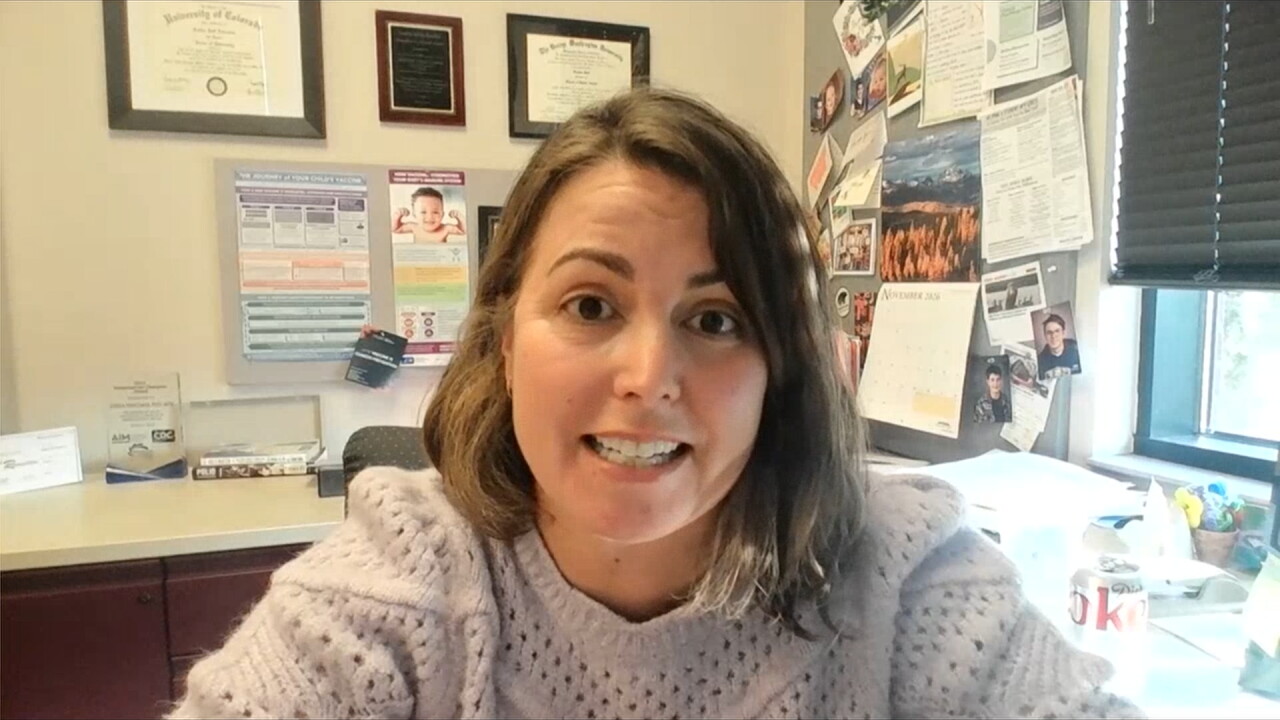
For doctors like Lysinger, that lack of information has practical consequences.
"It does make it difficult for me as a provider to know what our local vaccination rates [are]," Lysinger said. "And it also makes it hard for parents who want to make informed decisions ... knowing what the individual school risk is."
The gaps are especially significant with measles because the virus can spread quickly when it finds people without immunity.
Lysinger said a susceptible person can potentially contract measles simply by entering a room where an infected person had been as long as two hours earlier.
Some Montanans also depend heavily on high vaccination coverage among the people around them.
Newcomer said babies too young to receive the MMR vaccine are one important example. Some people with compromised immune systems may also have less protection against the disease.
"We know that we have babies being born in Montana every day ... but they're too young to be vaccinated against MMR," Newcomer said.
Lysinger said the vast majority of families she works with still vaccinate their children, but pockets of lower vaccination coverage can create opportunities for the virus to spread.
The MMR vaccine has been used for decades and remains highly effective. Newcomer said one dose is about 93% effective against measles, while two doses are about 97% effective.
Despite the return of measles transmission, Newcomer said there is still reason for optimism.
"As a mom and as an epidemiologist, I'm certainly concerned about the spread of measles," Newcomer said. "But I'm also hopeful because I know that we have a really effective and safe vaccine."
For people who believe they may have been exposed to measles, Lysinger recommends calling a healthcare provider before arriving at a clinic or hospital, allowing providers to take infection-control precautions and protect other patients.
