


PARK COUNTY, WYO. — The Heart Mountain Wyoming Foundation hosted its first educator workshop through the National Park Service’s Japanese American Confinement Sites Education Program, bringing teachers, scholars, and site leaders together to deepen understanding of the incarceration of Japanese Americans during World War II.
Watch the story below:
More than 14,000 Japanese Americans were imprisoned at the Heart Mountain War Relocation Center, located between Cody and Powell, from 1942 to 1945 during World War II. Now, educators are working to make sure that history is no longer forgotten.
For Shirley Ann Higuchi, chair of the foundation and a lawyer from Washington, D.C., that history is deeply personal. Higuchi said she did not learn about her family’s connection to Heart Mountain until her mother revealed it on her deathbed, after years of silence.

“On her deathbed, she said she wanted her memorial money to go to Heart Mountain, and that was the first we heard of it,” said Higuchi. "We later found out that she was secretly sending money back to Heart Mountain to dream of something being built here.”
Her parents met while incarcerated at the camp and later married after reuniting at the University of California, Berkeley.
"I wouldn't be standing here because my parents would have never met each other unless they had their rights and liberties taken away from them,” said Higuchi.

Their time at Heart Mountain was an experience, Higuchi said, that shaped generations of families who rarely spoke about what happened.
“I think the incarceration itself was incredibly traumatic, and the only way they could move forward is to put the whole history behind them,” she said.
That silence extended beyond families and into classrooms, she said, where the history was often omitted entirely.
“With the Japanese American story, it's been hard to tell this because part of the government's plan was to suppress the information, and to be quite frank, it worked very well,” said Higuchi. "Where this is one of the worst constitutional violations ever, it wasn't even taught in law school."

The foundation has made significant progress in educating the public about what happened at the site, and Saturday's workshop at the Heart Mountain Interpretive Center aimed to continue this effort.
Funded in part by a $750,000 federal grant matched by the foundation, the three-year initiative will expand education efforts nationwide. Plans include training K-12 teachers, hosting seminars for graduate students, and launching a digital platform to share stories and research.
The event also brought together representatives from other former incarceration sites across the region, including locations in Colorado, Idaho, Montana, and Utah, to collaborate on how to tell the story more effectively.
University of North Carolina at Chapel Hill law professor Eric Muller was one of the participants. He has studied Japanese American incarceration at the site for decades, and said the history remains widely misunderstood.

“This is one of the major historical injustices in this country's history, and I don't think that it is well understood enough,” said Muller. "It's not focused on sufficiently, I think, in educational curricula."
For educators like brothers Allen and Jason Doty, both Wyoming social studies teachers, the workshop offered a rare opportunity to engage directly with a local historical site.
Allen Doty, who teaches in Meeteetse, said textbooks often present a limited view of the topic.
"I'm a big advocate of place-based education. This is a great local example of me being 60 miles away,” said Allen Doty. "This was more for me to get a better understanding from it from a more multi-person perspective so that when I'm presenting it to students, I'm able to use primary sources and secondary sources that are effective. Basically for me, this is a good refresh for best practices of a local resource.”
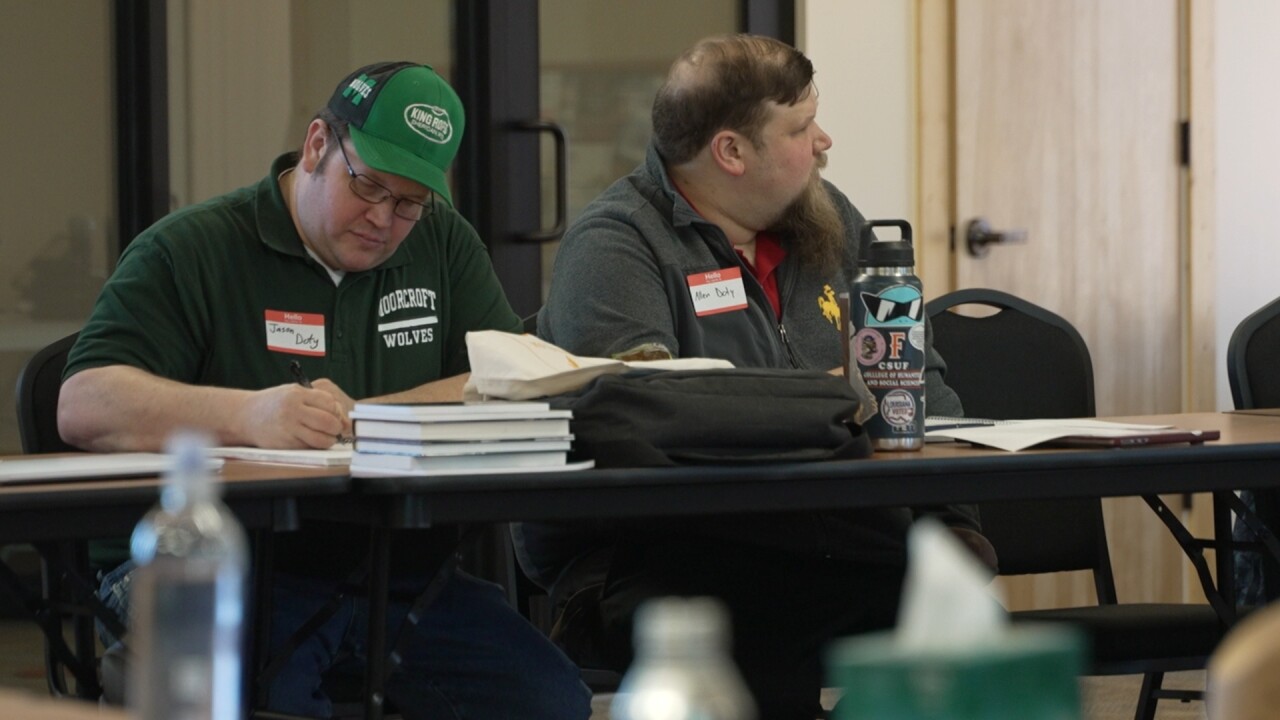
For Jason Doty, a teacher from Moorcroft, it's a place that has had a profound impact on his life growing up in the Powell area. He said the proximity of Heart Mountain makes the history especially powerful for students, even though it is several hours away.
"For us as teachers in our discipline in social studies, we can go, 'Here's what happens when things break down, and people make decisions during wartime without giving people consideration of their rights and protecting their constitutional rights specifically,'" said Jason Doty. "This happened here ... There were 10,000 people plus that were interned here against their will. They weren't convicted of anything. They were just forced into that situation."
Both educators said the workshop provided tools to help students connect with the human stories behind the history, which is something they believe is essential to teaching it effectively.
“Kids connect on a personal level with this kind of stuff, and you can provide them, like, hey, actual people experience this. Here's their story," said Jason Doty. “There's always more to learn. There's always more personal stories."
That personal connection drives Muller's work as well. As a professor, he has brought law students from across the country to the site, believing that standing on the ground where history unfolded creates an understanding no classroom can replicate.
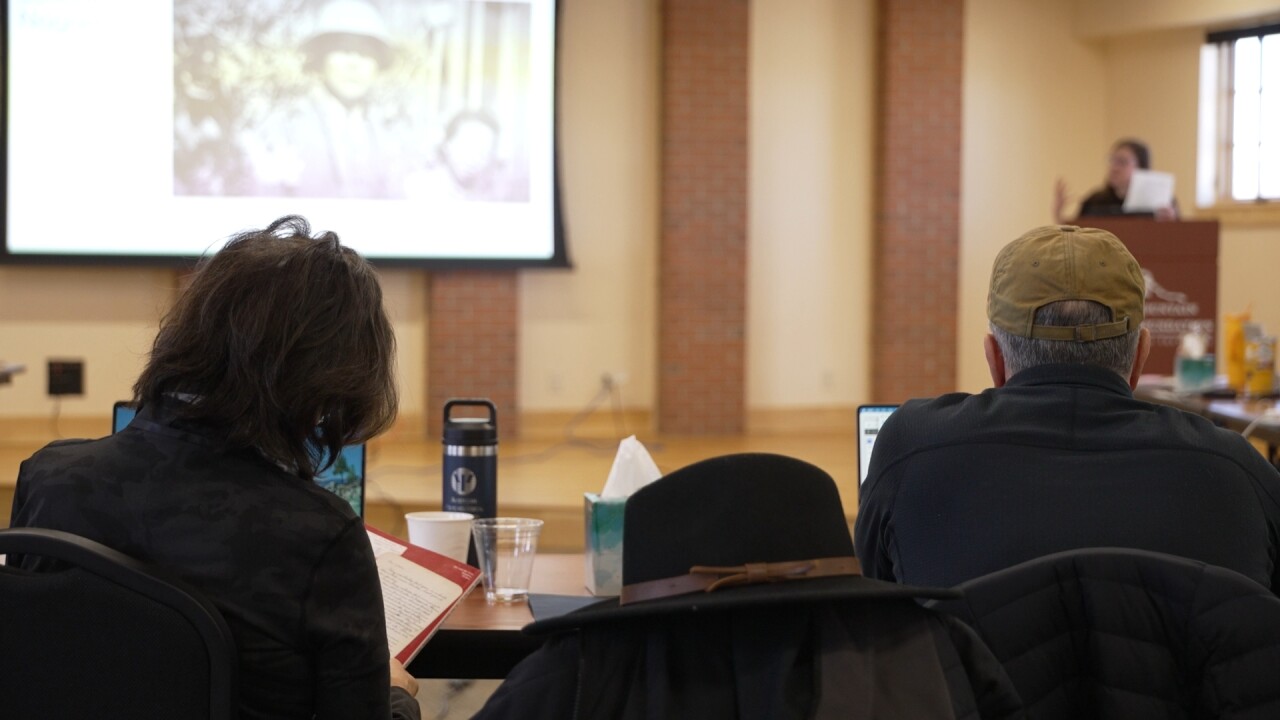
"The students, when they come here, they recognize the enormity of what happened to Japanese Americans. They can feel that Wyoming wind blowing on their own faces that would have blown through the barracks that Japanese Americans lived in," said Muller. “There is a depth of feeling and thought that happens at this place that just can't be replicated in a classroom anywhere else.”
Organizers said that impact is exactly the point. By equipping teachers with knowledge and resources, the foundation hopes to reach thousands of students and ensure the lessons of Heart Mountain endure.
“This seems like it was long ago and far away, but it really wasn't that long ago, and it certainly wasn't far away. It was right here," said Muller. "I think that this history reminds us of the speed with which society can transform and the speed with which things, government programs, and policies that would have been unthinkable can become thinkable and actually can come to life in ways that ultimately society will come to regret.”
For Higuchi, preserving this painful chapter of American history is not just a mission, but a responsibility she carries forward with resilience, determined to ensure future generations never forget.
“As an independent museum, we are able to tell the truth, tell the history accurately, and to have objectivity," said Higuchi. "We want to have a global impact on what happened here because of the significance that this experience has for this country in terms of not doing something like this again.”
