


ROUNDUP— Residents here are outraged with the owner of the only gas station in town after gas prices soared to $4.59 this week, nearly 40 cents above the statewide average.
Roundup has one functioning gas station, Phillips 66 at 701 First Ave. W., after the town's other station, Conoco at 806 Main St., closed for renovations two weeks ago.
Watch the report:
“That's not a way to conduct business in a small town, where the community gets together, and they help each other,” Roundup resident Dee Dimmick said in an interview outside the station.
More than 100 comments on a Roundup Facebook page highlighted frustration within the community.
“I am already boycotting them as much as I can. They are ridiculous!” said one commenter.
“If it is simply price gouging—especially taking advantage of the fact that the other gas station is currently out of commission—then yeah, that’s 100% wrong,” said another.

According to Dimmick, her neighbors are looking for gas elsewhere.
“People would rather go to Billings or to Grass Range to fill up their tanks now,” she said.
Billings is a 53-minute drive away and Grass Range is a 40-minute drive away. Gas in Billings was selling at some stations for around $4.29 as of Friday, with an average of $4.13, according to AAA.
“A lot of them are on fixed incomes. They can't afford to put $200 into a truck. They can't afford to put $100 into a car,” added Dimmick.
According to AAA, Musselshell County is now the third most expensive county for gas in the state, trailing behind Petroleum County and Powder River County.
MTN spoke with the owner of the Roundup gas station Friday afternoon, who said the price hikes are necessary.
“I'm not a price-gouging guy. I believe in honesty. And I love my local people,” owner Lucky Singh said in a video call.
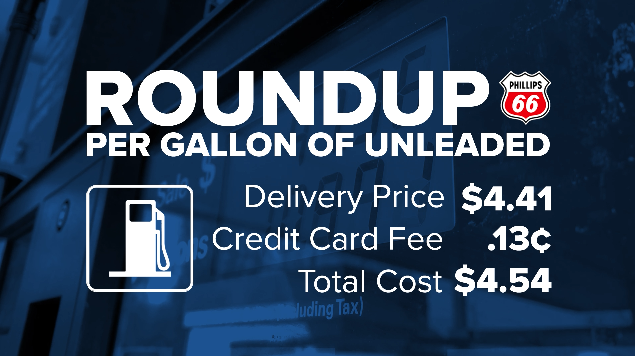
Singh said each gallon of gas comes with a $4.41 delivery fee and a 13-cent credit card fee, totaling $4.54 for every gallon he buys. Charging a $4.59 rate leaves him with a five-cent profit per gallon.
“We go according to cost,” said Singh.
Roundup residents still worry about how they will pay for gas in the summer months.
“We don't make a lot of money here. A lot of us don't,” said Dimmick. “The ranchers, the farmers, they need the diesel. They need the red-dyed diesel for their equipment.”
