

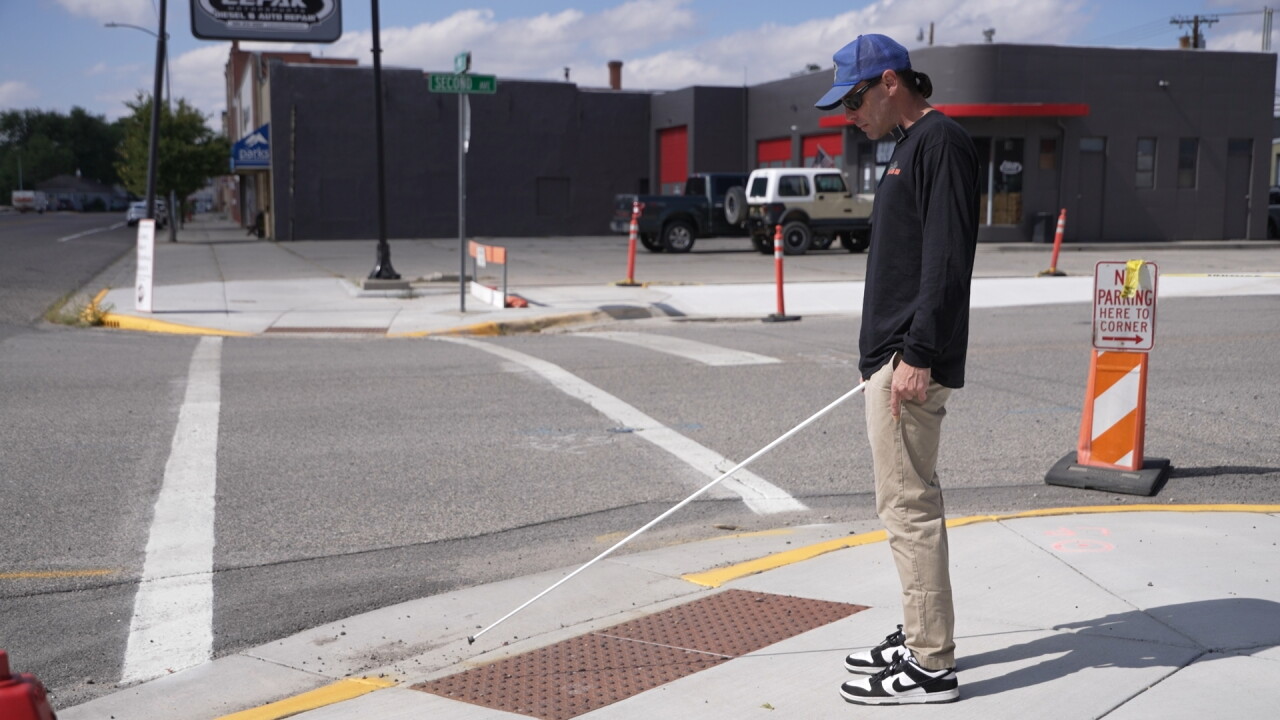


LAUREL — Michael Mooney walks the streets of Laurel nearly every day, using his cane, the sounds of traffic, and subtle changes in his surroundings to find his way.
It is a skill he has spent more than two decades developing. Mooney lost his vision at age 20 after a car crash. Now 42, he has made independence a priority, and helping other blind people achieve it has become part of his work.
Watch the full story below:
“I’m just an advocate for the blind, really,” Mooney said.
That advocacy recently brought him to Laurel’s sidewalks, where he found a problem he says could create a serious hazard for blind pedestrians.
At intersections, Mooney relies in part on raised metal plates known as truncated domes. The textured surfaces mark transitions between sidewalks and streets. For people with vision loss, Mooney said, they can also provide a tactile reference point to help determine which direction to travel when crossing.
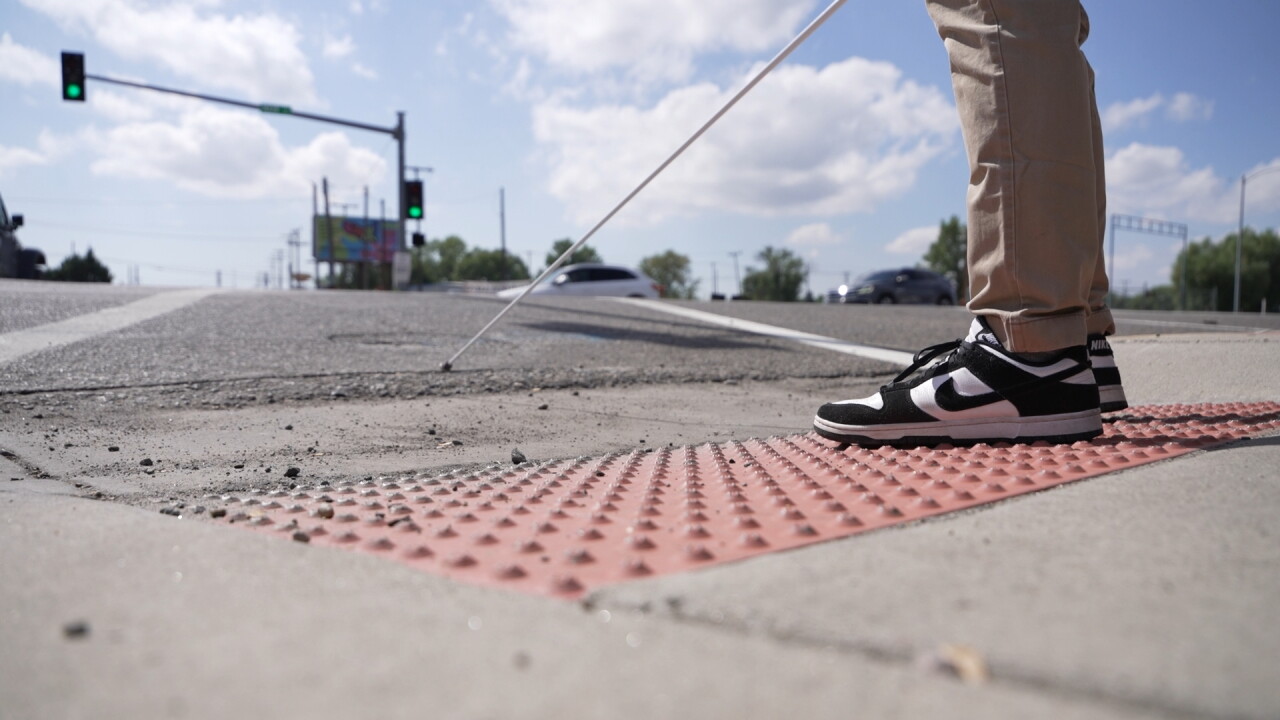
“You hear them when you hit it with your cane, but then you can feel with your feet to be oriented on which way to cross the street, if you don't have traffic or know this intersection," Mooney said. "I use those a lot.”
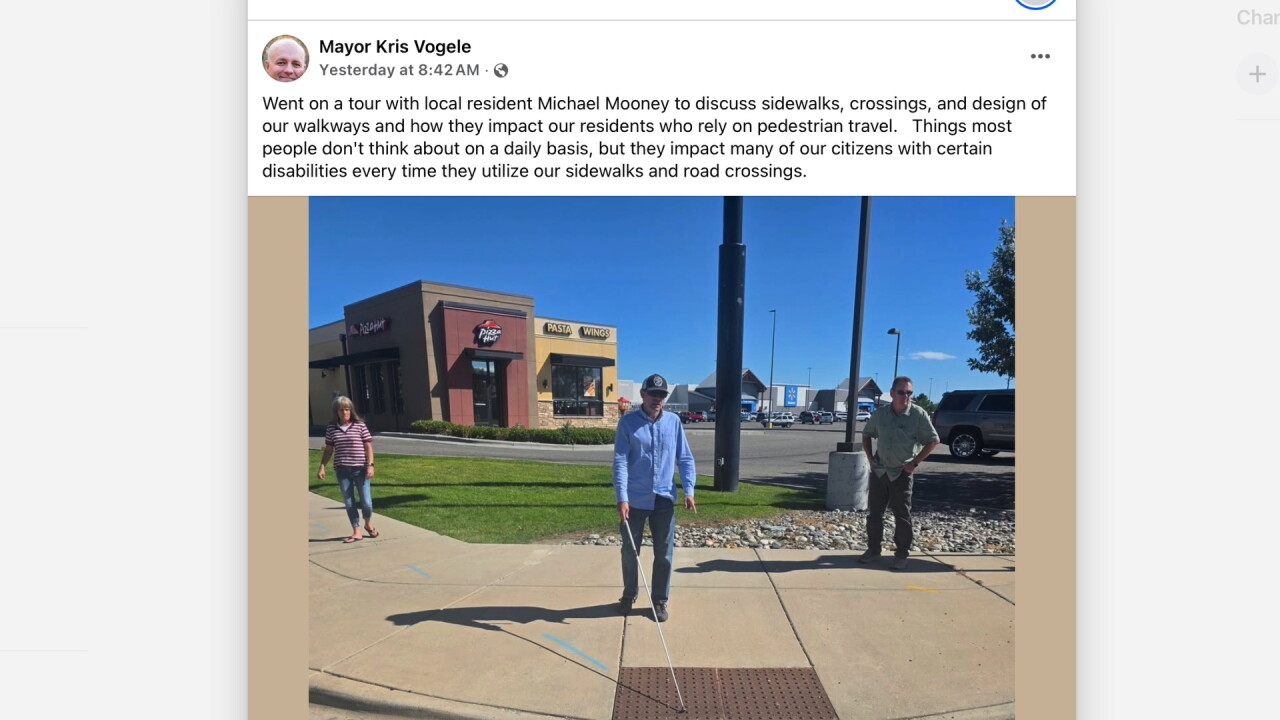
But Mooney, who has lived in Laurel for 14 years, noticed some of the plates in town were not aligned correctly. During a walk with MTN News Sunday, he stopped at one intersection and demonstrated the problem.
“These are not pointed right,” he said. “That’s sending me 45 degrees into the intersection."
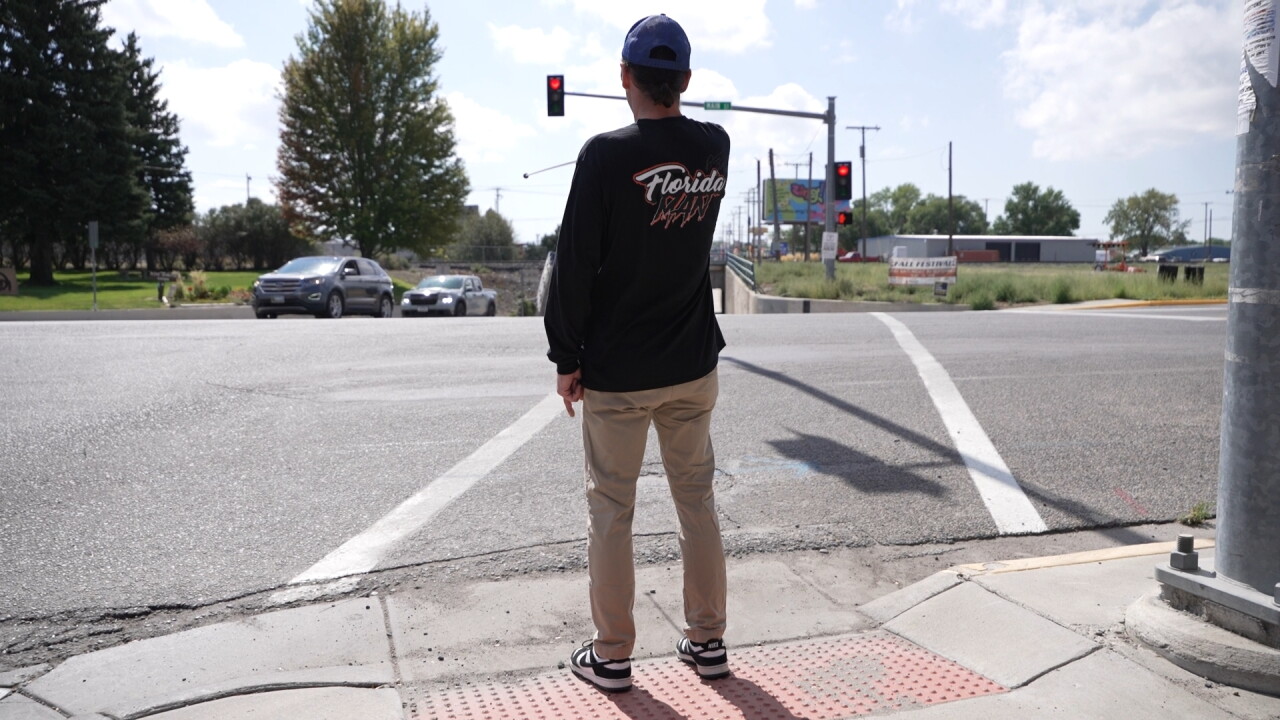
Instead of helping guide a pedestrian across the street, an improperly aligned crossing could direct someone toward traffic. For someone who cannot see approaching vehicles, Mooney said, that difference matters.
“Some of them are placed perfect,” he said. “And then others are 100% wrong. It sends you right into traffic instead of on a sidewalk path.”
The timing of his discovery in Laurel allowed him to act. The city is beginning a series of sidewalk projects, including work near City Hall. After noticing the alignment issues, Mooney brought his concerns to a Laurel town hall meeting.
City officials then met with him to look at the crossings firsthand.
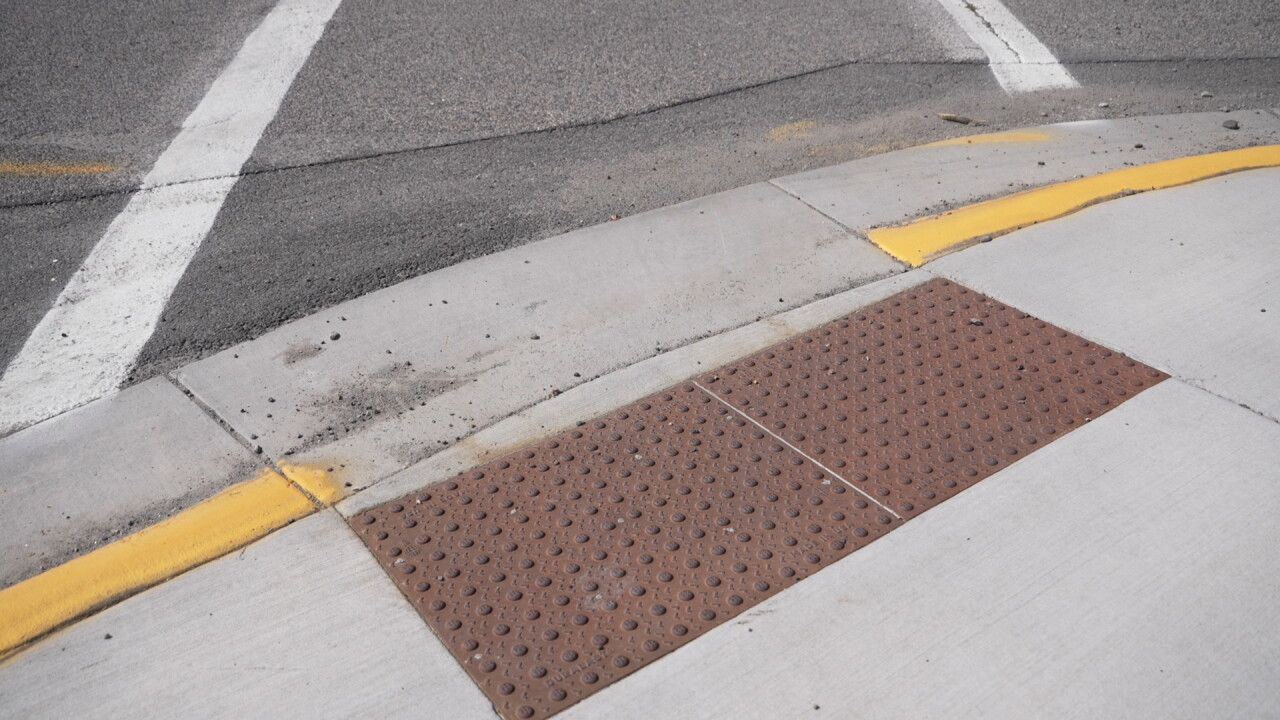
“They didn’t know about it,” Mooney said. “We found out that the state and many people have been placing them wrong, and correctly and incorrectly, for years."
Mooney said city officials looked at applicable guidelines and agreed to account for the proper orientation of the plates in upcoming projects. He said the city also plans to address the issue at crossings that have not yet been poured.
“I caught them just in time so that they don’t place these grates wrong going forward,” Mooney said. "They're going to place them properly for blind pedestrians."
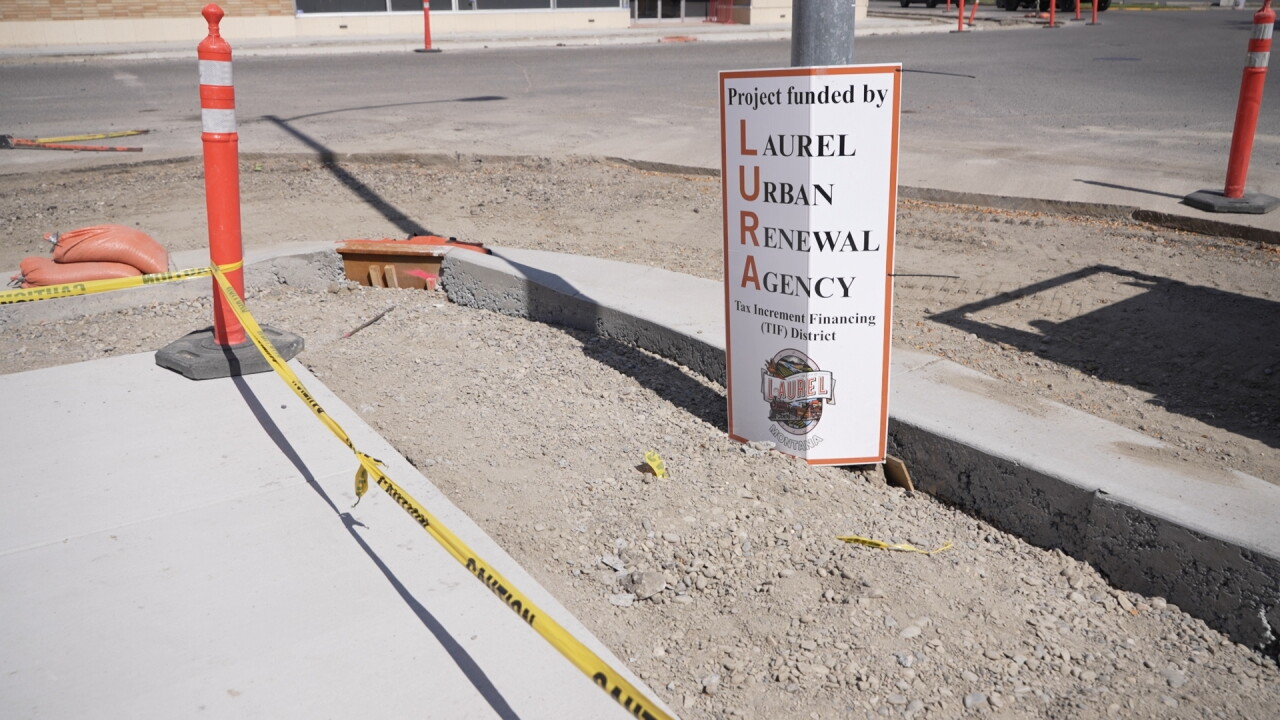
He said several more sidewalk projects are planned, allowing the city to make the changes before the concrete is finished.
“I just don’t want no blind guy or gal getting around over, especially in my town or my state, if I can help it,” he said.
Mooney’s ability to identify the problem comes from years of learning how to navigate the world without vision. After his crash in 2004, he spent about two months in the hospital. He underwent extensive facial reconstruction and ultimately lost his vision because of damage to his optic nerve.
Today, he has some light perception and peripheral vision, but largely relies on his other senses.
“When you walk past an alley, you don’t notice the wind maybe blowing or the angle of the sun on your face when you’re crossing the street,” he said. “Or these little noises that a sighted person may not notice necessarily.”
He eventually attended the Colorado Center for the Blind, where he learned skills including orientation and mobility.
While he lost his sight, he did not lose his determination. He began learning how to use a cane gave him, which gave him a new level of independence.
“It was definitely scary,” Mooney said. “But I wanted to get out and learn. I didn’t have the skills yet.”
He said the training taught him to pay attention to information that sighted people may take for granted.
"Constructive discovery," Mooney said. “I may not know where I’m at or where I’m going, but I know how to navigate whatever obstacle I come across."
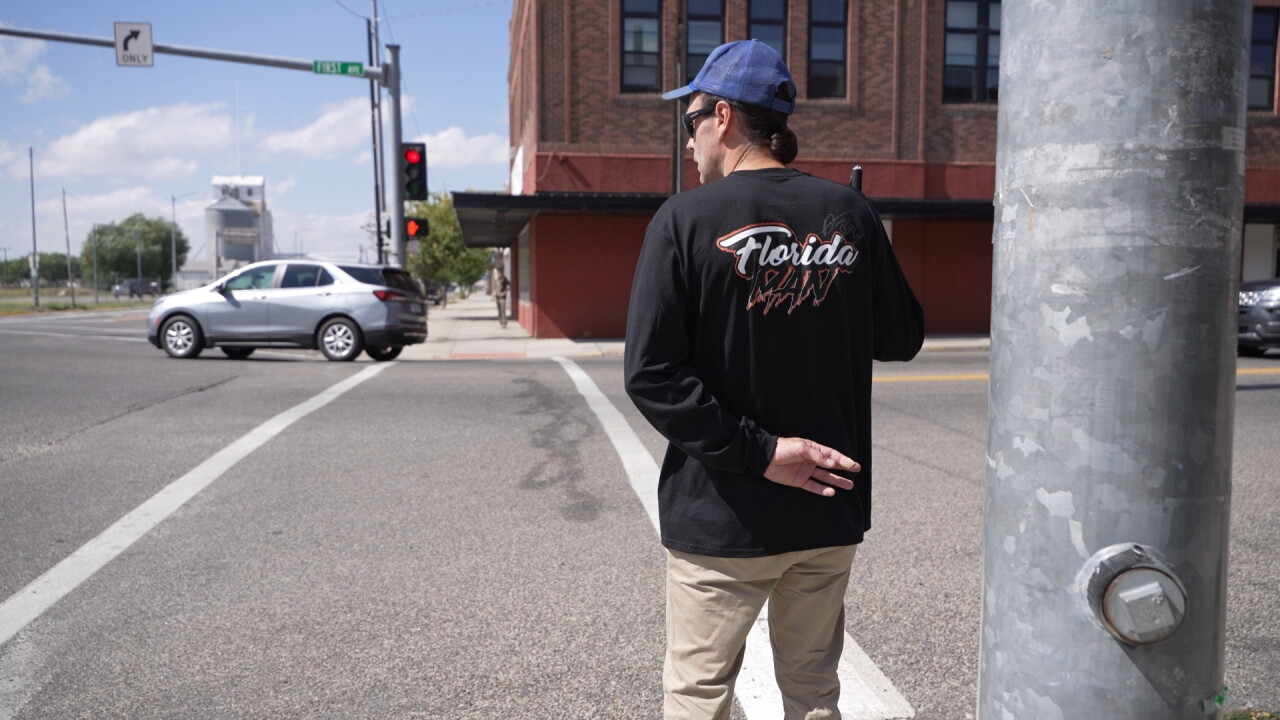
Mooney's advocacy work does not stop at the sidewalk. He previously served with the Billings chapter of the Montana Association for the Blind, but transportation and evening meetings made it difficult to stay involved.
In 2026, he helped establish a Laurel chapter of the organization and now serves as its president. The Montana Association for the Blind has chapters across the state, with the Laurel chapter becoming one of about nine local chapters, according to Mooney.
For him, the organization provides a place for people with vision loss to connect, share information, and learn skills that can help them live independently.
“Every community needs an organization where people can hang out, share information,” Mooney said. "It's worth it, because if they don't have any social connections, some people don't ... especially when you get to deal with a disability, people go on their own way sometimes."
He has already seen what that connection can mean. One of the chapter’s newer members is an 82-year-old woman who lost much of her vision in recent years. Mooney said she recently rode the Laurel bus by herself for the first time.
“She felt it was so empowering to go shopping by herself for the first time since she’s had her eye condition,” he said.
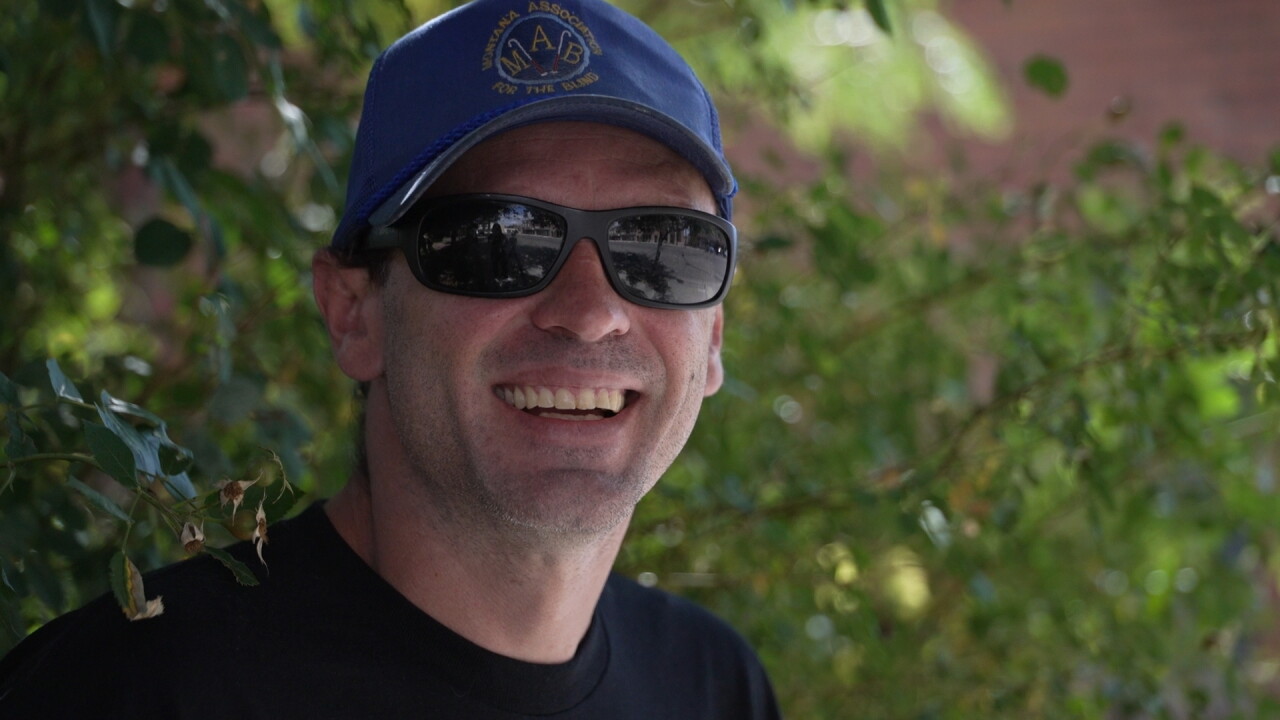
The organization also helps members access technology and other equipment through interest-free loan programs. Its summer orientation program teaches blind and visually impaired people skills for independent living, including mobility and cooking.
For Mooney, the sidewalk issue is part of a larger conversation about what accessibility really means. He wants people to understand that blindness does not mean someone cannot travel independently, work, manage daily responsibilities, or participate in the community.
"I was the first blind guy I ever met," said Mooney. "And now when people meet me, and they're like, oh, wow, or see me walking, some people may think I'm not blind, but I am.”
He said his own experience has shaped the way he approaches advocacy.
“Don’t get me wrong. I get down at times,” he said. “But you got to stay positive.”
For Mooney, that means continuing to walk, continuing to speak up, and continuing to point out problems that others may never notice.
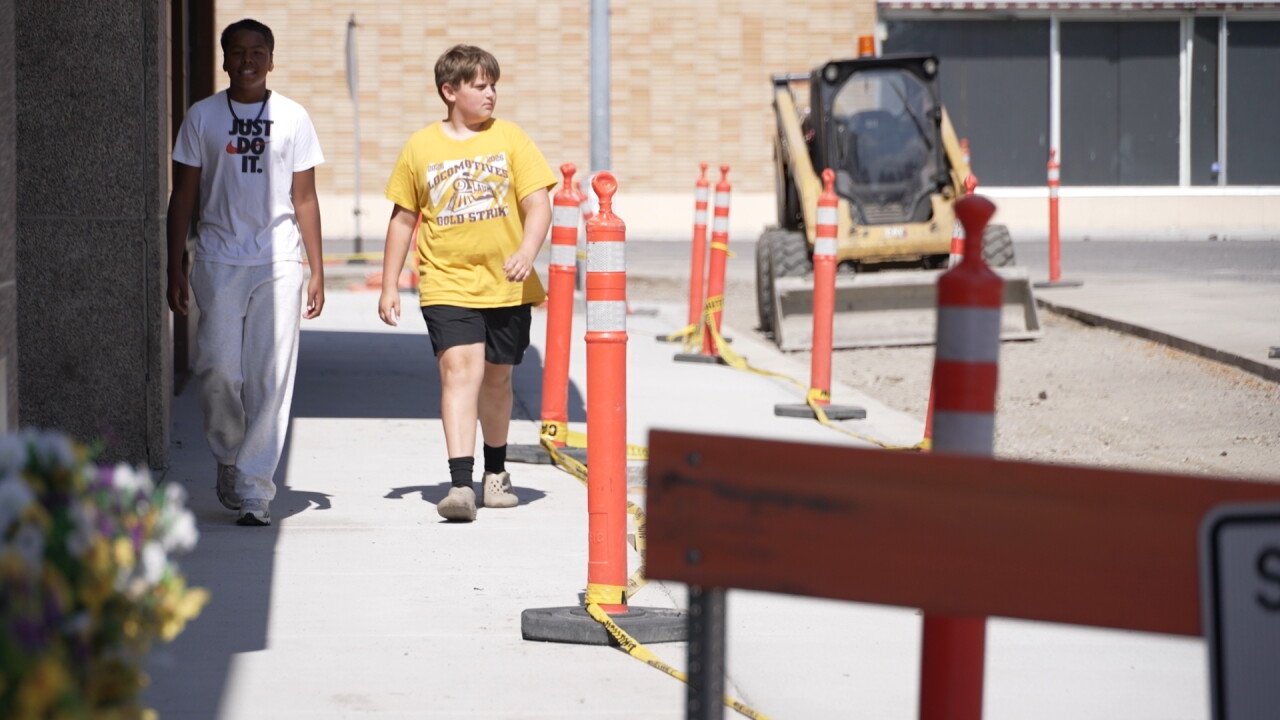
When a sidewalk is built correctly, most people may never think twice about it. For the people who depend on it, Mooney said, it can make all the difference.
“It makes me who I am,” he said. “And I’m thankful.”
