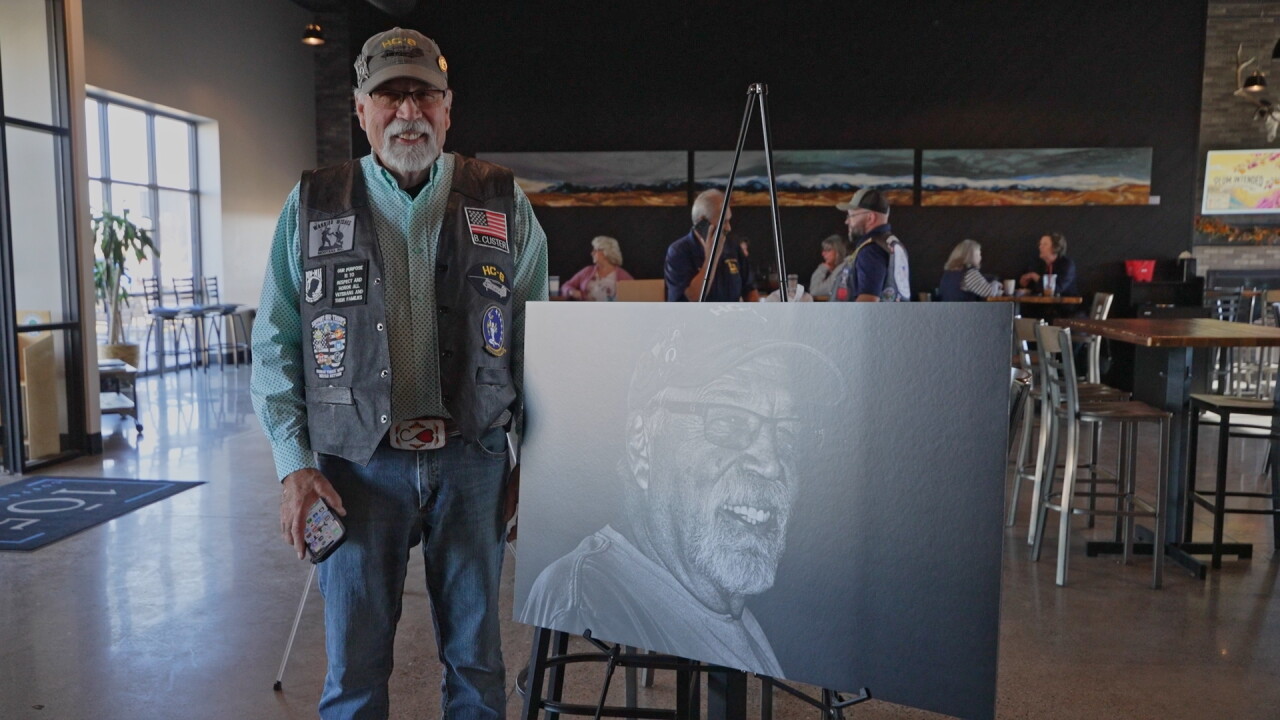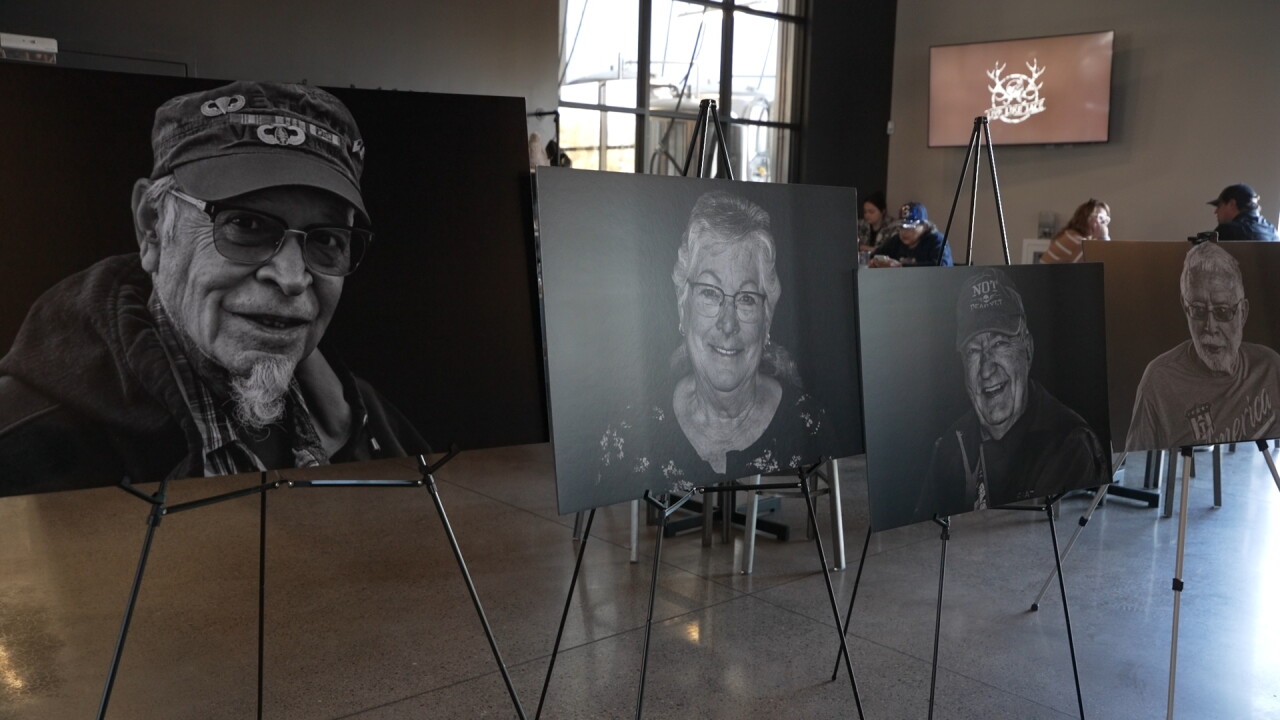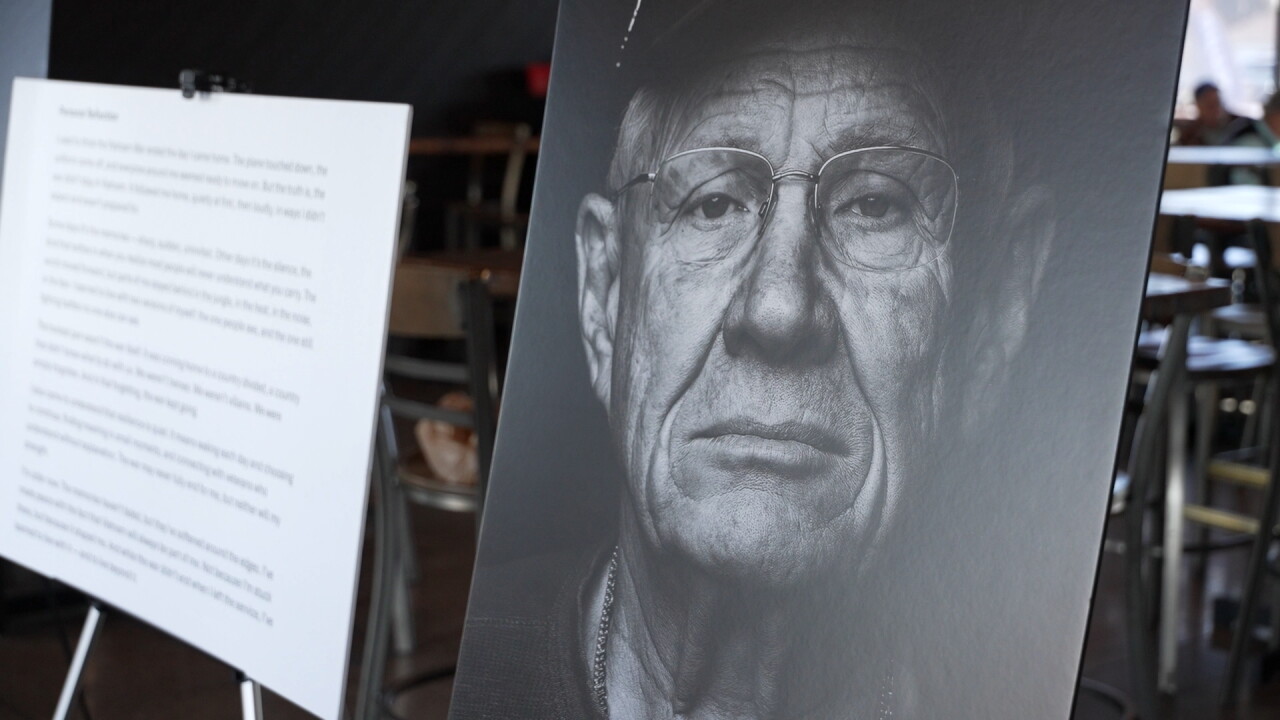


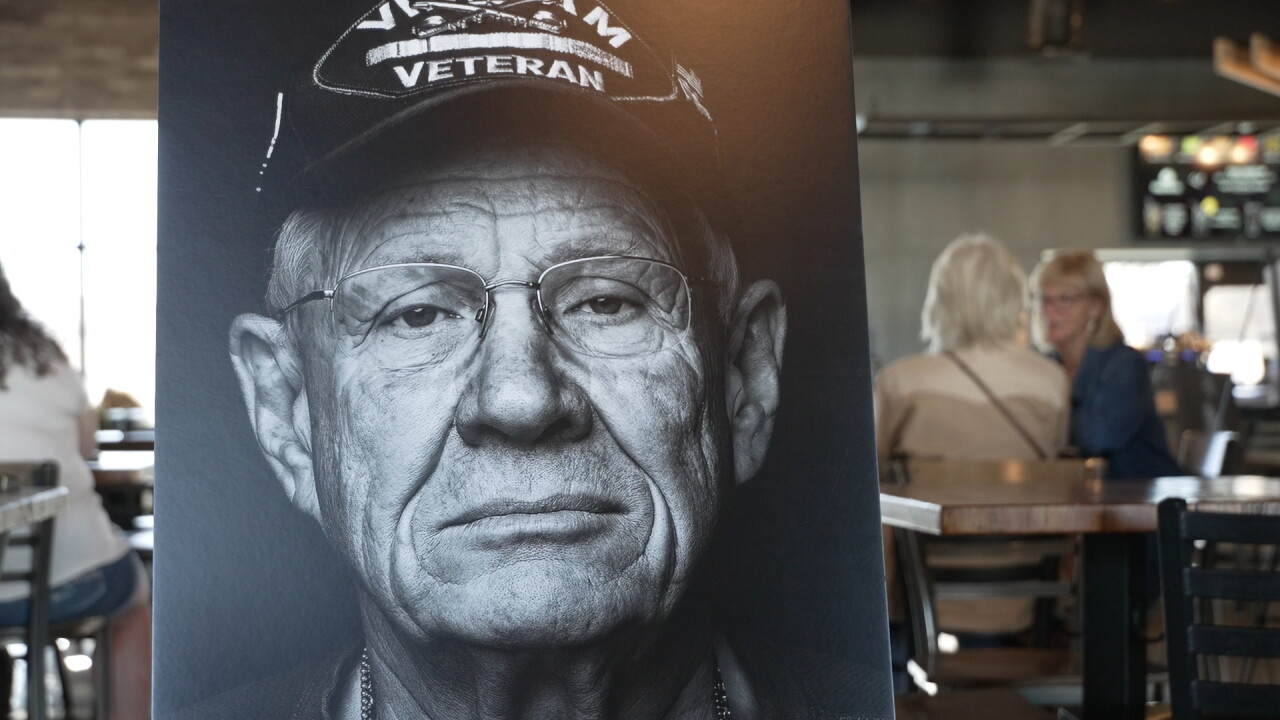
BILLINGS — A Billings Vietnam veteran honored 16 of his fellow veterans this Veterans Day with a series of black-and-white portraits celebrating their service, friendship, and the stories they still carry.
Listen to their stories below:
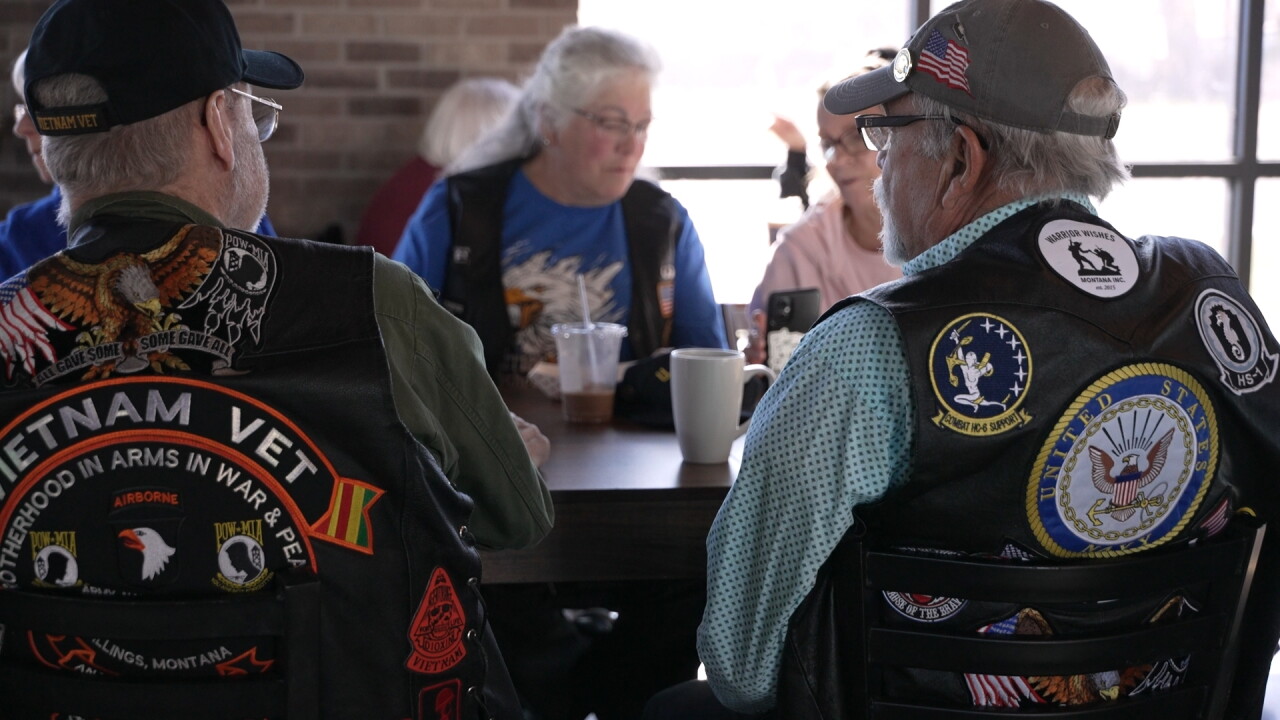
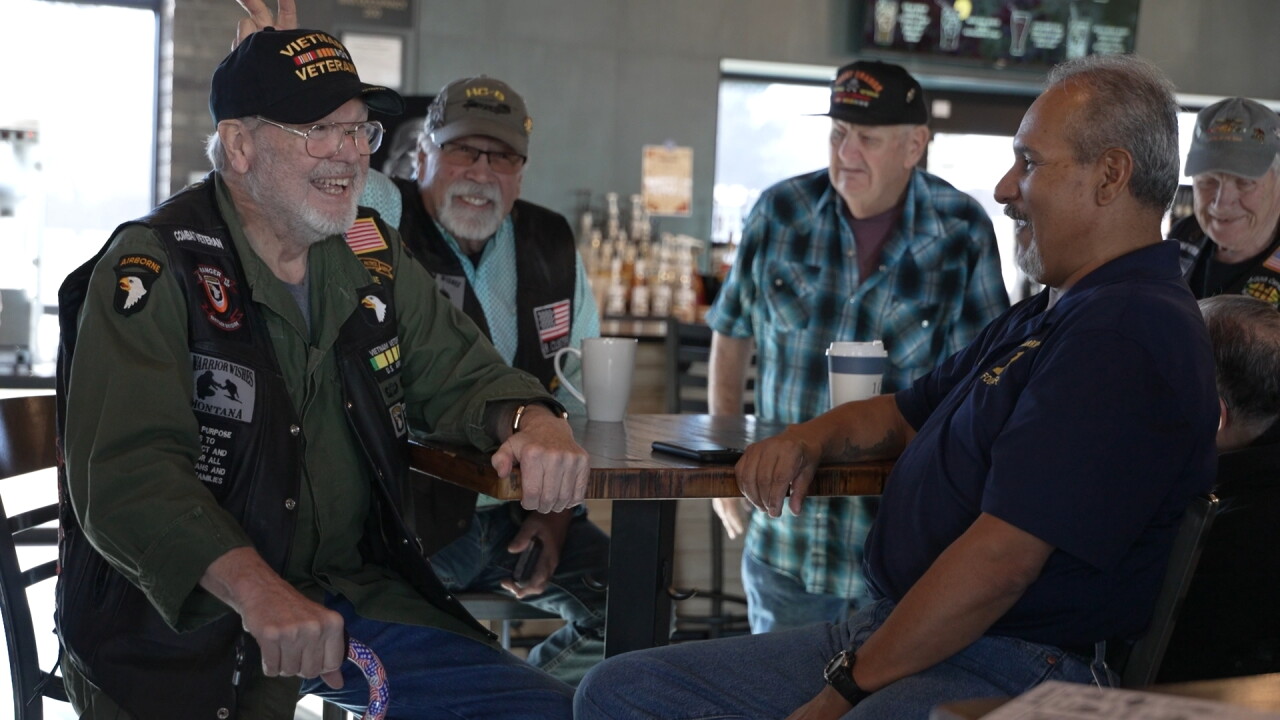
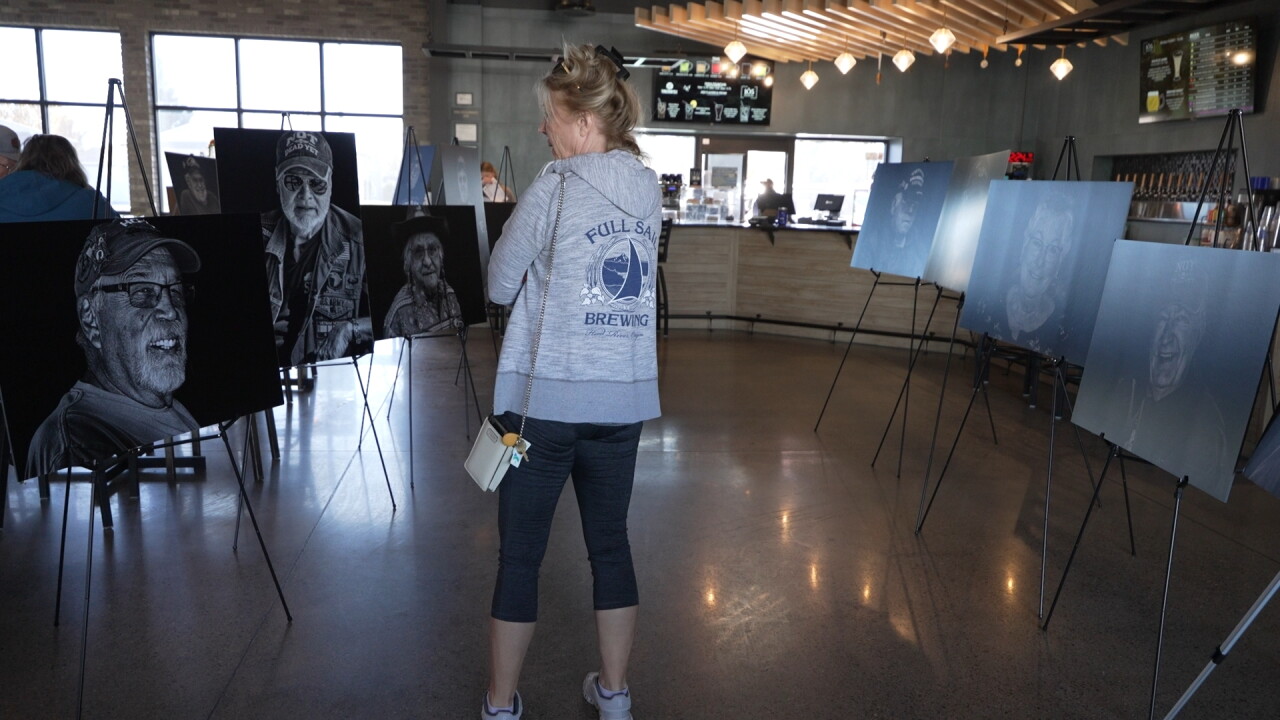
The portraits, displayed at 105 Coffee and Brewing in the Billings Heights, featured fellow veterans who gather there every Tuesday for coffee and conversation.
For Pete Herzog, the photographs are more than a Veterans Day display. They're a way to give back to the people who have helped him through the years and make sure their stories aren't forgotten.
"I do know that 69% of Vietnam veterans are deceased," he said. "The people you see here are part of the 31% that are still kicking.”
Herzog, who served in the Army and deployed to Vietnam in 1967, said the group has become a support system built on shared experiences and the understanding that comes from having served.
"We talk, we exchange stories and stuff, how we're doing. We support each other," Herzog said. "It's just all part of the healing."
For many, the weekly meetings have become an important part of their lives.
"These guys are great. You don't have to explain anything to them. They know," said Connie Hatley, a Navy veteran who is part of the group.
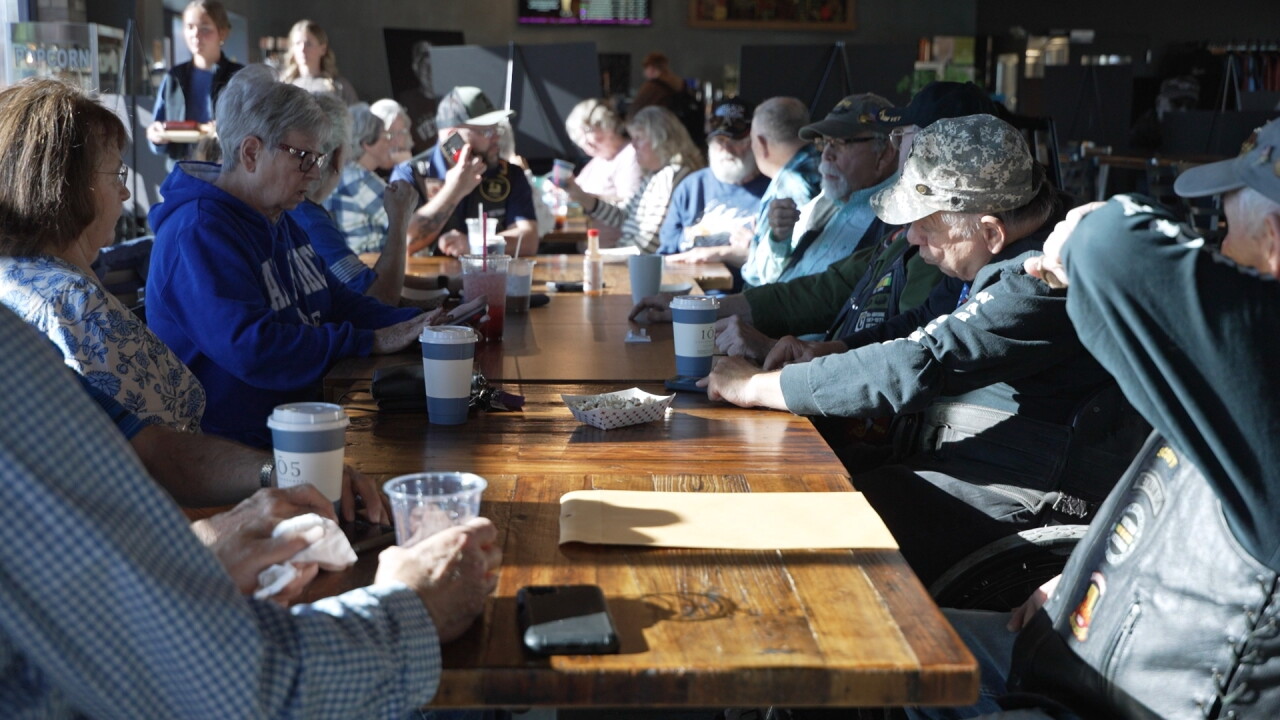
The group began around 2011 through a VA program and grew with support from Miguel Gonzalez, founder of Warrior Wishes Montana, a volunteer-run organization that provides assistance and support to veterans and their families.
For Bob Crandall, who served a tour and a half in Vietnam with Special Forces, the group provides a connection that is difficult to find elsewhere.
"You should ask my wife. She'll tell you that it's my support," Crandall said. "To be able to have something in common with a group of guys and gals too, it's huge.”
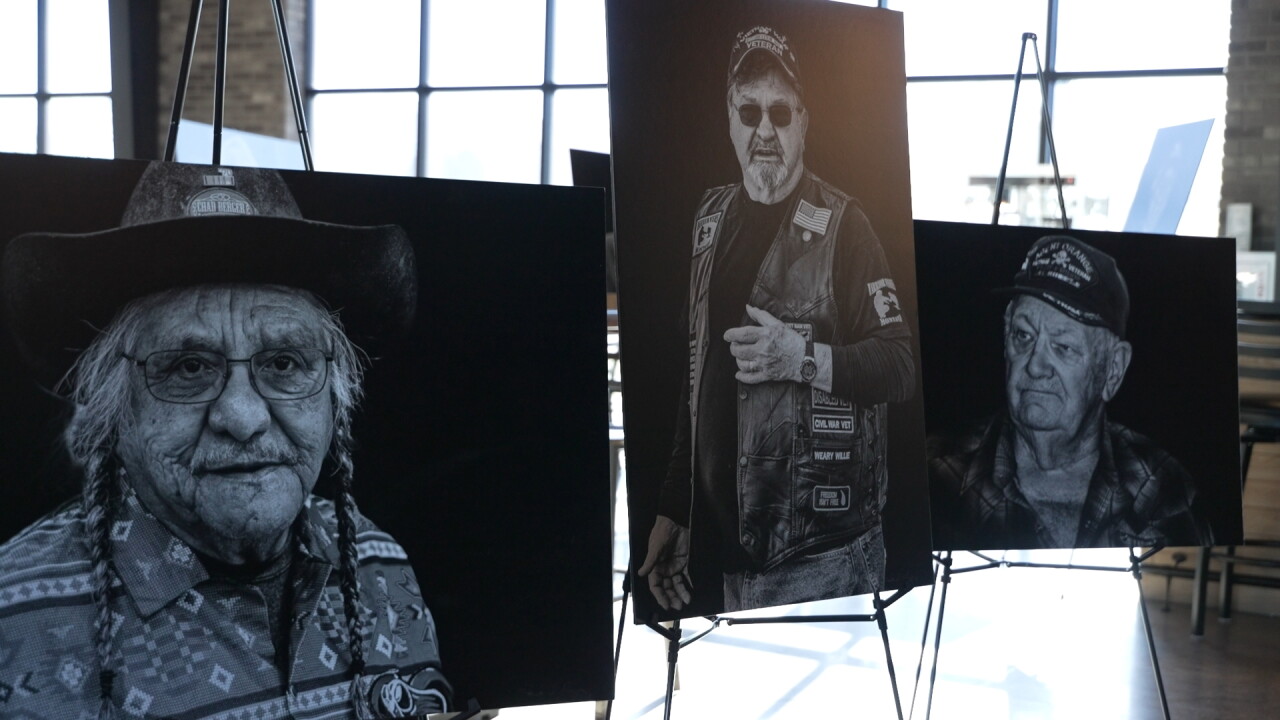
Herzog wanted to find a way to recognize that connection. Drawing on his passion for photography, he created 16 large black-and-white portraits of the veterans, using dark backgrounds to keep the focus on each person.
He said the idea came to him one night when he couldn't sleep.
"I just figured, I'm not gonna be around forever, and I wanted to do something to pay back these guys," Herzog said. "I'm a veteran, but I wanted this to be something for them.”
The portraits were unveiled on Veterans Day, giving many of the veterans their first look at the photographs displayed throughout the coffee shop. Herzog said he wanted the images to show who the veterans are today, decades after they left for war as young adults.
"This is who they are now. They were 19, 20, 21-year-old kids when they went over there. And this is the result of their life," he said.
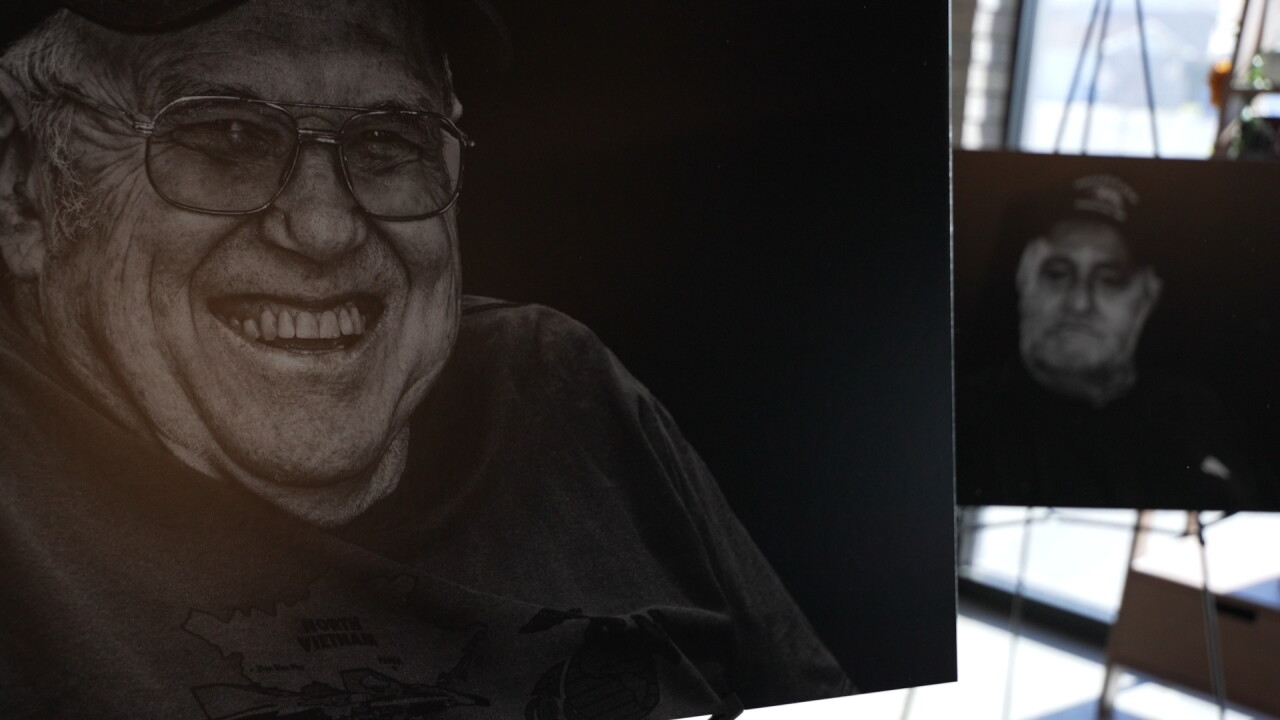
For some, like Crandall, seeing the portraits was a welcome surprise.
“That brought me up short. I had heard that there was going to be a picture of me ... and I didn't expect it to be right in the door," he said. “He's touched a cord that we've all carried since we came back.”
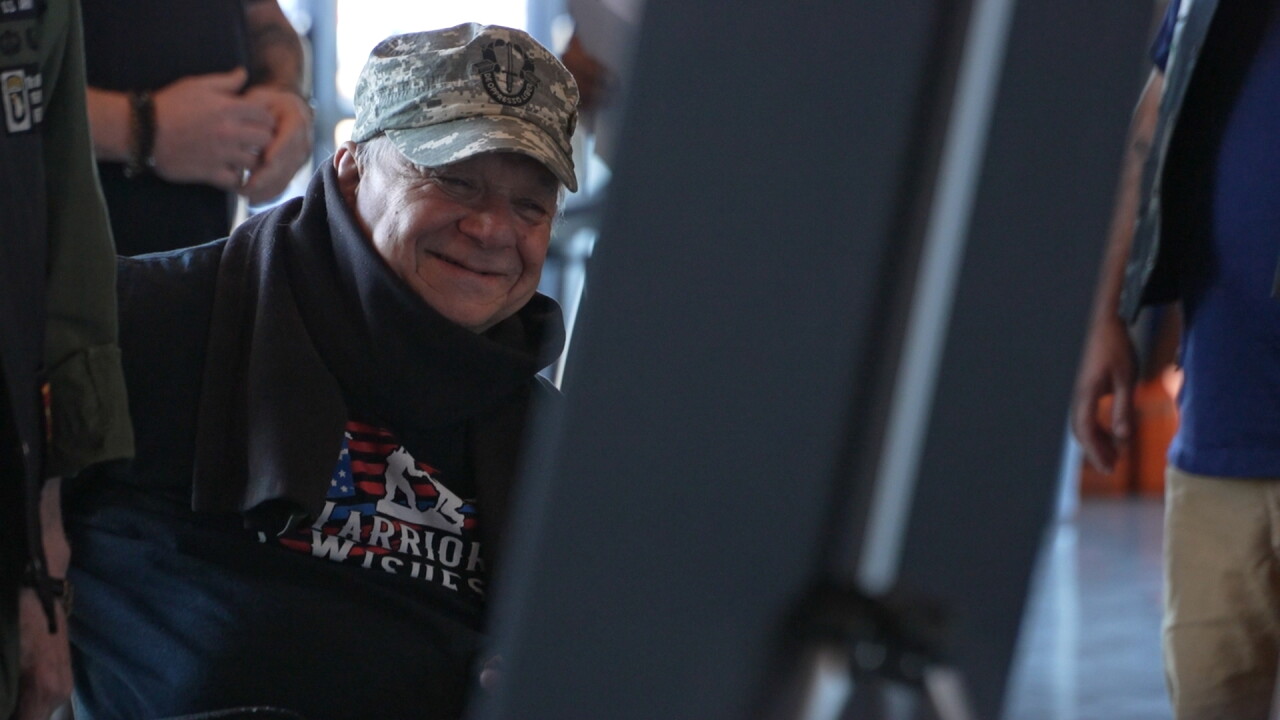
“I think this is absolutely amazing Pete did all this himself," added Hatley. “It's really an honor to be on his wall.”
For Hatley, seeing her portrait among the others was an emotional recognition of a chapter in her life that wasn't always acknowledged.
She served in the Navy as an air traffic controller and became the first woman in the service to qualify for carrier operations, despite women not being allowed to serve aboard aircraft carriers at the time.
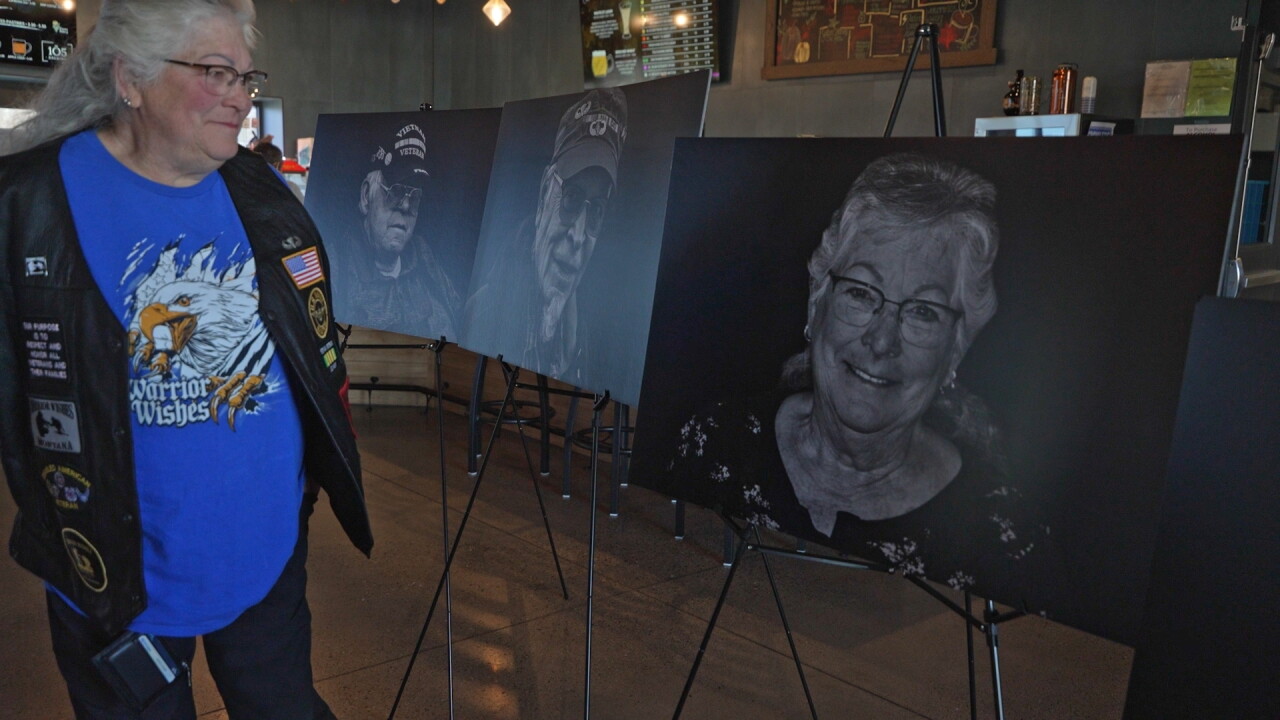
"I come from a military family, and so the whole military life wasn't different to me," she said. "It was an adventure for me. I enjoyed it."
Her military experience was not always met with respect. Hatley said she faced prejudice as a woman in uniform, including when she returned home from service.
"The experience coming home was being spit on and called filthy names because I was a female," she said.
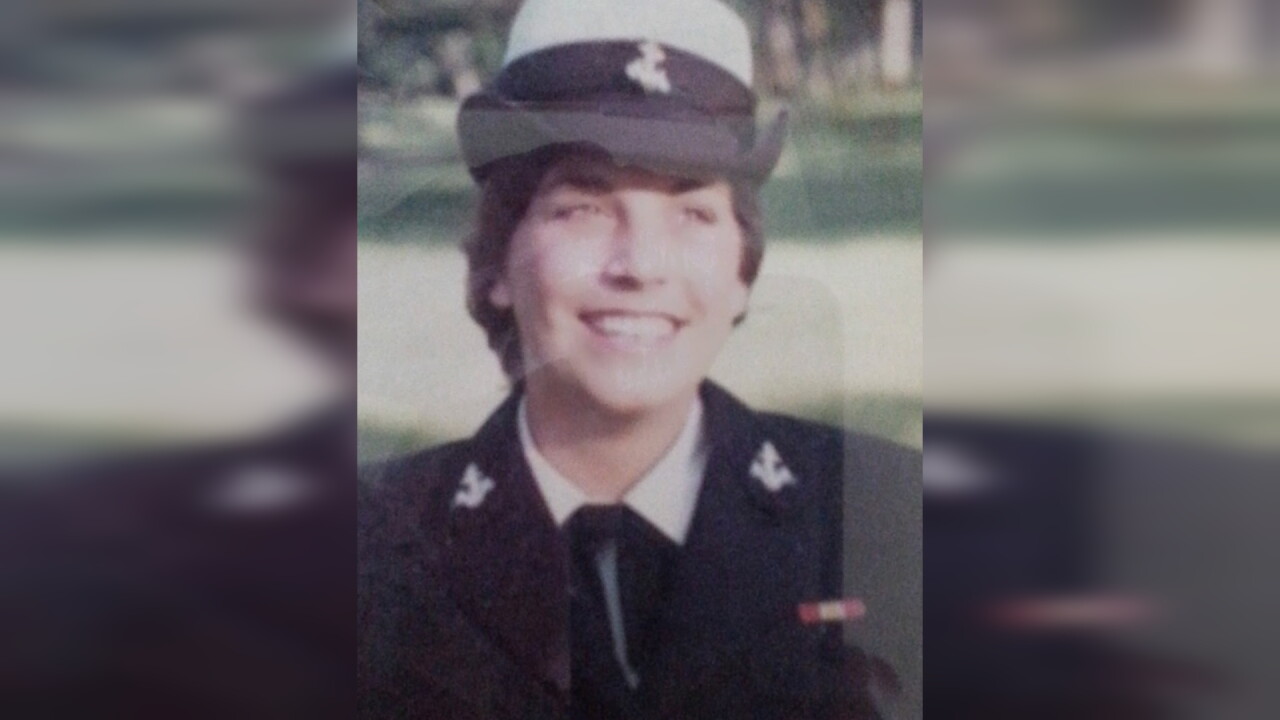
Hatley said her perspective on war has changed over the years. Although she initially believed in the purpose of her service, she now sees war as deeply political. Still, she said she is glad she served and considers it part of who she is.
Herzog has also reconsidered his service over time. While he once believed in the mission, he now questions what the United States accomplished in Vietnam.
"It was a waste. We shouldn't have been there," Herzog said. "At the time, yeah, we did something for our country, but as we reflect 50-some years later, what did we accomplish? We didn't accomplish anything."
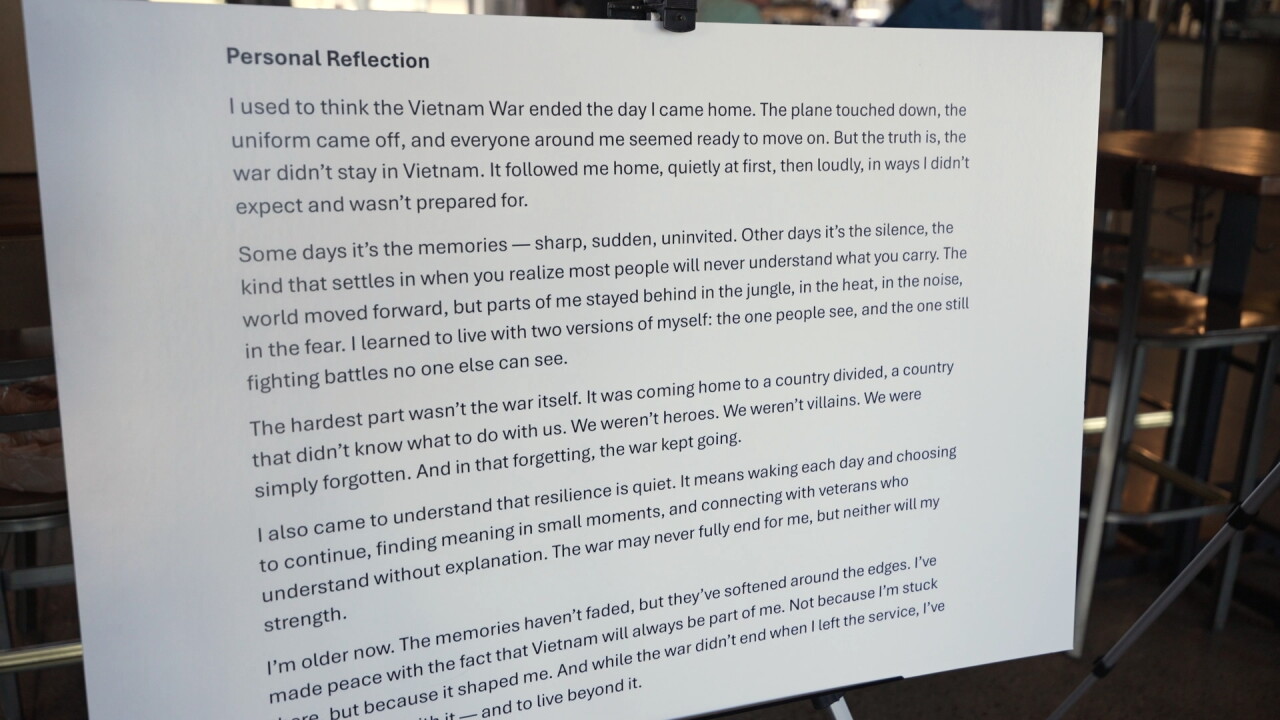
Crandall described the experience of war as something that stays with a person long after returning home.
"It's just one of those experiences you have in your life that, no matter what you carry with you, and it changes you along the way," he said. “It isn't always comfortable. It's not always uncomfortable either, but it was an experience."
For some veterans, those experiences also include struggles with mental health, physical injuries, and navigating care through the VA. Herzog said the group has experienced the loss of members to suicide. He also knows firsthand how difficult it can be to recognize when help is needed.
"Up until 2012, I thought I was pretty normal, until my wife said, 'You need to get some help.' It's tough," Herzog admitted. "After that, when I got the help, it opened just the way I saw things differently. I knew I wasn't alone anymore.”
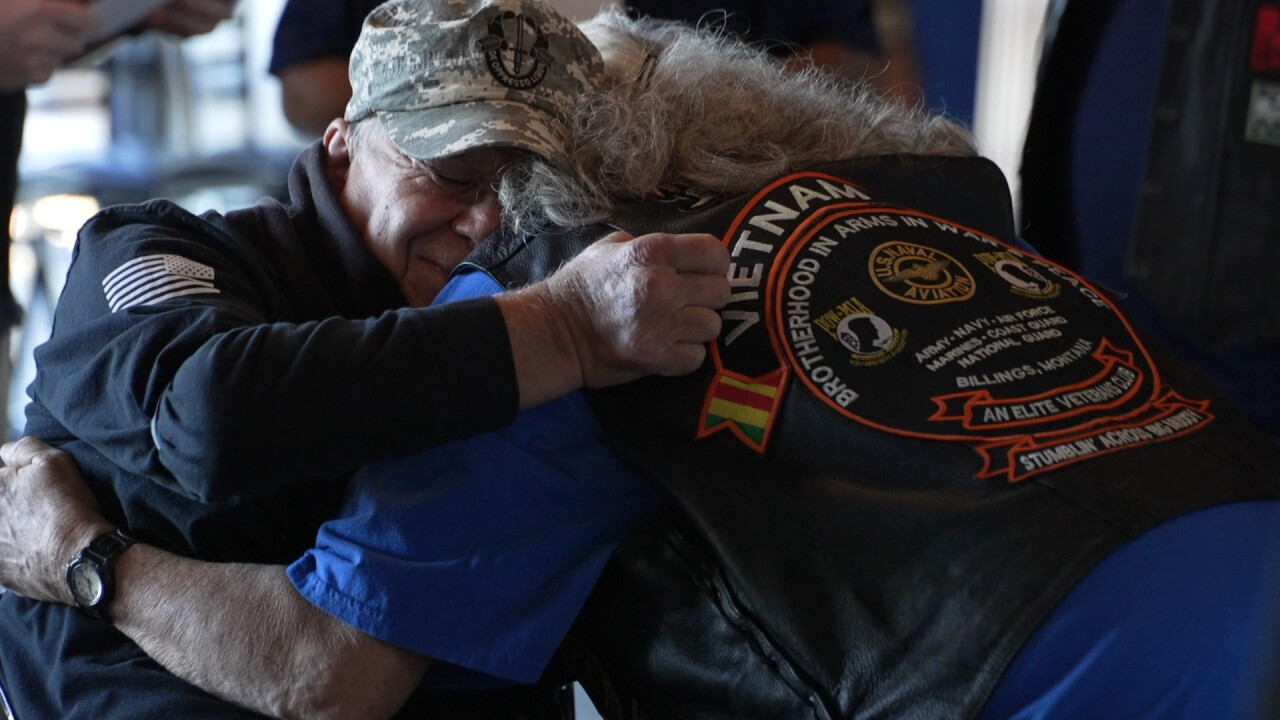
That understanding is part of what keeps the group connected. Members check on one another, share their experiences, and reach out when someone hasn't shown up.
"I realized as I went around and saw each one of them that there was a camaraderie there that's kind of invisible," Crandall said. "You don't think about it much until you get out of it and then you come back in and suddenly, 'Oh, wow, I am close to these guys.'"
For Herzog, the photographs are a way to preserve that bond and recognize the people behind the service. He hopes the portraits offer younger generations a chance to see the people behind the history and understand the lives that continued long after the war.
"We're not a bunch of old guys or women. We were young like they were at one time," Herzog said. "But this is what we do, or did. You know, we served our country."
For Hatley, the display is a reminder of how easily the experiences of veterans can fade from public memory. But for those whose faces lined the coffee shop, the recognition is something they can experience firsthand.
"I think most of our stories will be forgotten, to be honest with you. It's happened with every war," Hatley said. "But it is nice to see this. And to be acknowledged. That's a good feeling."