


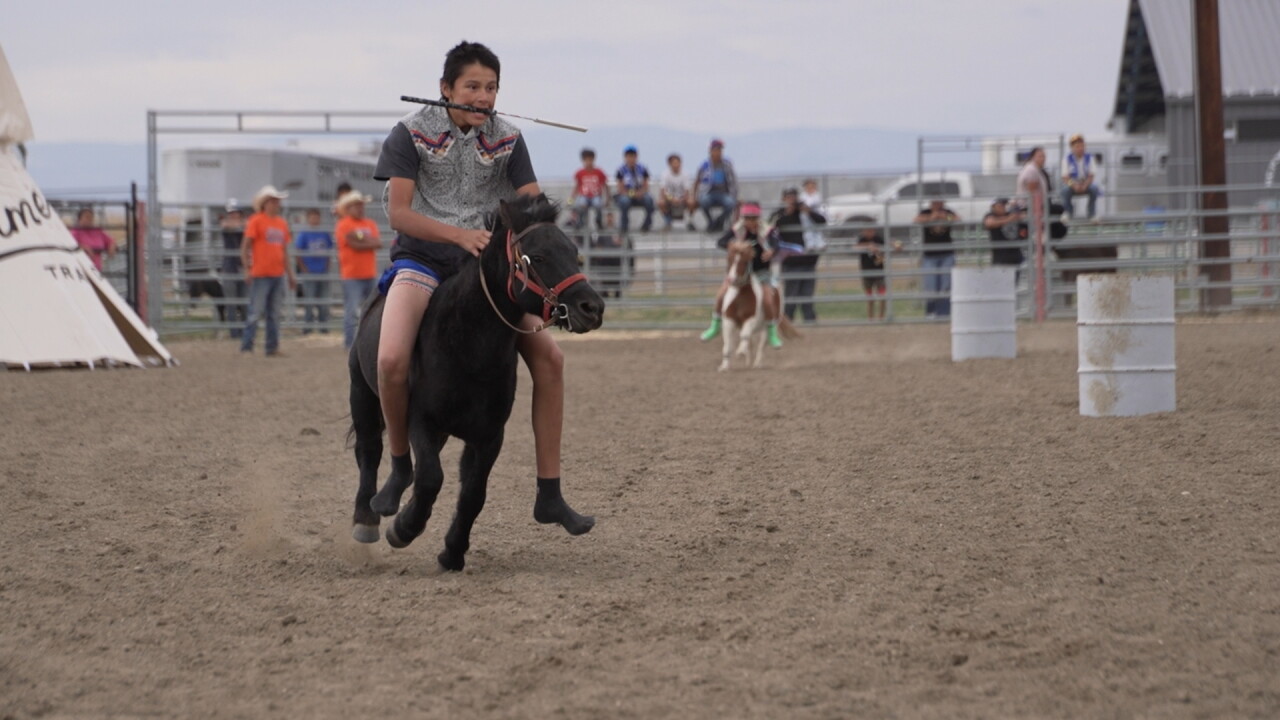
HARDIN — With horses thundering around the track and riders switching mounts at full speed, Indian relay racing brought nearly 40 teams to the Big Horn County Fairgrounds Saturday for a day of competition, family, and cultural celebration honoring Indigenous Peoples Day.
Watch the full story here:
For 22-year-old Tristan Birdinground, the sport is more than a race. He grew up around it, a family tradition that now puts him in the saddle alongside his father, uncle, and grandfather.
"It's a good feeling, though, when you win and all that adrenaline when you're on that horse, it's pretty fast,” Birdinground said. “My mind goes blank out there, and I just forget about everything.”
Birdinground, of Crow Agency, has been riding horses since he was young. His father introduced him to Indian relay racing, and what began as a childhood pastime eventually became a competitive pursuit.
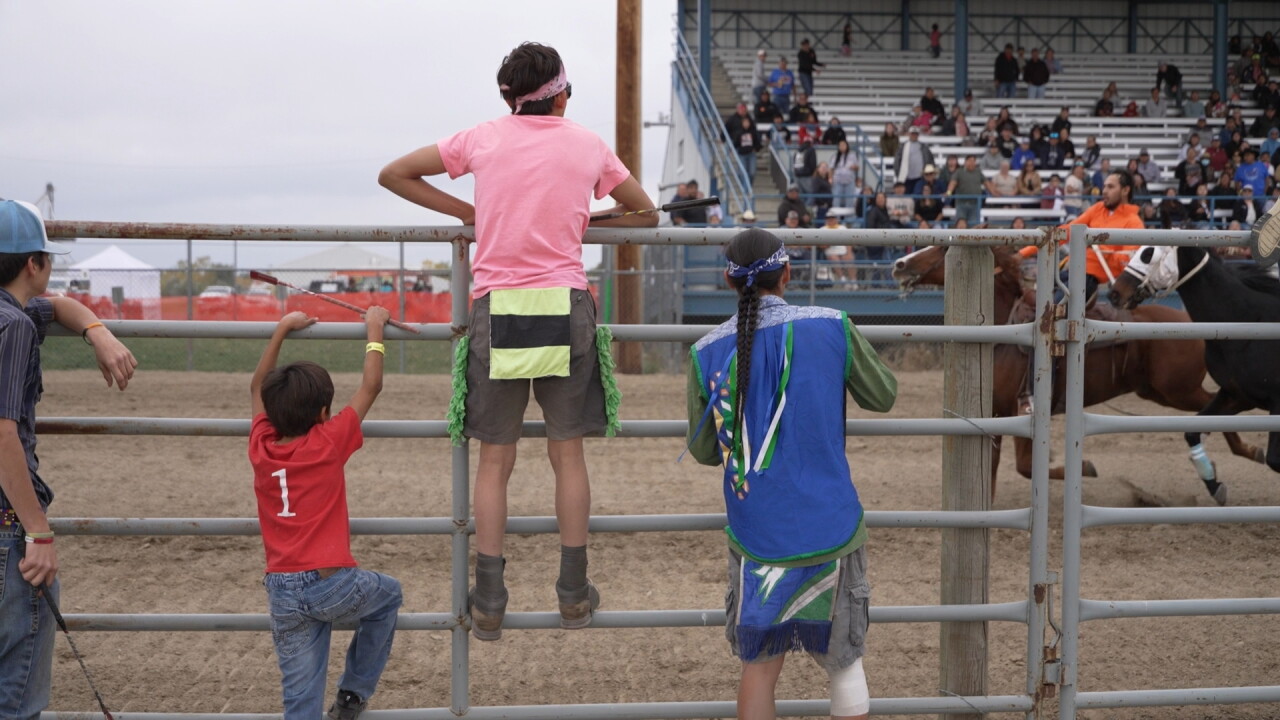
“It kept me out of trouble,” he said.
Indian relay racing combines speed, horsemanship, and precise timing. Each team has a rider and three horses, along with a setup man, a stopper, and a back holder.
The rider completes a lap, dismounts, and switches to the next horse, repeating the process until all three horses have run. The crew must position and control each horse while the rider makes the transition, often with little time to spare.
“(A) relay race, like they do with track and baton, but then I'm the baton,” said Tristan Birdinground.
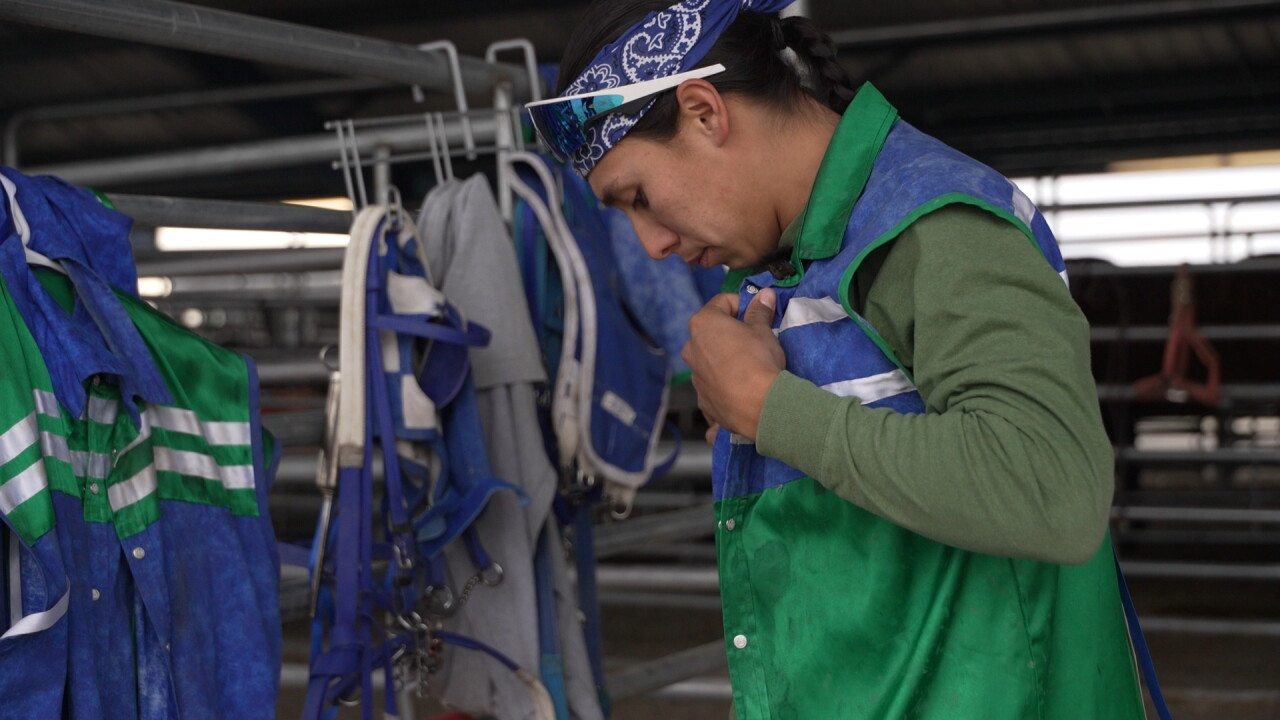
Trampus Birdinground, Tristan's uncle and the team's stopper, knows the risks firsthand. His job is to stop the incoming horse so the rider can mount the next one.
"You have to have a big heart for that because it's kind of scary when these thousand-pound animals are running at you," he said.
The Birdingrounds rely on their family bond to keep the team moving. Tristan's father, Tim Birdinground, prepares the horses, while his grandfather, Tronnes Birdinground, serves as the back holder. Trampus Birdinground said being related helps the team understand one another, both during competition and when challenges arise outside the arena.
“We're a family,” Trampus Birdinground said. “So it's kind of like a stronger bond. So when we lose, we still pick our heads up.”
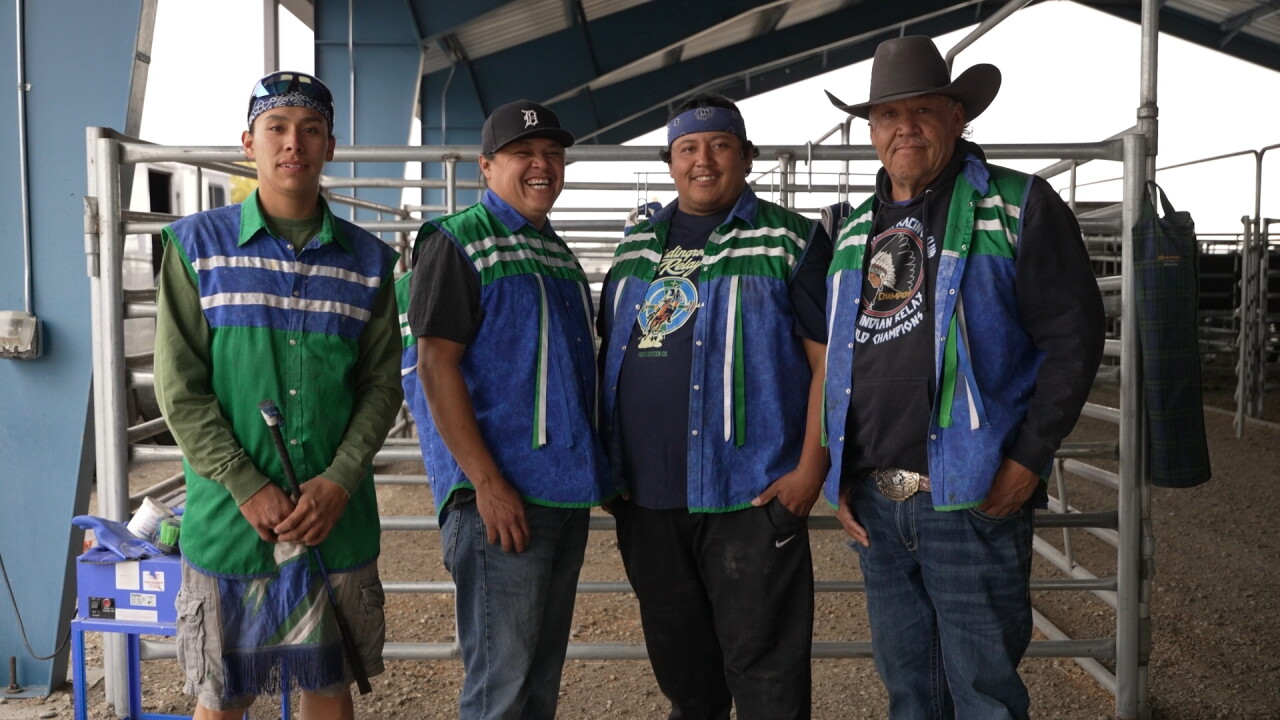
The team trains and travels together throughout the racing season, representing the Crow Tribe at competitions across the region.
The event marked the first time Big Horn County paired Indian relay racing with its Indigenous Peoples Day celebration, establishing a new event organizers hope will continue in future years. Big Horn County secured a $30,000 grant from the Montana Department of Commerce to help establish the Indigenous Peoples Day event.
"It's a new statute in Montana law. The legislature last session established Indigenous Peoples Day, and in Montana, we're actually the only county with two reservations," said Big Horn County commissioner George Real Bird III. "It's really exciting to know that the legislature, even in Helena, wants to support events like this, honor the traditions, the culture on our reservation, the Crow and Northern Cheyennes."
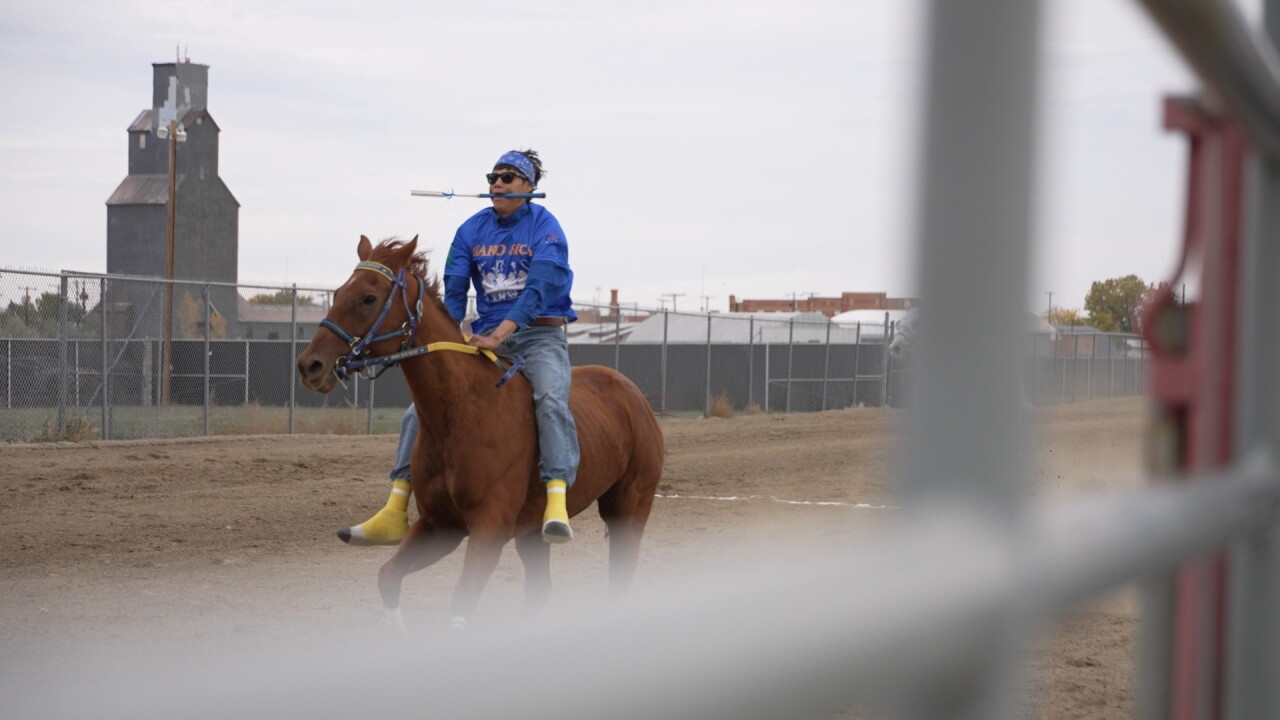
The county had previously hosted relay racing during the Big Horn County Fair. Officials saw an opportunity to build on that interest while bringing more visitors to the fairgrounds and supporting the local economy.
"A lot of people are native here, you know, and so in the school a lot of native students, so celebrating for them, for their parents, for the community as a whole," said Commissioner Lawrence Pete Big Hair. "Economy, I guess, a lot of people come in from all over."
The event’s schedule included preliminary heats, a powwow, and championship races later in the afternoon. The lineup included 17 men’s relay teams, six pony relay teams, four women’s relay teams, and additional races for chiefs, warriors, and maidens. Teams traveled from Montana, Idaho, South Dakota, North Dakota, and Washington.
Event coordinator Clement Other Medicine said more than $45,000 in prize money was scheduled to be awarded across the day's races, helping teams cover travel and horse-care expenses.
“It is nerve-wracking, it is thrilling, it is exciting, it is a rush," said Other Medicine. "You gotta watch out for your safety, you gotta watch out for horses."
For Other Medicine, the importance of the relay runs deeper than competition.
“Horses have always been within our culture as Indigenous people,” he said. "To still have them and to still use them and to still learn from them and just everything you need to do with the horse, you know, is just, man, it's amazing."
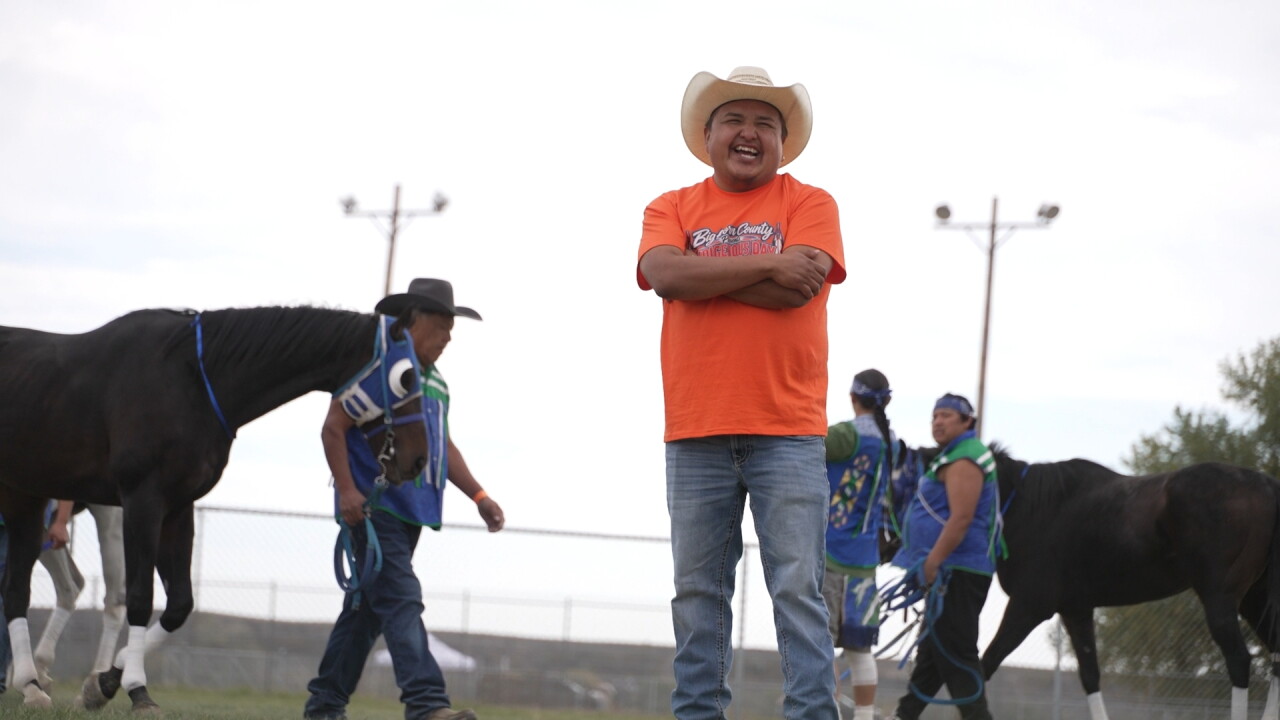
For Trampus Birdinground, representing the Crow Tribe is part of every race. He compared the competition between tribal teams to the traditional practice of counting coup, describing a victory over another tribe as a particularly meaningful achievement.
"Sometimes you win on your own tribe, and it feels good. But to go and win at someone else's tribe, that's a different feeling, too," he said. "We win, we lose. That's just the game, but we represent our tribe as we can.”
For the Birdinground family and the teams gathered in Hardin, the races were a chance to compete while keeping horsemanship, family ties, and Indigenous traditions alive.
“It represents who we are and where we come from,” he said. “We just want to carry it on and keep it going as long as we can for the youth to see us and make sure they keep it going as well.”
