

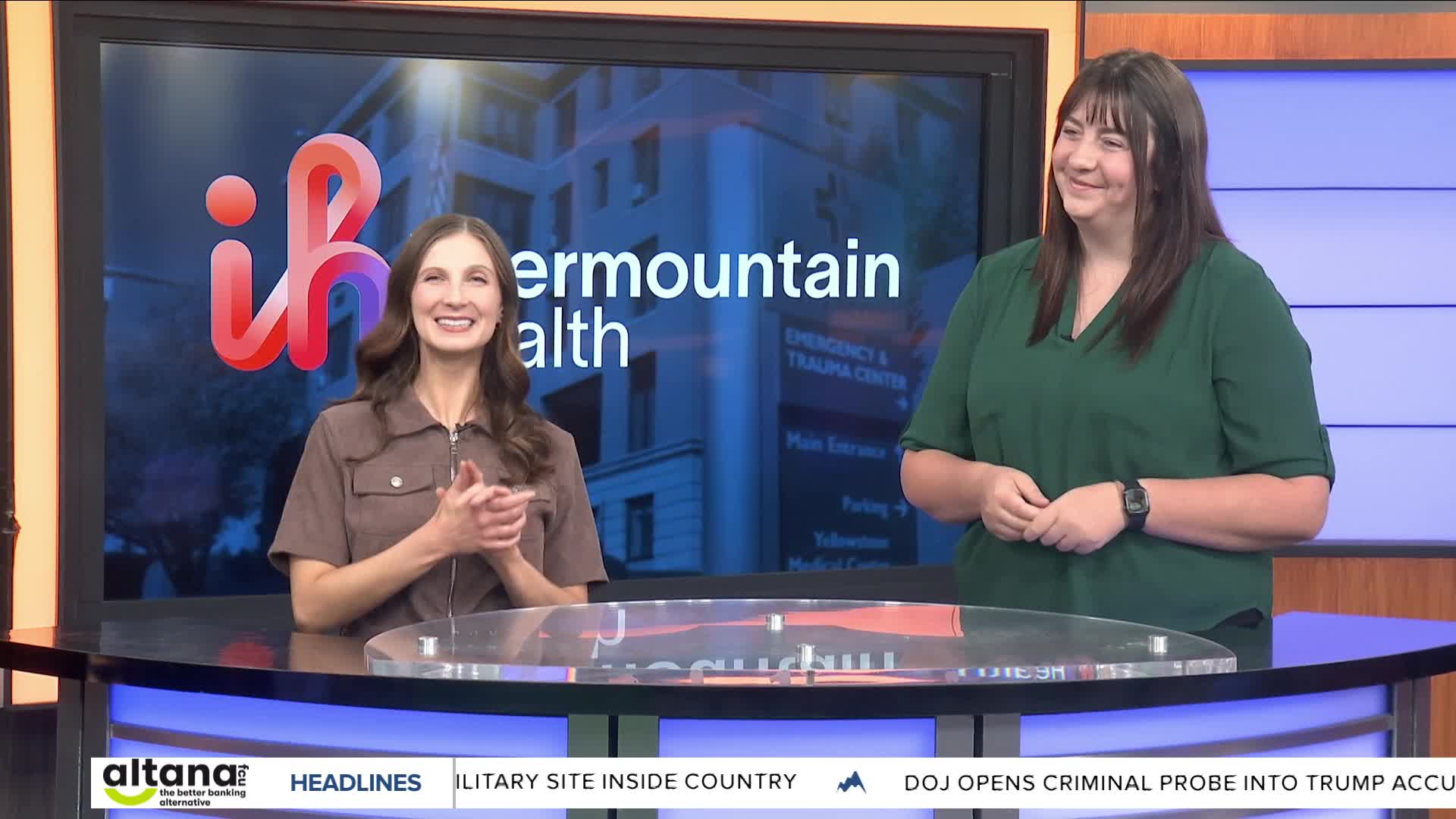

May is Stroke Awareness Month, and Erin Schreibeis, a registered nurse and stroke program coordinator at Intermountain Health St. Vincent Regional Hospital, is urging the community to learn the signs of a stroke and act quickly.
Schreibeis said the BE-FAST mnemonic is the best way to remember stroke symptoms.
"Balance problem, vision problems, facial droop, weakness on one side of the body, speech problems," Schreibeis said.
But she said the most critical letter in that acronym is the last one.
"The T of BE-FAST is the most important part of time. We need to get to the hospital quickly in order for us to help you," Schreibeis said.
She said strokes don't always look the same because they affect different parts of the brain, but some of the most common and recognizable symptoms include sudden difficulty walking, numbness in the leg, and jumbled speech.
Schreibeis also noted that stroke victims often aren't the ones who recognize what's happening.
"A lot of times it's not the patient themselves that's calling or recognizing the symptoms of a stroke. It's their family, it's their loved ones, it's their kids," Schreibeis said. "So really trying to let all of the community know to watch out for these signs, even if it's probably not for you, it's for somebody else in your life," she said.
Prevention starts with knowing your numbers
Many stroke risk factors are within a person's control. Schreibeis said lifestyle changes and regular medical care can make a significant difference.
"Eating healthy, exercise, getting a primary care doctor to help you manage your blood pressure, manage your cholesterol levels," Schreibeis said.
"Keep looking at your numbers, make sure your heart's working okay, make sure your body's right to help keep your brain right," she said.
Advancements in treatment are saving lives
Getting to the hospital fast doesn't just improve outcomes, it opens the door to potentially life-changing treatments.
Schreibeis said St. Vincent Regional Hospital offers 2 key stroke interventions, but both are time-sensitive.
"T-PA is our big one. It's only able to give it within the first four and a half hours or so of stroke starting, and so we really need to move quickly to help prevent brain cells from dying," Schreibeis said.
The hospital also performs a procedure that physically removes the clot to restore blood flow to the brain.
"Both of those things get riskier the longer the stroke has been happening," Schreibeis said.
She said calling an ambulance is the best course of action because paramedics can alert the hospital before the patient arrives.
"Get an ambulance. They can pre-activate the hospital so we know you're coming and get you in as quickly as possible," Schreibeis said.
Schreibeis said the advancements in stroke care have made her work especially rewarding.
"I've seen patients come in completely devastated by their stroke, unable to walk, unable to talk, and we can do things to help them walk out of the hospital a few days later," Schreibeis said.
This story was reported on-air by a journalist and has been converted to this platform with the assistance of AI. Our editorial team verifies all reporting on all platforms for fairness and accuracy.
