


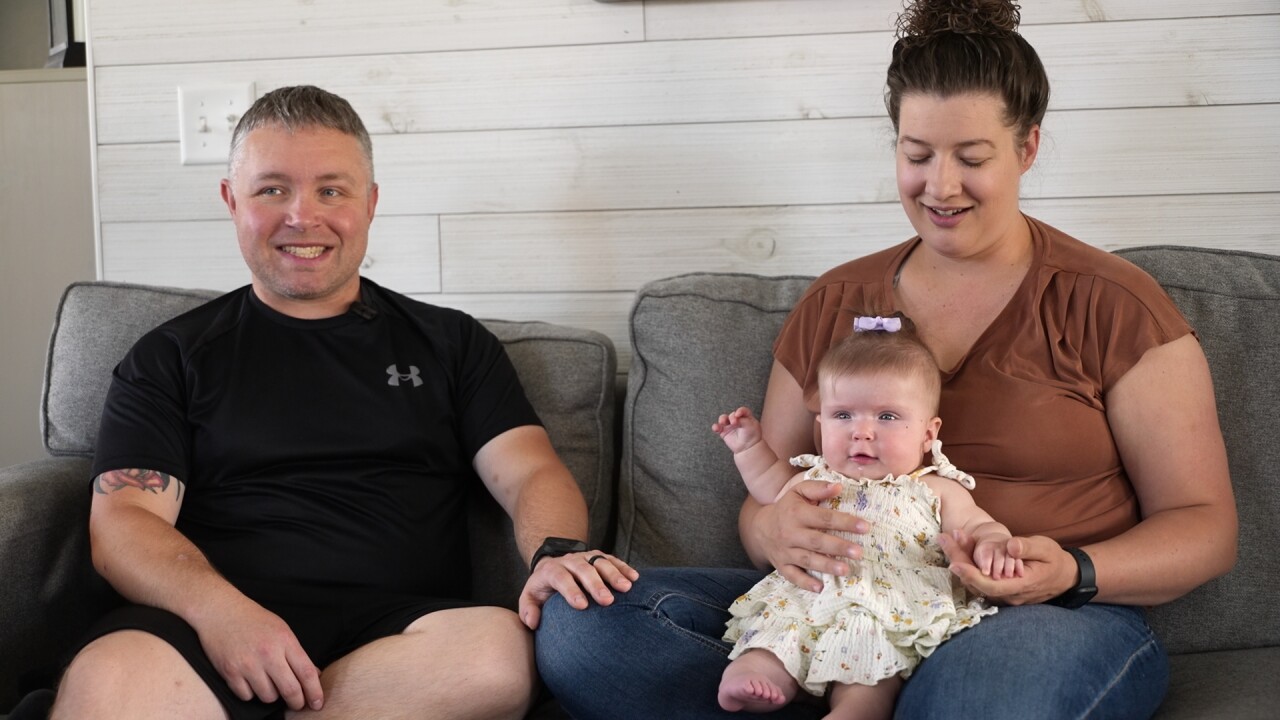
BILLINGS - When Nicole and Chris Lacy learned their baby had Spina Bifida at just 13 weeks, the news hit with a wave of grief.
Watch the Lacy family's story below:
"It was pretty devastating at first, and it felt like we were already kind of grieving. We'd worked so hard to get pregnant and to have a baby. She was an IVF baby," Nicole said.
Harper was diagnosed with Spina Bifida at 13 weeks. For the Lacy family, the diagnosis raised fears about their daughter's future.
"The thought of her not being okay and not having a good quality of life or having to have a life of living in the hospital and never being able to come home or her lifespan being like three to five years, we just, that was really hard," Nicole said.
After the diagnosis, the family was presented with three options. The first was open fetal surgery.
"It's an open incision for mom and then an open incision on the uterus to take baby out and do the surgeries. Kind of like an out and then put everything back," Nicole said.
The second option was a minimally invasive patch surgery, the path the Lacy family ultimately chose. Dr. Ahmmed described the third option.
"The third option would have been like...this is...a baby that has a defect and some people opt not to continue their pregnancy," Dr. Ahmmed said.
Once the family had all the information, the decision came quickly.
"Once we had the information, the decision was easy to just move forward and do the surgery," Nicole said.
Chris said the family was grateful for the level of specialized care they received.
"We have some of the top experts in the nation, like specialists that there is a handful of that are focused on both my wife and my future daughter," Chris said.

The Lacy family credits the dedicated team at Intermountain Health and the University of Utah with making it all possible.
"And when you have a complicated medical situation, simplifying the process gets rid of all that stress," Chris said.
"I don't know that we would have her if it wasn't for them," Nicole said.
Intermountain Health is holding a Make a Call for Kids benefit from June 1 through June 6 to help our local kids, like Harper, survive and thrive. Funds raised will benefit children’s services at St. Vincent Regional Hospital, home to the only Pediatric Intensive Care Unit and Pediatric Surgery Program in eastern Montana.
Donate at svhkids.org or call 406-237-KIDS or text KIDS to 32037.
