

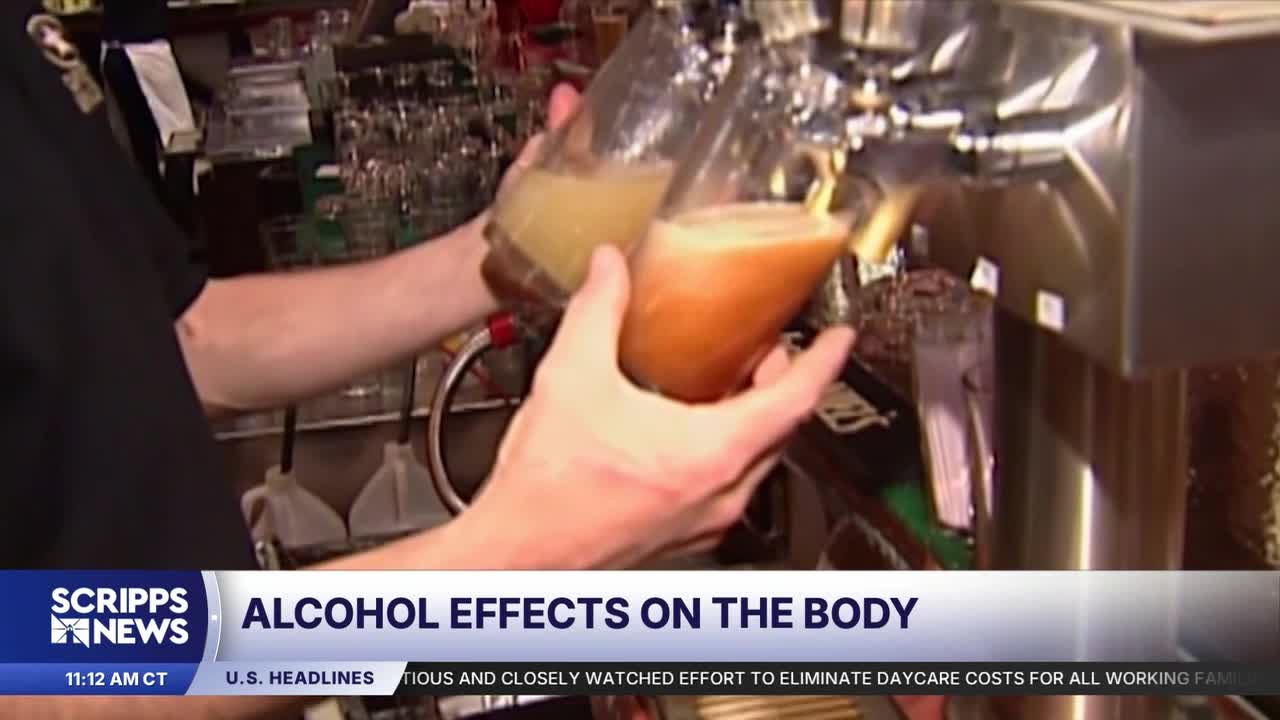


A new study indicates that what many Americans consider moderate drinking is linked to an increased risk of health issues — including death, disability, and chronic disease.
Over the last few years, evidence has increasingly pointed to the harmful effects of excessive alcohol consumption. In 2024, the American Association for Cancer Research found that alcohol use increased the risk for six different types of cancer: certain head and neck cancers, esophageal squamous cell carcinoma, and breast, colorectal, liver, and stomach cancers.
RELATED STORY | Alcohol use becoming the leading cause of liver transplants, especially among women
Currently, U.S. Dietary Guidelines advise Americans to “limit alcoholic beverages.”
“While the new U.S. Dietary Guidelines contain a useful ‘less-is-best’ message, they provide no quantitative framework. Our study was designed to do just that across the drinking spectrum,” said study co-author Timothy Naimi, M.D., M.P.H.
Previous guidelines recommended a daily limit of two alcoholic drinks for men and one for women.
The Alcohol Intake and Health Study found a mortality risk from alcohol of 1 in 25 for people who consumed an average of 14 drinks per week.
The study also found that even low levels of alcohol use carry health risks. For men, drinking more than about 6.5 drinks a week begins to raise the risk of dying from alcohol-related causes above 1 in 1,000.
For women, the threshold is similar — consuming more than 7 drinks a week puts them at the same risk level.
Once weekly consumption passes an average of 8.5 drinks, the risk jumps to higher than 1 in 100.
In 2025, a Gallup poll found that more Americans were prioritizing their health and wellness. The poll reported that 54% of U.S. adults consume alcohol — the lowest percentage in the survey’s 90-year history.
RELATED STORY | Poll: US alcohol consumption drops to 90-year low amid health concerns
A generational divide has been a key factor, with the drinking habits of young adults declining over the last decade.
The trend accelerated more recently: the drinking rate dropped from 59% in 2023 to 50% in 2025.
