

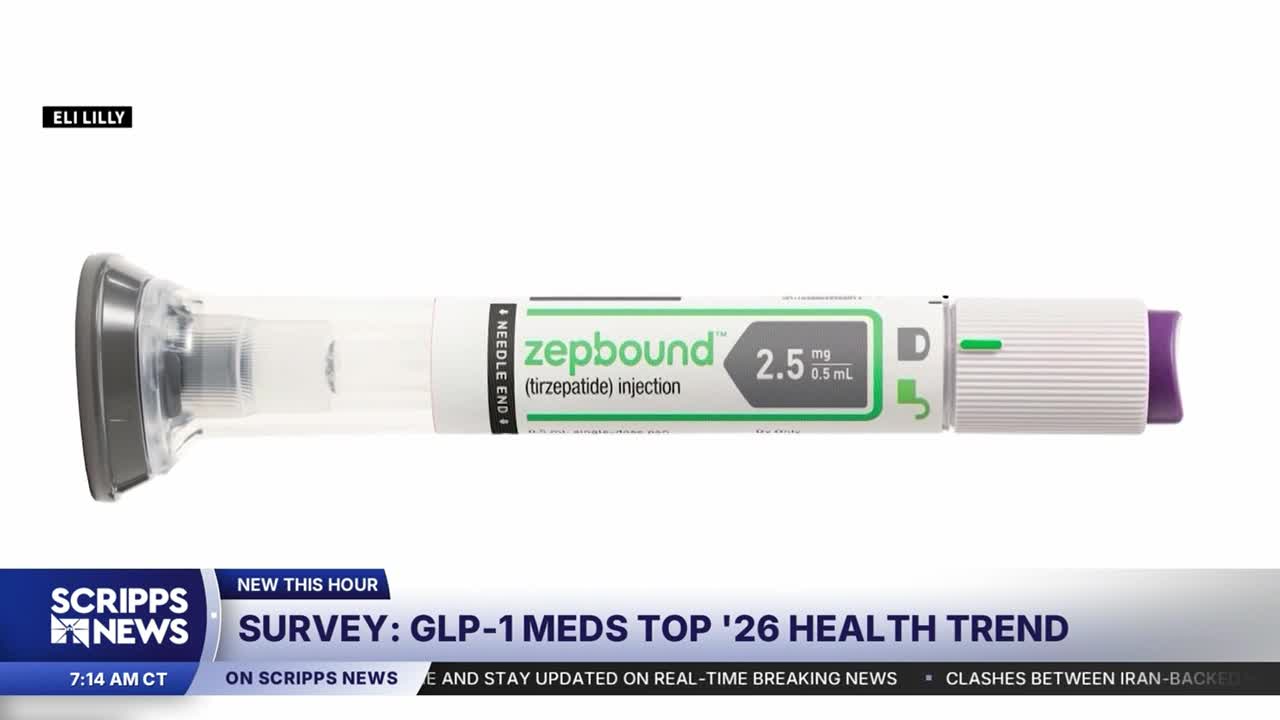


About 1 in 5 American adults has already tried a GLP-1 medication, and as costs come down, that number is expected to keep climbing. Drugs like Ozempic and Wegovy are topping health trends in 2026, and their reach is expanding beyond weight loss into treatments for heart disease, kidney disease, arthritis and even addiction.
With a crowded marketplace of online providers offering these medications, experts are urging patients to do their homework before choosing a telehealth platform.
RELATED STORY | Novo Nordisk sues Eli Lilly, alleging the company's GLP-1 ads are 'deliberately false'
Gretel Schueller, managing editor of Health at U.S. News and World Report, said 52% of health experts identified GLP-1 expansion as the biggest public health trend of 2026. About 11% of Americans are currently using a GLP-1 — a fourfold increase over the last two years — driven in part by the arrival of pill versions that make the medications more accessible to people who prefer not to use injections.
Red flags to watch for
Schueller said one of the most concerning patterns her team found during its evaluations was the speed and ease with which some platforms issue prescriptions.
"In some cases you can essentially fill out a questionnaire online and literally within hours without having had any interaction with a clinician get an email or a text with a prescription for your GLP-1 that will get mailed to you," Schueller said.
She said another red flag is minimal oversight — specifically, platforms that skip a thorough medical evaluation, a review of a patient's medical history, or baseline blood work.
"These are still prescription medicines," Schueller said. "I think sometimes we forget that because they sort of have this miraculous appeal of being a weight loss drug. But they can have significant side effects and can carry real risks for people with certain health conditions and medical histories."
RELATED STORY | Novo Nordisk sues Eli Lilly, alleging the company's GLP-1 ads are 'deliberately false'
Schueller said patients should also confirm that any platform they use orders baseline blood work — including tests of liver and kidney function — before issuing a prescription.
What separates the best providers
U.S. News and World Report evaluated more than 20 telehealth providers across six key areas, ultimately identifying 11 that met its standards. The evaluation only included companies selling FDA-approved brand-name medications such as Ozempic, Wegovy and Foundayo. Companies selling only compounded medications were excluded because those products are not reviewed by the FDA for safety or quality, which can introduce contamination or dosing errors.
The six areas of evaluation included whether providers offer clinical support, long-term follow-up and health screening, transparent pricing, insurance support or concierge services, and patient feedback. U.S. News also surveyed more than 1,200 GLP-1 users about their experiences with online telehealth providers.
About two-thirds of survey respondents reported losing more than 10% of their body weight.
"There's no doubt that these drugs work," Schueller said. "They're finding now that these drugs may be helpful for not just weight loss but heart disease, arthritis, possibly addiction. In some circles and fields, these are being touted as a longevity drug. But there's a lot more research that remains to be done for sure."
Tips for patients considering GLP-1 treatment
Schueller offered three recommendations for anyone researching GLP-1 medications online:
- Always consult with your primary care doctor and keep them informed, even if you are obtaining medication through an online platform.
- Make sure the platform you use includes a real-time interaction with a clinician, ideally a video consultation.
- Confirm that a full medical history evaluation and blood work are completed before any prescription is issued.
The U.S. News and World Report ratings and provider accolades — including designations for best clinical support and best supplemental support — are available on its website.
