

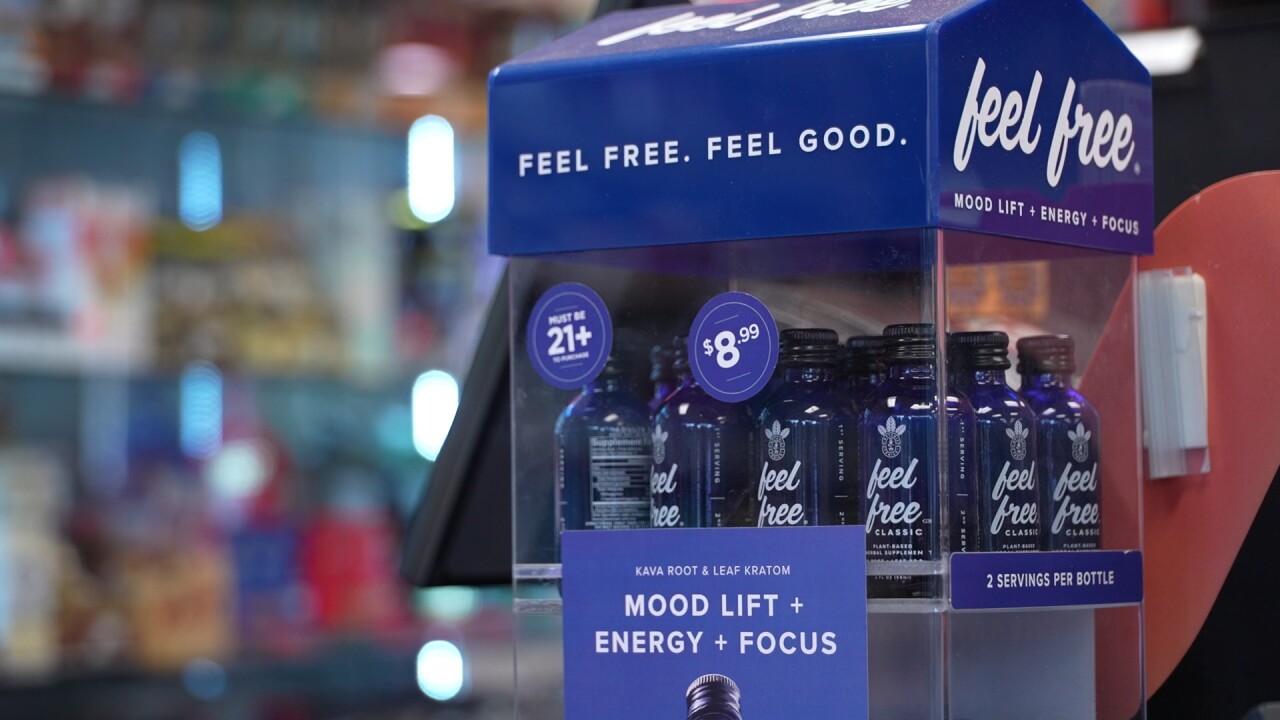


BILLINGS — A new Yellowstone County health regulation that took effect Jan. 1 now prohibits kratom sales in licensed food and drink establishments, prompting conversation between health and state officials citing safety concerns, and critics who argue the move oversteps local authority.
Watch the story below:
Under the rule, enforced by RiverStone Health, licensed food and drink establishments, including restaurants and bars, are prohibited from selling kratom. The substance remains legal to possess and sell in other settings, such as smoke shops and kava businesses, which do not fall under food establishment regulations.
The move makes Yellowstone County the first county to take such action in Montana, after the Blackfeet Reservation banned kratom sales earlier this year.
Related: Kratom ban in Yellowstone County food establishments sparks concern from users and businesses
RiverStone Health officials say the action is intended to keep kratom out of the local food supply and address public health concerns.
“Our regulatory authority, as the local health department, enables us to take this action and keep kratom out of the food supply,” RiverStone Health CEO and Health Officer Jon Forte said in a December interview.

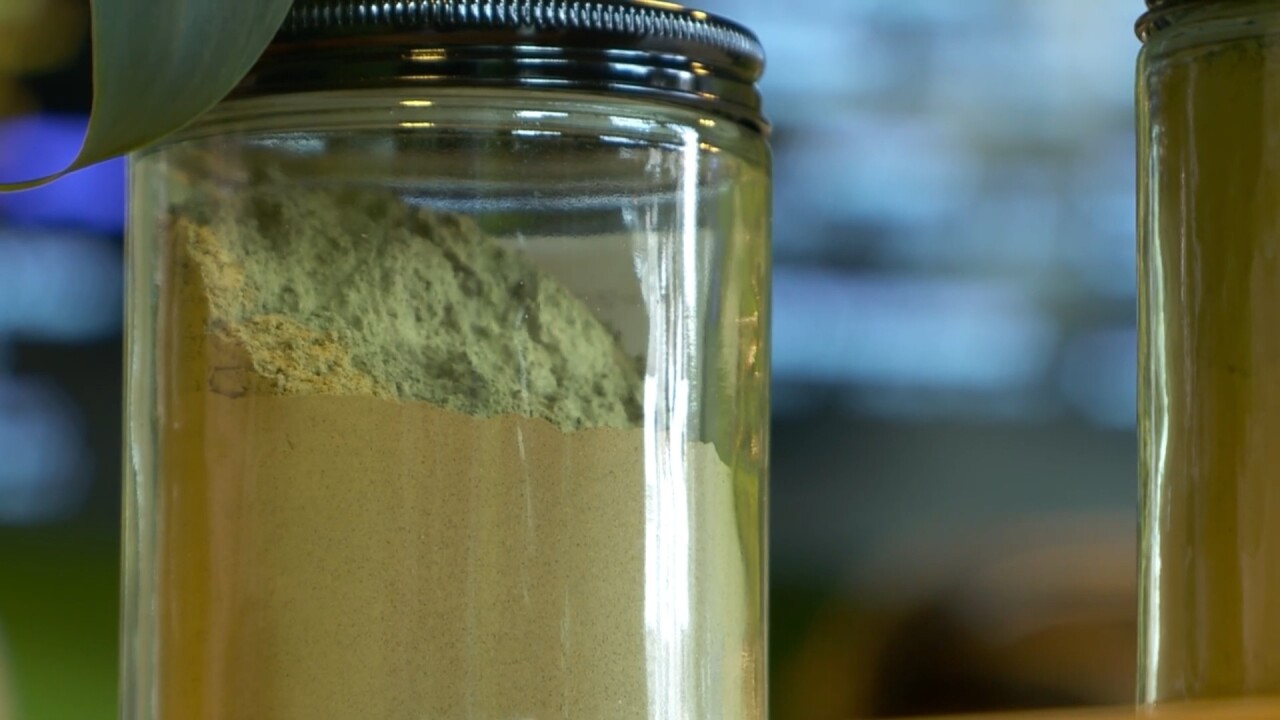
Kratom is derived from the leaves of a tropical tree native to Southeast Asia and is often consumed as a powder, capsule or tea. Kratom is commonly used by some people for pain relief, relaxation or opioid withdrawal. It is not approved by the Food and Drug Administration and is not classified as a controlled substance by the Drug Enforcement Administration, which says kratom use can lead to dependence and addiction.
RiverStone Health says its concerns include both natural kratom and synthetic products, such as 7-hydroxymitragynine, commonly known as 7-OH. Forte said kratom has been identified in at least 29 overdose deaths in Montana since 2020.
But not everyone agrees with the county’s approach.
Kyle Austin, a Billings pharmacist and owner of Pharm 406, has criticized the rule as government overreach. Austin, who is also a candidate for the United States Senate and says he uses kratom himself, recently discussed the issue on his radio program, "My Fellow Montanans," which airs Sundays on KGHL 94.7 FM.
“It's a complete government overreach,” said Austin. "The state of Montana is not regulating it, but here we have the Department of Health trying to step outside their bounds to create law."

Austin argues that natural kratom is generally safe when used responsibly and says many overdose cases involve other drugs. He also contends the restriction could push some users back toward prescription opioids, alcohol or illicit substances.
"As a pharmacist, I understand addiction. I understand side effects. I understand withdrawal. I don't experience that at all when you utilize natural kratom," said Austin. "It hasn't caused any harm, any proven harm out there.”
Rep. Nelly Nicol, R-Billings, supports RiverStone Health’s decision.
“There's zero regulation on it, so having the county health board ban it in Yellowstone County, it's a big wave,” said Nicol. "It's taking us the same type, but more of the drugs that it's taking to get people off of opioids. So it's a problem.”

Nicol previously sponsored House Bill 407, known as the Kratom Consumer Protection Act, which would have created a regulatory framework for kratom products in Montana. The bill passed an early House reading last session but later stalled in the appropriations committee, largely due to cost concerns and limited data.
"Since it is not regulated, we don't have a sense yet of how much product is actually in our state, and what kind of damage this might do to businesses," said Nicol. "We walked into appropriations without numbers. We didn't have any idea exactly how much it would take.”
Related: Faced with kratom bill, Montana lawmakers pressured to ‘get something passed’
Austin sharply criticized the proposal, calling it overly broad and poorly developed.
"Her bill was such garbage that it got pushed back to committee and stuck there because it was so broad,” said Austin. “She emailed me admitting in 2025 that she was carrying a bill that she knew nothing about. I have a problem with that.”
But, Nicol said future legislation is possible as more lawmakers become familiar with the substance and data becomes available, with options ranging from product testing and regulation to an outright statewide ban. Some lawmakers, she said, have discussed classifying kratom as a Schedule II substance.
“We're not going just off of testimony or groups or all of the different moms that have called me that have lost children to kratom," she said. "We're getting real good data.”
Nicol also rejects claims that regulation would be excessive.
“As far as government overreach, I don't want that either," said Nicol. "There is a job of government to keep people safe and to educate, and I think we need to fall carefully within that role."
For now, the county’s rule remains limited in scope, affecting only licensed food and drink establishments in Yellowstone County. Both supporters and opponents agree that broader education and research are needed as Montana lawmakers consider whether to take action at the state level.
"My hopes for all this is that RiverStone backpedals and they put it back in the court of the state government or put it back in the court of the federal government and let those higher powers make those decisions," said Austin. "Instead of government regulation and government overreach, what we need is our government to step up and just educate people ... Don't go out and bash it because, like I said, 7-OH has its place in society and it benefits a lot of people.”
