

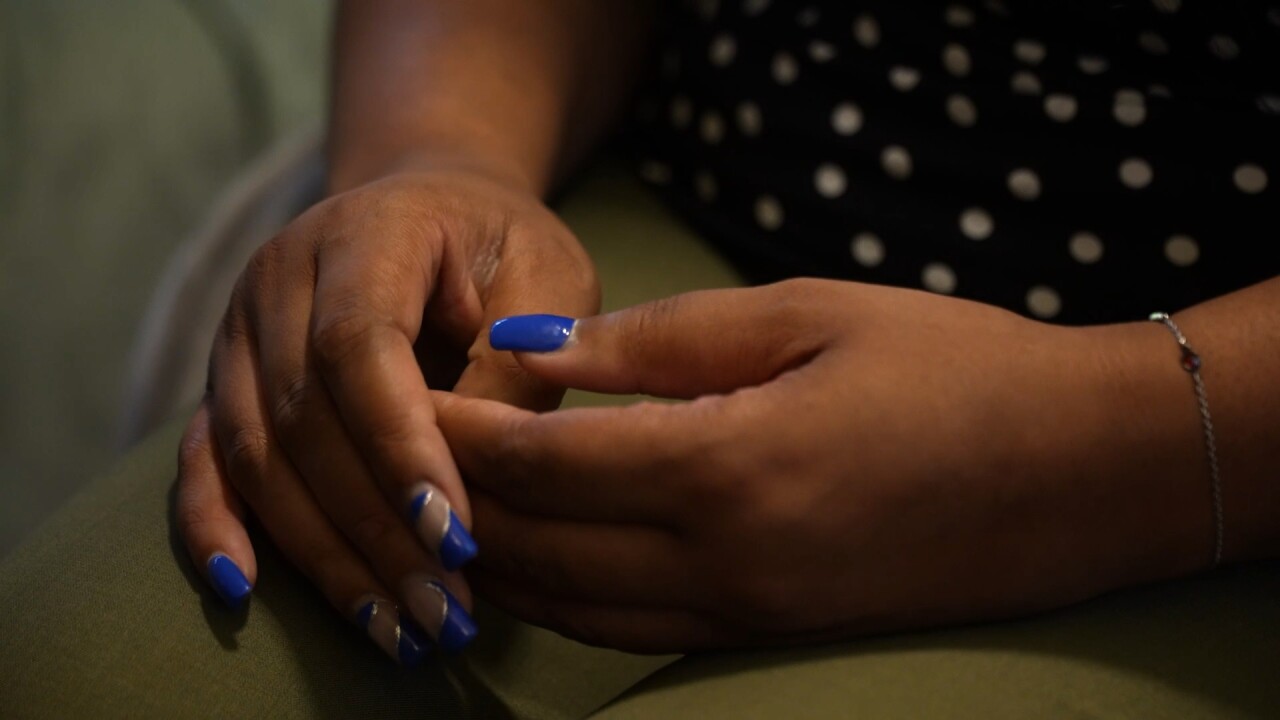


BILLINGS — Domestic violence cases in Billings remain at record levels, but new laws and voter-funded programs are providing resources to help survivors and support the city’s overburdened system.
While these efforts are making a difference, many survivors say the changes don’t go far enough, and the system still falls short.
Watch the video below:
One survivor, Billings mother of three Lily Aimone, knows the danger firsthand.
She lives in constant fear after surviving brutal attacks. "I am just always on alert," Aimone said.
She described one violent episode with her ex while holding her baby. "I was laying down with the baby in my arms. He was punching me so hard he broke his wrist."
Aimone says her ex strangled her, but years later, she’s rebuilding her strength and support system. While she says the abuse continues in different ways, she still must co-parent with him.
"Oh my gosh, is it him, is he following me, is it safe?" she said.

Aimone shares her experience online as a social media influencer, connecting with other survivors and turning trauma into visibility.
But her story is not uncommon.
Billings prosecutors say domestic violence cases have exploded, particularly over the last decade.
"We’re at about a thousand misdemeanor cases of domestic violence every year, and that’s just the misdemeanor side," said Ben Halverson, a prosecutor with the city’s Domestic Violence Unit.

The unit has two police investigators, three prosecutors and three victim witness specialists who help survivors navigate the legal process.
"In 2015, we had about 600 domestic violence cases, and I was the only prosecutor at that time," Halverson said. "Then 2020 came around, and things just exploded."
The pandemic further fueled a surge in violence, with Billings recording 16 homicides in 2020 and calls for domestic violence increasing 25 percent.

Prosecutors say the most serious consequences of domestic violence are not always visible.
"Domestic violence survivors are three times more likely to meet the criteria for PTSD," said prosecutor Morgan Lix. "They are three times more likely than the average person to experience suicidal thoughts."
A key tool in addressing the surge is the Northern Lights Family Justice Center, which opened in February of 2025 with the help of voter-approved money.
The center provides legal help, housing, and law enforcement support all under one roof.
Since opening, the center has served 308 victims and 382 children It ensures families do not have to navigate the system alone, serving 91 percent of clients who would not have qualified for help under the previous shelter-only model.
Repeat offenders and heavy caseloads keep the system under strain.
"Eighty percent of the people we prosecuted at the misdemeanor level re-offended within 10 years, and above 60 percent within five years," Halverson said.
He also says tougher laws on stalking, strangulation and revenge porn have given prosecutors new tools.
"Strangulation cases are very hard to prosecute, which is a shame because it’s the easiest way to kill someone without a weapon," he said.
Law enforcement is stretched thin, and Lix says that’s where the system really falls short.
"Our police department is not big enough to deal with the crime rates that come with the population of that size, and our jail is certainly not big enough," she said. "We need an overhaul of our justice system as a whole."

Aimone is also calling for stronger laws, mandatory officer training, and a deeper public understanding of trauma survivors carry long after physical violence ends.
"Judges need to understand the abuse doesn’t stop, it changes forms,” she said.
“I am still getting abused. It’s still domestic violence. He’s not physically hurting me. He’s mentally and emotionally hurting me.”
