


BILLINGS — Artificial Intelligence is changing how journalists gather and report the news, but robots aren't writing the stories. So how are newsrooms using AI?
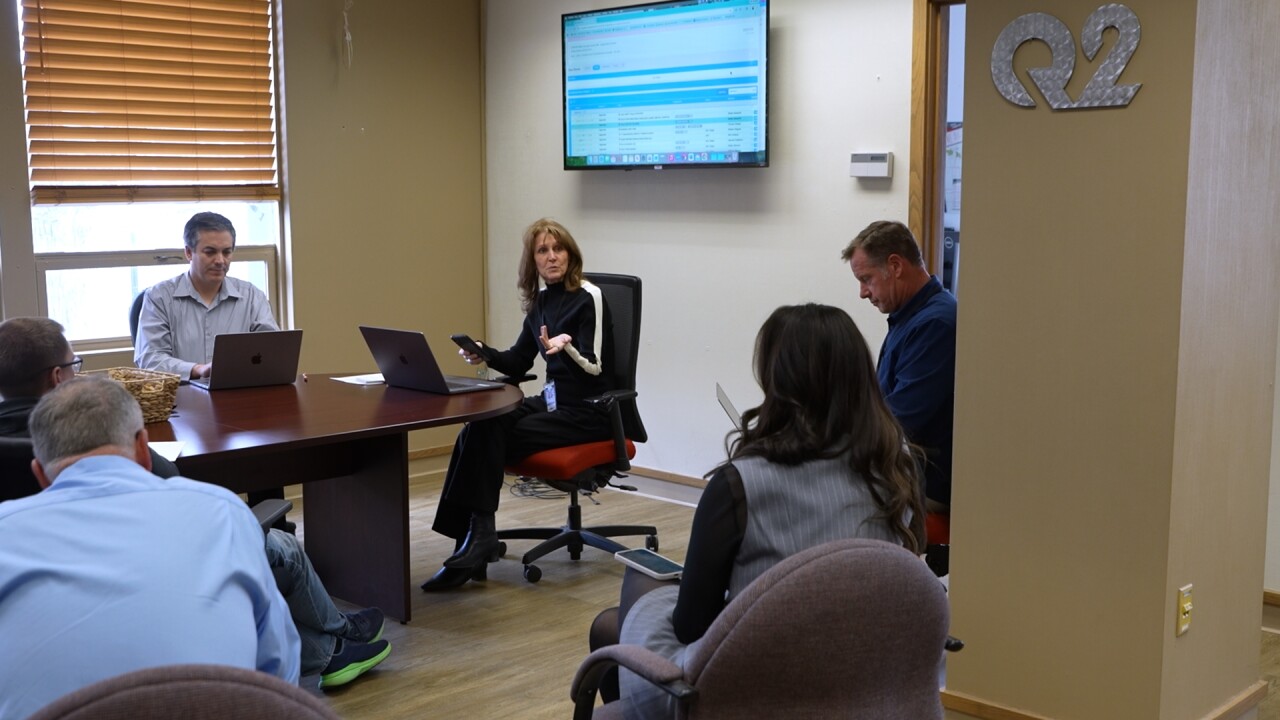
In MTN newsrooms, there's a good mix of using new technology and doing things the old-fashioned way. Just at the daily meetings held in the KTVQ building, some opt for computers to work, while others prefer hand-written notes.
In the last year, artificial intelligence has become a new tool for Scripps employees at MTN News.
See how MTN News uses AI:
"This industry changes on a dime all the time," said Cody Boyer, morning news and statewide noon news producer at MTN.
An AI bot called Engine Room is offered to reporters, anchors, and producers to help with various tasks. Some choose to use it while others don't.
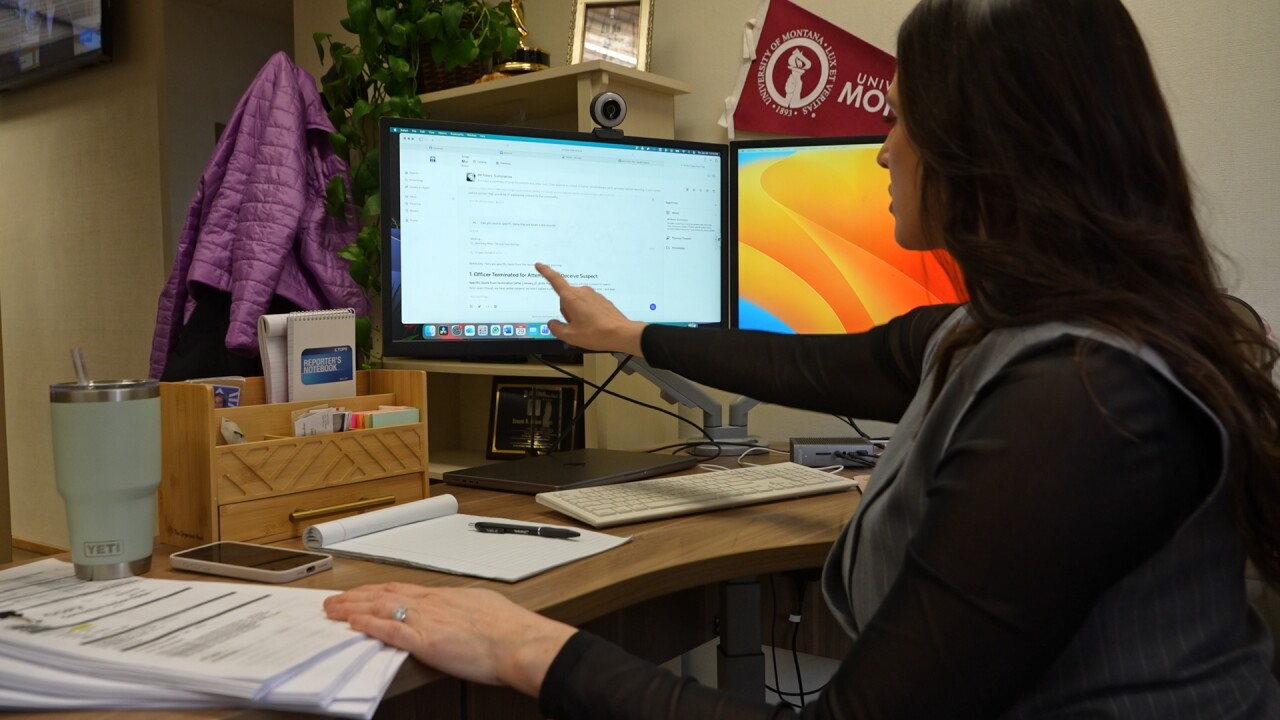
Anchor Andrea Lutz uses AI to help dive through hundreds of pages of public documents, summarizing important parts.
"You have to move fast in this industry, and going through a ton of documents is time-consuming. So if I have any bit of help from that, I like to see how it can help me and use it," Lutz said.
Multi-media journalist Isabel Spartz spends her day pitching her ideas and setting up interviews, conducting those interviews, writing her TV script, and editing all to meet deadline. Once her TV story is done, she needs to write an article for the Q2 website.
"I do use it to write my web stories, but it's just what I've written onto web. So it just transforms from all caps to regular AP style," Spartz said.
The AI can take a script written for television and format it into AP style in just seconds. AI did it with this story.
In the editing software MTN News in Billings uses, AI can transcribe an interview in seconds as well.
But AI does not replace the fundamental work of a journalist.
"You have to check the AI because it's not always accurate," Spartz said.
Lutz said she always double-checks what AI does. When she uploads documents, she also asks the AI to cite which page the information is on so she can check that it is accurate.
"We have already done the story. We did the research on it. We even wrote it. We wrote it. We interviewed our sources in there. We checked the facts. We just used software, a software to help us make it so it's easier for you to read and digest," Lutz said.
Still, the use of AI in journalism raises important questions.
"People don't know it was just that minute change so they might think that entire information, an entire body of work, was artificially induced and that's the scary part," Boyer said.
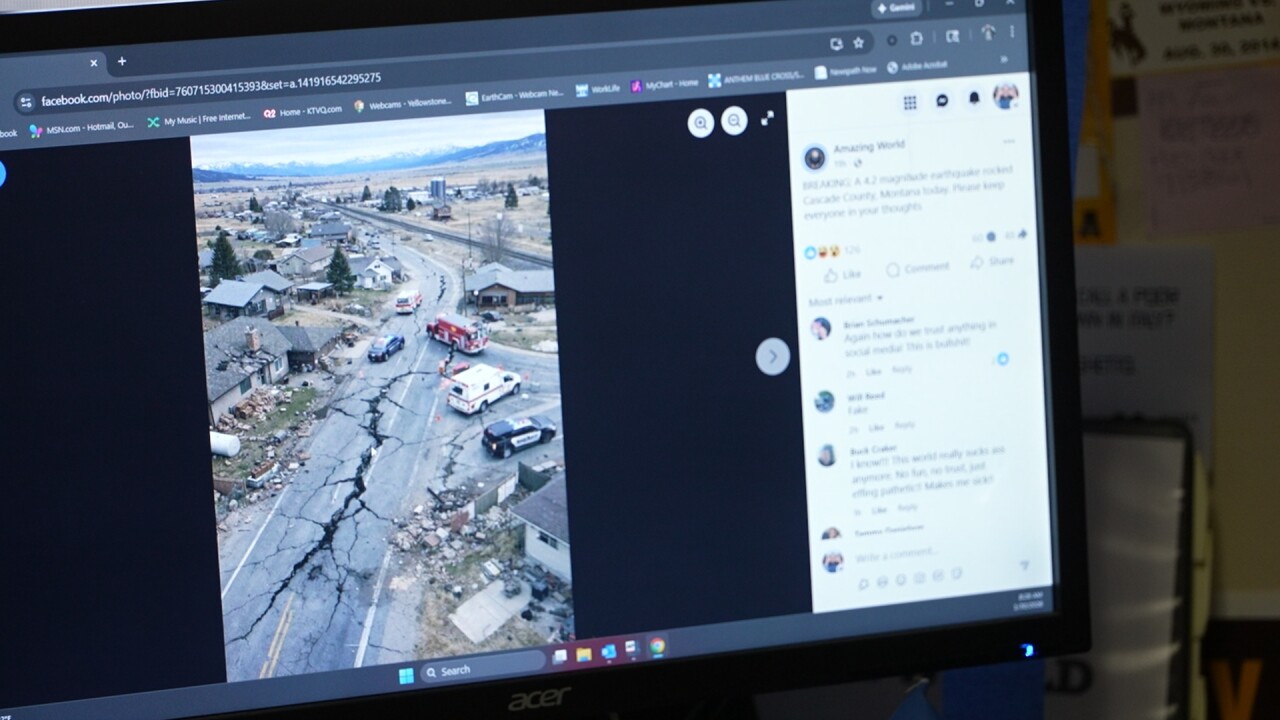
During Boyer's interview, we discovered a photo on social media claiming to be what Great Falls looked like after a recent earthquake. In reality, it's a Facebook account made up of AI images with 34,000 followers.
At MTN, journalists are given training sessions for Engine Room and always have real human oversight.
"You have to have another set of eyes on it. If you ever use AI, don't just rely on AI," Boyer said.
This ensures accurate work because humans, as well as AI, can make mistakes.
"I still take the fundamentals of journalism and the ethics of journalism with me everywhere I go, and that's never going to change," Lutz said.
When newsrooms use AI responsibly, it can be a helpful tool, but it does not replace human judgment or fact-checking. Real journalists are still behind every story MTN News produces.
This story was reported on-air by a journalist and has been converted to this platform with the assistance of AI. Our editorial team verifies all reporting on all platforms for fairness and accuracy.
