


Costco is suing the Trump administration over some of its sweeping tariffs, claiming they're illegal.
In a lawsuit filed Friday, the wholesaler writes it is seeking a "full refund" for duties it has paid to the government due to tariffs imposed under the International Emergency Economic Powers Act, or IEEPA.
That act is a 1977 law that President Trump has used as the basis for many of his tariffs. It gives the president broad power to regulate imports and exports under certain circumstances.
The legality of the president's use of that law to impose tariffs was the focus of a Supreme Court case argued in November in which justices appeared skeptical of the administration's defense of the law.
"It doesn't say 'regulate tariffs,' It says, 'regulate importations and exportations,'" Justice Sonia Sotomayor said during the Nov. 5 hearing.
Justices also raised concerns about the potentially complicated process of refunding the tariffs if they were deemed illegal.
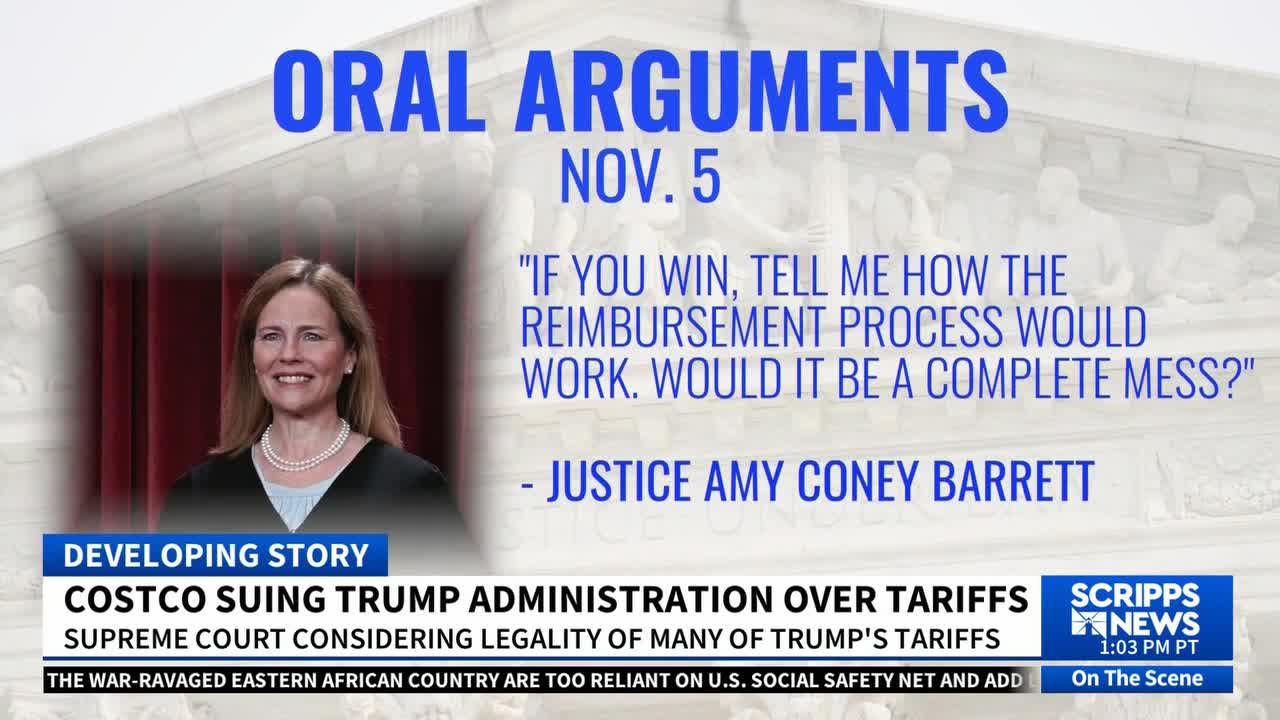
"If you win, tell me how the reimbursement process would work. Would it be a complete mess?" Justice Amy Coney Barrett asked.
An attorney representing the businesses suing the Trump administration before the Supreme Court admitted the reimbursement process would be difficult but said it's doable.
Costco joins growing list of companies suing over tariffs
Costco joined a growing list of companies suing the Trump administration over its tariffs and seeking reimbursement for those it's already paid.
A Monday court filing consolidated Costco's lawsuit with suits from more than 20 other companies making the same argument, in an effort to ensure they'd be reimbursed if the Supreme Court ruled the tariffs illegal.
"We will see more retailers put their names on the list," said Gregory Shaffer, a professor of international law at Georgetown University. "They'll do so, one, to get the money back, but two, also they'll be thinking about whether or not they'd be at a competitive disadvantage if their competitors get the tariffs back, but they do not."
Earlier this year, the U.S. Court of International Trade and the U.S. Court of Appeals for the Federal Circuit in Washington ruled that tariffs imposed under IEEPA were illegal. It's unclear when the Supreme Court might rule on the case.
RELATED STORY | Supreme Court appears skeptical of Trump’s use of emergency powers for tariffs
Importers, not consumers would receive reimbursements
If the Supreme Court ruled the tariffs were illegal, it could trigger a process in which billions of dollars in tariffs would have to be returned.
Shaffer says it would be a complicated and lengthy process in which money would go back to the importers.
"In some cases the importer of record will have contractual arrangements with retailers, and then the retailer would get the money eventually. But it will not be the consumers."
An analysis from the Tax Foundation estimates new tariffs from the Trump administration will cost the average U.S. household $1,100 this year.
