

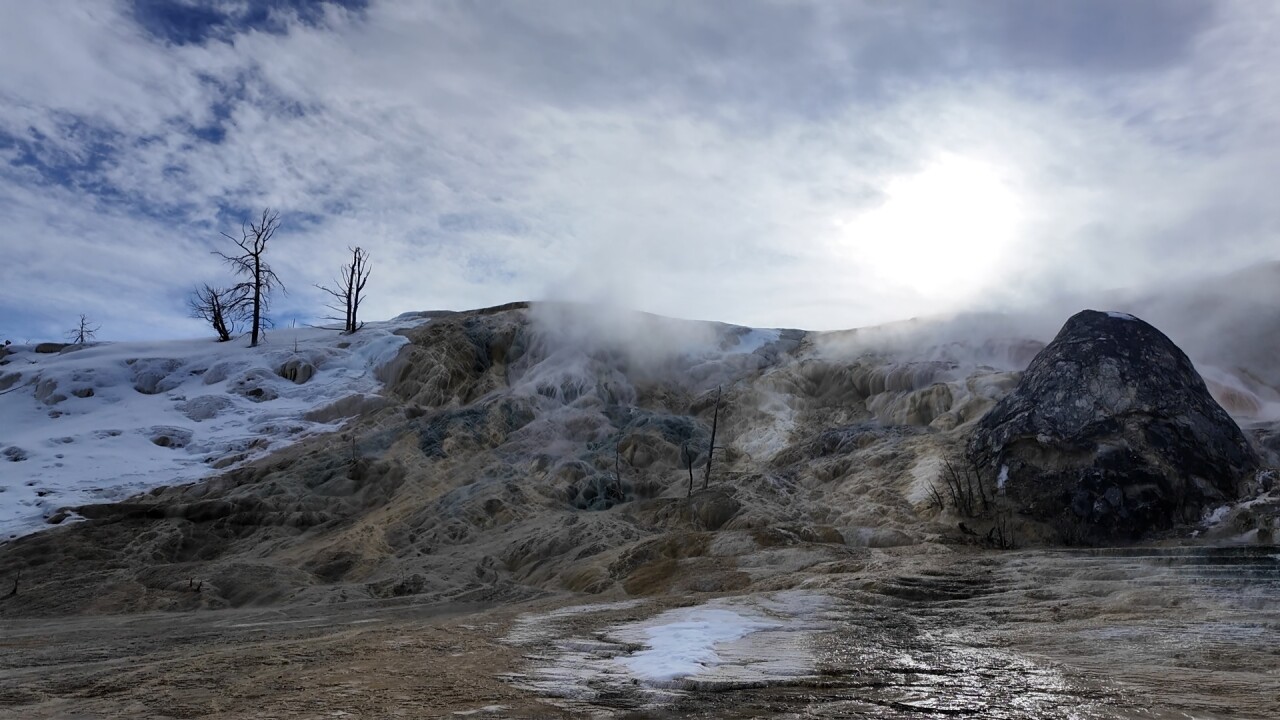

Yellowstone National Park is a place of wonder and beauty that never ceases to amaze the millions who visit each year.
But there’s much more to Yellowstone than just the incredible views above ground.
Watch the video below:
Scientists are also interested in what is happening below the surface of this still active volcano.
“What makes Yellowstone really spectacular is all that hydrothermal activity, the seismicity, the ground rising and falling, the gases that are coming out,” says Mike Poland, the scientist in charge at the Yellowstone Volcano Observatory.

He says scientists have been watching a large uplift, a bulge, that stretches around 20 miles on the northern rim of the caldera in the area around Gibbon Falls. It’s risen about an inch since last July.
“It is a sign of some pretty dramatic changes happening deep underground. The source of this is 10 miles deep, so there’s a lot of rock between there and the surface, but it still has the energy to push the surface up—even if it’s only about an inch that is still impressive,” he says.
So, what’s causing it?
“It’s more than likely some kind of magmatic fluid,” Poland says.

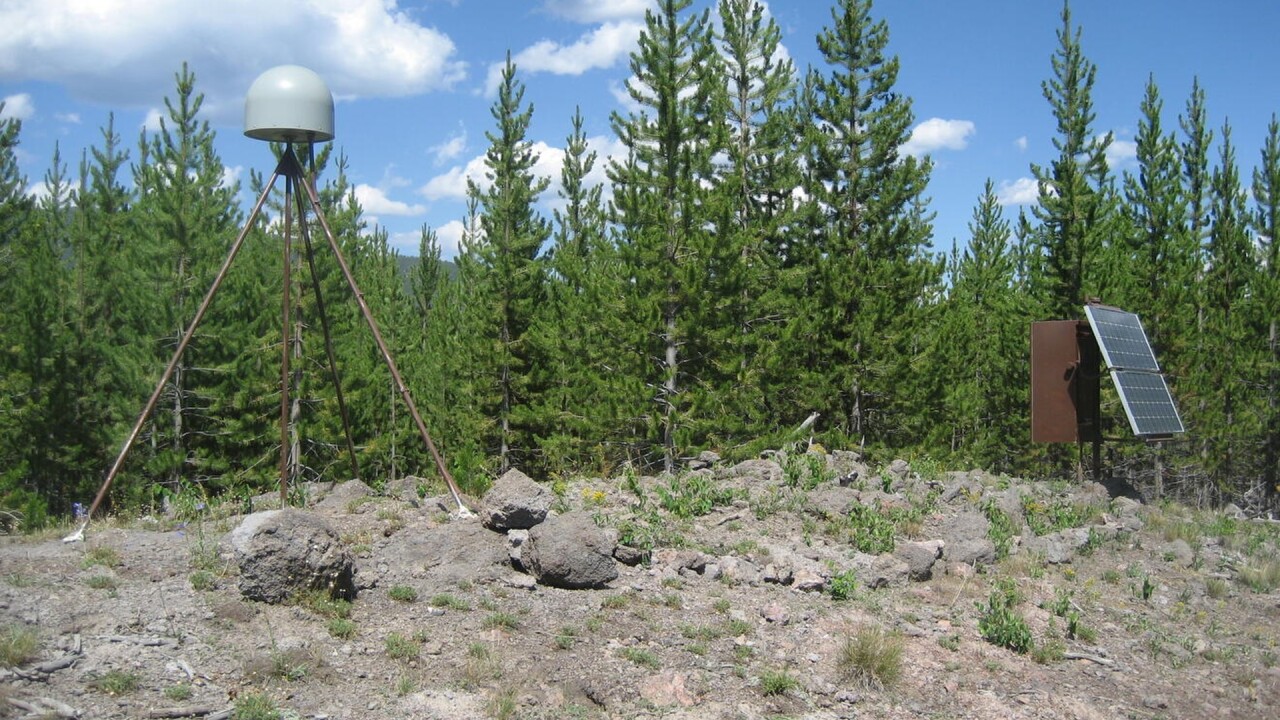
It’s not the first time an uplift like this has been noticed in that area of the park—something Poland says is visible on satellite radar and on an elaborate GPS monitoring system that the observatory has in place.
“That sounds alarming, I know—Yellowstone Volcano and all— but at that depth, it’s not something we are particularly worried about. It’s well below the surface. It’s not showing any signs of rising,” Poland says.
When Mount St. Helens blew its top in Washington state in 1980, Poland says the bulge on the northern flank of the mountain was moving outward by several feet per day.
“If this magmatic activity was to culminate in an eruption, we would have to see it get a heck of a lot shallower, a heck of a lot larger. We would see changes in patterns of earthquakes. There would be all kinds of different signs,” he says.
It’s been an estimated 70,000 years since Yellowstone’s last eruption with magma making to the surface—and it’s probably a good bet that it won’t happen again anytime soon, if ever.
Bottom line, it’s not something to get too excited about—unless you’re a scientist.
“But we now have the technology to detect it and to track it and to characterize it. So, I think it is kind of a golden age of exploration for geology in Yellowstone, Poland says.
