

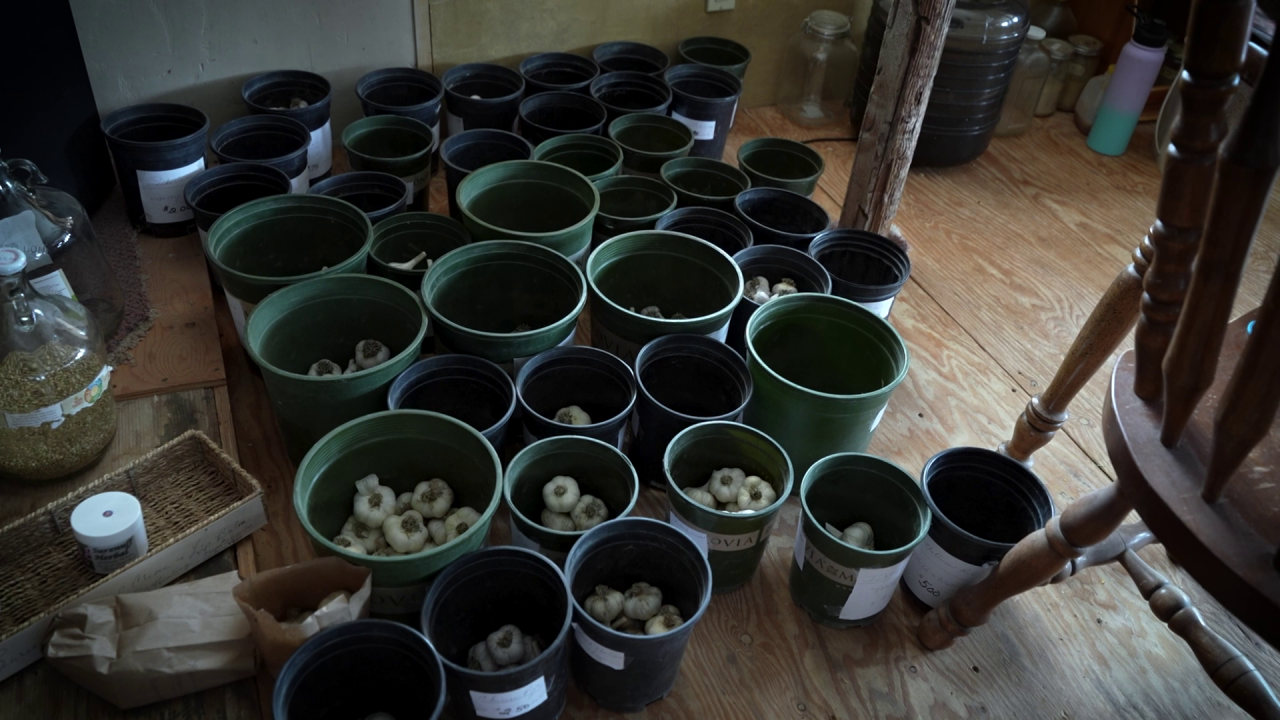


FERGUS COUNTY — When Jill Smith walked to her shed on the morning of Aug. 14, she expected the ordinary: a day of cleaning garlic, brushing dirt from bulbs and getting ready for market. Instead, she looked up and watched a small plane pass. She says it circled their property again and again for nearly two hours.
By the next morning, the life in her fields was gone.
Smith and her partner, Paul Armstad, spent more than a decade building Surenuff Garlic into a small and respected operation. They planted by hand, harvested by hand, and even cleaned each bulb with a toothbrush to preserve the outer wrappers so their garlic would store for months.
Watch Jill and Paul discuss how they lost their garlic crop
At peak production, they harvested roughly 6,000 to 10,000 bulbs across about 30 beds and grew 15 varieties, work they described as both a livelihood and a way of life.
The couple says the plane was hired to spray leafy spurge on a neighboring property. Instead, the pilot repeatedly flew outside the target boundary and used their property as a turnaround point while spraying.
Because the valley’s winds swirl unpredictably, Smith and Armstad say the spray plume did not stay in the intended area.
“I looked up and this plane was thirty feet over my head. For two hours, he kept circling,” Smith recalled.
“At the time, I didn’t smell chemicals, so I didn’t know what was happening. But some of those passes were so low I could’ve thrown a rock and hit him,” Armstad added.
Over the following days, they found willows drooping, raspberry canes collapsing, and vegetables wilting. The couple immediately collected samples and sent them to labs for testing, including soil and plant tissue.
Independent lab testing and state analysis detected picloram, the active ingredient in the herbicide Tordon, on the property.
The independent lab returned readings described in their paperwork as 0.017 parts per million of picloram and negligible or below 0.01 parts per million of 2,4-D.
Picloram is known for its persistence. The couple was told it can remain active in soil for one to seven years, and that very low concentrations can injure sensitive crops such as garlic.
Because picloram binds in soil and breaks down slowly, the couple said they made the difficult decision to discard their entire harvest and not replant this fall.
The long half-life of the compound means growers often must rely on stepwise soil testing over multiple seasons before they can safely resume sensitive plantings.
Surenuff Garlic was more than a small business. Smith and Armstad described their farm as a sanctuary that provided food and herbal medicines for daily use, a self-reliant lifestyle they’d carefully built. They estimated the loss included hundreds of pounds of stored produce.
“This wasn’t just the garlic. It was everything we eat,” Smith said. “This was our life. This was our heartbeat. And it just… stopped.”
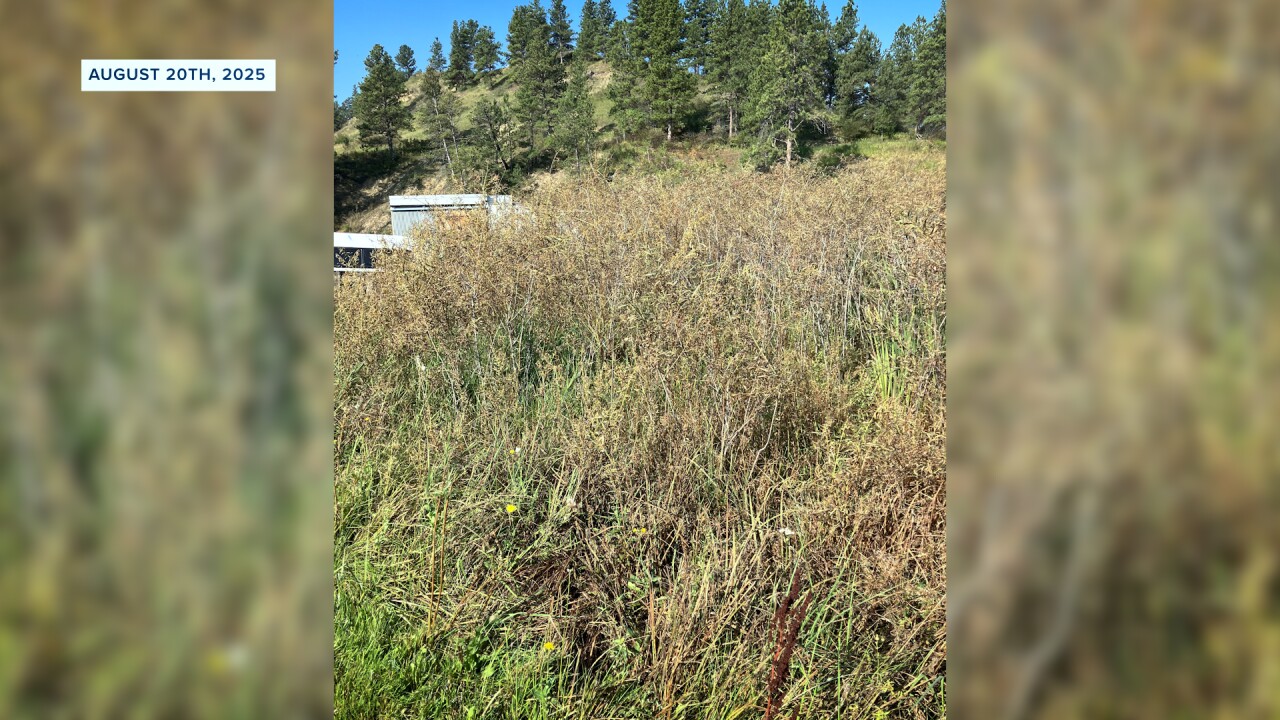
Their operation had been largely hand-driven and low-input, which made it both sustainable and financially precarious.
Planting, digging, curing, brushing, and sorting thousands of bulbs is intensely labor-dependent, and most small garlic growers exit the business within a few years because of that workload.
Smith and Armstad had made it more than a decade. Now they face uncertainty about whether the ground will ever again support the kinds of crops that defined their farm.
They plan to continue testing and documenting the property and hope their experience prompts more caution in aerial application practices in valleys where wind and terrain can carry spray beyond intended fields.
MTN News contacted the pilot of the plane, who referred us to his attorney. The attorney has yet to respond.
