


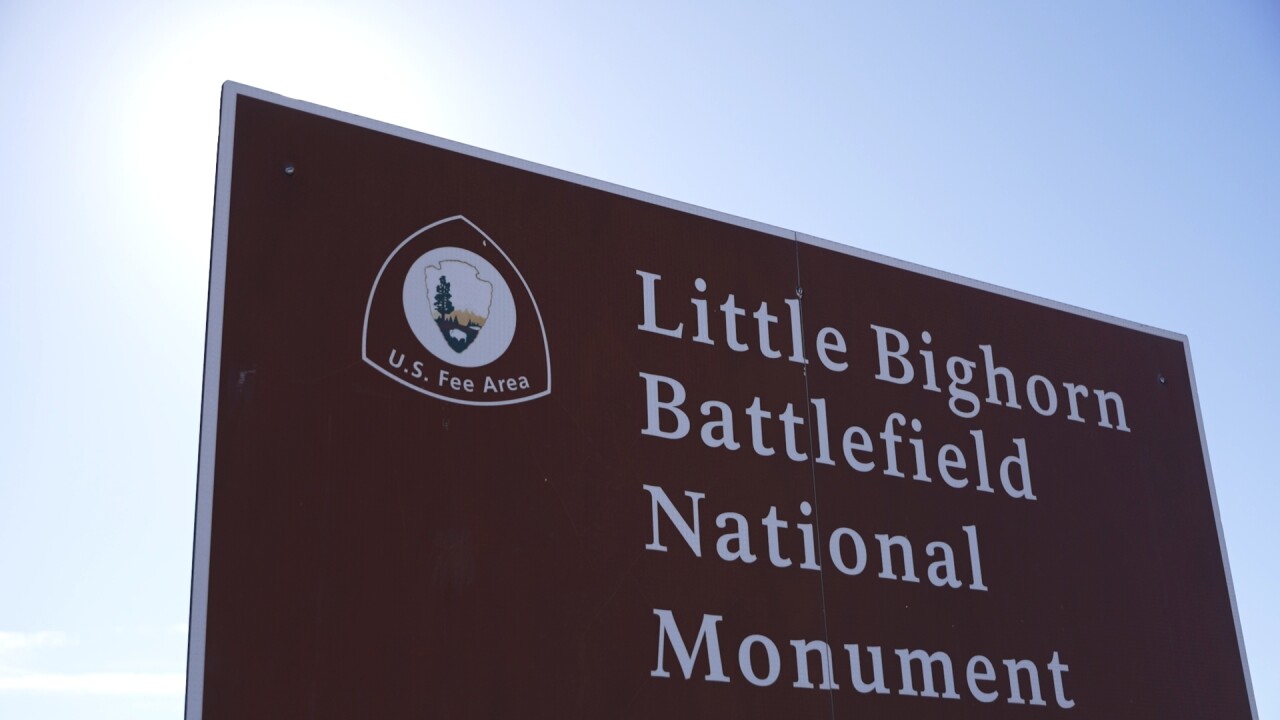
LAME DEER — As the 150th anniversary of the Battle of the Little Bighorn approaches this summer, a dispute has emerged between Northern Cheyenne tribal leaders and the federal government over how history is presented at the Little Bighorn Battlefield National Monument.
Listen to both sides of the debate:
Tribal officials said recent directives from the Trump administration could lead to the removal or alteration of interpretive displays in the visitor center that address broken treaties and the impacts of federal Indian boarding schools. The Department of the Interior disputes that characterization, stating that it conducts routine reviews to ensure historical accuracy and broader context — not erasing history.
The disagreement centers on an executive order issued last March by President Donald Trump titled “Restoring Truth and Sanity to American History,” and Secretary Order 3431 issued last May by Interior Secretary Doug Burgum, which directs federal agencies to review certain interpretive materials at national parks and historic sites. The order applies to at least 17 National Park Service sites nationwide, including Little Bighorn Battlefield National Monument and Glacier National Park in Montana.
The Washington Post first reported last week that exhibits at Little Bighorn referencing the U.S. government’s broken promises to Native Americans and describing how boarding schools “violently erased cultural identities and language” were flagged as noncompliant under the order.
Previous coverage: Trump orders removal or changing of Native American signage at national park
Northern Cheyenne tribal leaders said Thursday that those exhibits reflect long-documented history and were developed through years of consultation with the Park Service.
“We're the victors. Our story needs to be told,” said Wallace Bearchum, chairman of the Northern Cheyenne Cultural Commission. "We don't like the talk that's trying to take away our history, take away our story.”

Vice President Ernest Littlemouth said the Northern Cheyenne Tribal Council voted unanimously, 11-0, on Wednesday to oppose any changes to existing displays at the monument.
"We're here just to confront what Trump's trying to do,” said Littlemouth. "We want to teach our youth our history. That's why we got the signage up there.”
Tribal leaders also raised concerns about artifacts that were removed from the visitor center during construction and relocated off-site, saying they were not informed where the items were taken or when they might return. Littlemouth said the tribe has spent years preparing for the anniversary and was troubled to learn of the proposed changes through media reports rather than direct consultation.
“It's going to be a historic event for us, and for the government to be doing what they're going to do, don't look too good," said Littlemouth.
For many on the council, the decision felt personal.
“We had a lot of people that are our family members that are buried over there, and a lot of them were killed during the battle,” said Llevando Fisher, a council member. "We have our great senator, Sen. Ben Nighthorse, he's a member of our tribe, that introduced legislation to do away with Custer Battle and make it Little Bighorn Battleground."
“If they're going to censor anything about broken treaties, that's certainly not good. We want the truth to come out," added Eugene Little Coyote, assistant to the tribal vice president. "We have a lost narrative about this battle that needs to be brought to light.”
Council members met with National Park Service officials on Thursday to seek clarification. On Friday, tribal officials said the meeting helped them better understand which exhibit displays in the new visitor center may be revised, but they remain opposed to any changes they believe would soften or remove references to historical trauma, even if the wording of those displays only slightly changes.

In a statement, the tribe said language previously agreed upon, particularly descriptions of violence against children in federal boarding schools, “reflected the truth, although painful, but it was honest.”
“Obviously, the Tribe is opposed to the Park removing these truths from the exhibits, and will strive to get it reinstated,” the statement said.
Federal officials said the tribe’s concerns are based on a misunderstanding of the order.
A spokesperson for the Department of the Interior said recent news reports have inaccurately linked routine sign maintenance to Secretary’s Order 3431. The agency said the changes are instead a part of "routine sign maintenance," as the parks regularly replace signs that are damaged, weathered, or outdated, and that those actions are unrelated to the directive.
The Interior Department said the order instead calls for a review of interpretive content to "ensure parks tell the full and accurate story of American history, including subjects that were minimized or omitted under the last administration," such as slavery and the treatment of Native Americans.
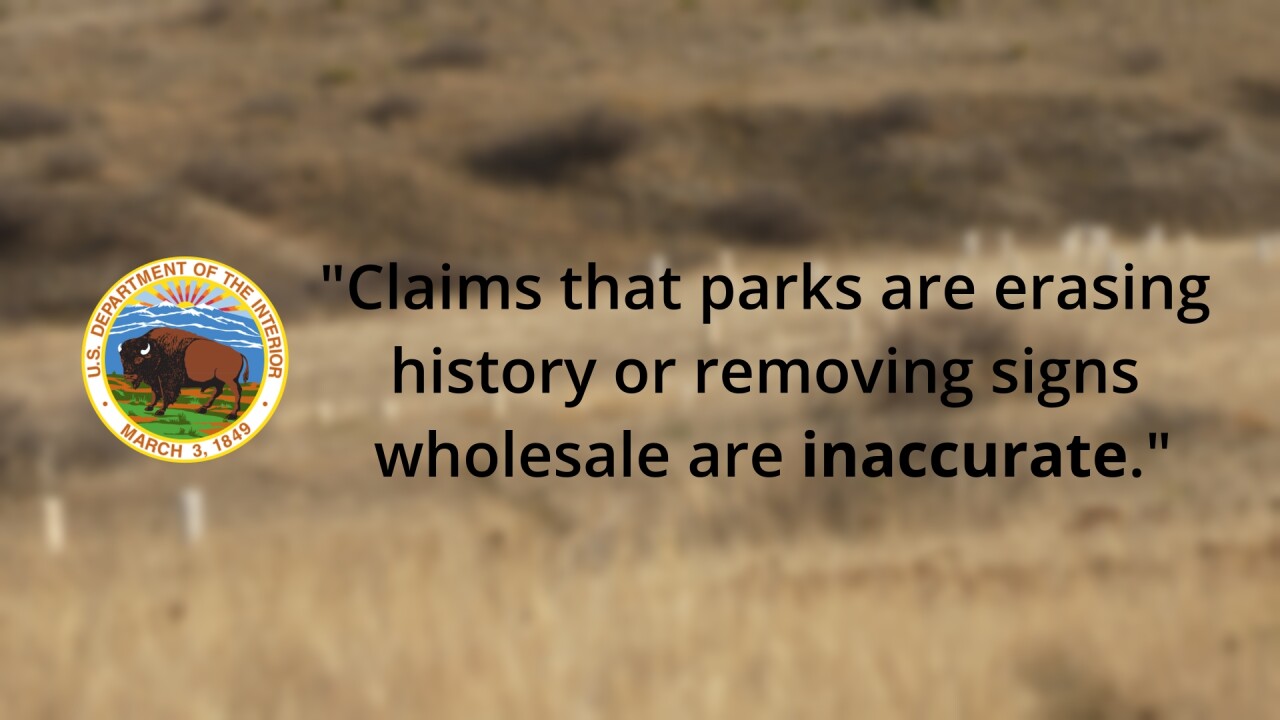
"Some materials may be edited or replaced to provide broader context, others may remain unchanged, and some removals being cited publicly had nothing to do with SO 3431 at all," the statement said. "Claims that parks are erasing history or removing signs wholesale are inaccurate."
Not all historians see the issue as an attempt to rewrite history.
“There's two sides of every story," said Renee Christiansen.
Christiansen, a historian with the Yellowstone Historical Society in Billings, agrees with the process and said she believes it could provide an opportunity for broader community input.
“I do not feel that the government is trying to rewrite the history. I feel that they are wanting input from our communities to make the history alive and real,” said Christiansen. “If the Cheyenne want to protest, that's fine, but they do need to also be part of the story and take the time to do that.”
Tribal leaders argue that they have already provided that input.
“We're very involved there. We worked years to develop and design things," said Bearchum. We've fought all these years to stay who we are and to also educate non-Cheyenne people about who we are and what we did there."
The Northern Cheyenne Tribe has reached out to the Bureau of Indian Affairs, U.S. Rep. Ryan Zinke, and U.S. Sen. Tim Sheehy seeking intervention. A spokesperson for Sen. Steve Daines told MTN Friday in a statement: "Senator Daines is a staunch supporter of Montana's tribes and history and believes tribal stakeholders should be consulted."
In a statement, Rep. Troy Downing’s office said he welcomes tribal input on the issue and was "proud to advocate for the direction of additional resources to support the Little Bighorn Battlefield National Monument ahead of the 150th anniversary events."

Despite the disagreement, tribal leaders said they hope the issue can be resolved through continued dialogue.
“We've had a very good working relationship with the Park Service up to this point, and we hope we can resolve these things with dialogue and consultation," said Little Coyote.
“We’re the fighting Cheyenne,” said Littlemouth. "We'll keep fighting for our land because of our youth."
