


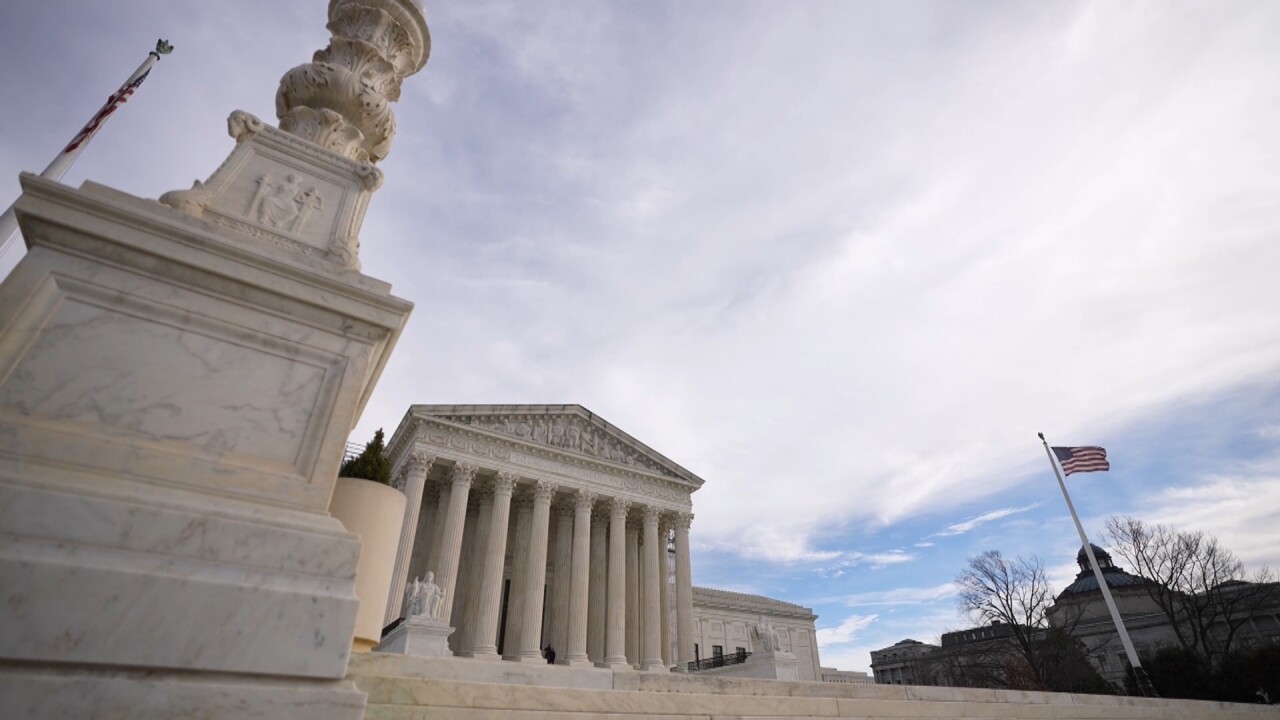
BILLINGS — Montana business owners and agricultural producers are sorting through uncertainty after the U.S. Supreme Court struck down large portions of President Donald Trump’s tariff policy. It's a decision that could save businesses a lot of money, but it has left questions about whether companies will ever see refunds.
Watch how Montana businesses, farmers weigh impact of Supreme Court ruling on Trump tariffs:
In a 6-3 ruling Friday, the high court said the president did not have authority under the 1977 International Emergency Economic Powers Act to impose broad tariffs on U.S. trading partners. The tariffs were announced on April 2, which Trump dubbed “Liberation Day" were struck down by the court, as well as tariffs enacted in February that targeted imports from Canada, China, and Mexico.
Related: Trump signs order for new tariffs after Supreme Court blocked earlier plan
Trump sharply criticized the decision, including two justices he nominated, calling it disappointing, and said he would continue pursuing tariffs under other laws. In a social media post later that day, Trump said he signed an executive order invoking the Trade Act of 1974 to impose a 10% global tariff on imports.
The Supreme Court did not address whether companies that paid billions of dollars in tariffs are entitled to refunds, and Trump said any effort to recoup funds could take years of litigation. Businesses who have paid those tariffs are uncertain whether they will ever recoup the costs.
"With the Supreme Court of the United States, a conservative-leaning Supreme Court of the United States, saying that the President overstepped his authority, it's just a massive deal,” said Joe St. George, chief Washington correspondent for Scripps News. “For them to reject the President's economic tariffs is just remarkable.”
St. George said the path forward is still unclear.
"I think the fundamental question is, could the Trump administration even give this money back? Or has the Treasury Department moved the money already? I mean, this is a mess," said St. George. "Bottom line, there's a lot of unknowns as to what happens next.”
Businesses technically paid the tariffs to U.S. Customs, but St. George noted the Federal Reserve has found most costs were passed on to consumers.
"Ninety percent of the tariffs have been paid by you or I," he said. "Ultimately, those tariffs have been passed along to all of us."
In Billings, SewTites owner Jessica Drain said tariffs created some significant challenges for her small manufacturing business, which relies on magnets and other raw materials sourced from China. She said her company placed its largest production order just before tariffs on some Chinese goods spiked as high as 150%. Because the order was already in progress, the company could not halt production. The shipment was delayed for about 90 days as tariff rates fluctuated.
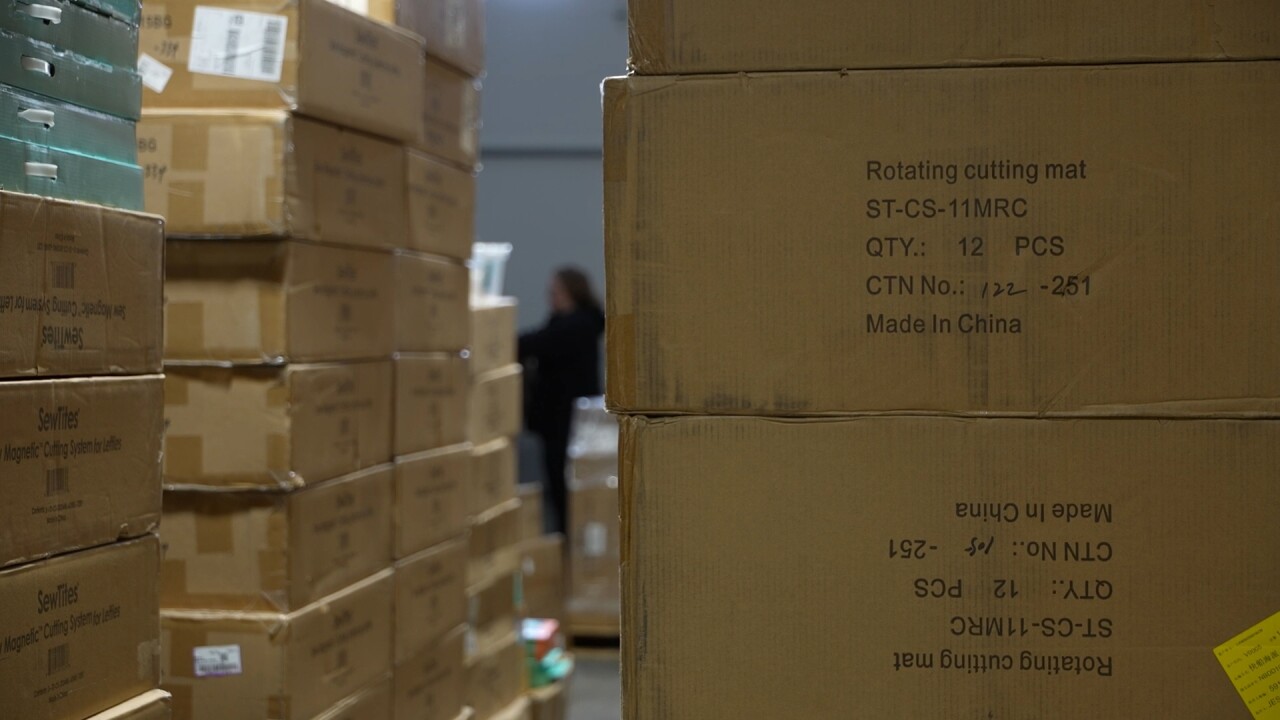
“It was definitely a really challenging year last year,” Drain said. "That was kind of the biggest impact to our business.”
Related: Billings business preparing for higher cost under Trump's China tariff
Drain said SewTites slightly increased prices to maintain margins amid fluctuating costs. While profitability was not severely harmed, she said a potential refund could mean a five-figure return, but she's not holding her breath yet.
“But who knows really? Probably just kind of wait and see, not hoping for it necessarily," said Drain. “It definitely sounds like it's going to be pretty convoluted.”
Montana’s agriculture sector, which depends heavily on trade, is also watching closely. According to U.S. Census Bureau data, over 90% of Montana’s imports come from Canada, making cross-border trade especially critical.
Related: Montana may face the biggest impacts from new tariff proposals, report shows
Steve Sheffels, president of the Montana Grain Growers Association, stated that tariffs have driven up input costs for farmers, including fertilizer, aluminum, and steel, all of which are essential materials for equipment and production. At the same time, commodity prices have remained low.

"Through that whole fiasco, fertilizer prices went up maybe 50% last spring,” said Sheffels. “The biggest issue for us this spring is there is no crop that I'm aware of that I can plant that I could hope to make money on, given today's costs and today's prices.”
Related: Montana Ag Network: How tariffs abroad are impacting farmers at home
Sheffels said the ruling could bring stability, which farmers desperately need.
"I think that we generally see it as a very positive thing," said Sheffels. “I guess my greatest hope for the Supreme Court decision is an increase in certainty. The uncertainty is absolutely killing us.”
Still, he worries that if refunds are issued, smaller producers like him may not benefit in the same way as larger corporations.
"The disadvantage we as farmers have is we don't have any place where we can pass any kind of a cost increase on," said Sheffels. "We have to accept our costs, and as commodity producers, we also have to accept the price that is offered in the market, so we don't get to set anything."
Not all agricultural leaders oppose tariffs.
Bill Bullard, CEO of R-CALF USA, which represents independent cattle ranchers and sheep producers in the country, said his organization has pushed for targeted tariffs to protect domestic industries.
Related: Montana ranchers look at potential effects of tariffs on beef industry
During the past year, the organization has requested tariffs on lamb imports from Australia and New Zealand. Bullard said that 73% of lamb consumed in the United States in 2024 was imported from those countries.

“We have been supportive of specific tariffs, tariffs that would be designed to protect domestic industries," he said. "We were supportive of these reciprocal tariffs that were instituted back in April, and we believe that this was the first step in the right direction, but these were tariffs that were really for the purpose of generating revenue.”
Bullard said he is skeptical that refunds will materialize and believes the president may pursue alternative legal avenues, including authorities granted under the Tariff Act of 1930, which allows temporary tariffs in certain circumstances.
“I don't know if it was legitimate that there was going to be a refund and certainly skeptical that any refund would be made at this point,” said Bullard. "This may just be a temporary setback. I think the president is still intent upon preserving and protecting the critical industries in the United States, and food is among them."
“This may just be a temporary setback,” Bullard said. “I think the president is still intent upon preserving and protecting the critical industries in the United States, and food is among them.”
For now, businesses and producers across Montana are left waiting.
"I wouldn't be counting on a refund check just yet," said St. George. "I think the White House still has some cards up their sleeves with this issue.”
