


BILLINGS — The large celebrations of Mardi Gras may be thousands of miles away, but each winter, a taste of the celebration arrives in Billings.
At West End restaurant Cajun Phatty’s, owner Ashley Robichaux spends weeks baking and decorating king cakes, an iconic Mardi Gras dessert rooted in centuries-old tradition, sharing a piece of the Big Easy with the Big Sky every year.
Watch how one local restaurant celebrates Mardi Gras each year:
When you step inside the restaurant, there's a good chance you'll be greeted by Robichaux's southern, Louisiana charm.
"Once I meet you, you're getting a hug the next time," she said. "People thought that that was weird at first. Now they expect the hugs.”
Robichaux moved to Montana from New Iberia, La., more than a decade ago and opened Cajun Phatty’s in 2012. The restaurant remains the only brick-and-mortar Cajun restaurant in Billings. She said the move was daunting at first.

"That was kind of scary to say, 'Okay, well, we don't have any Cajun food to eat," said Robichaux. "We brought the culture. We brought it here with us. You can't have a Cajun restaurant without playing Cajun music without doing something quirky, off the top.”
Along with gumbo and jambalaya, Robichaux brought traditions, especially king cakes. During the holiday season, which begins Jan. 6 and runs until Mardi Gras, which falls on Feb. 17 this year, they take center stage.
“It's just a thing. Come January 6th, it's King Cakes season,” said Robichaux.
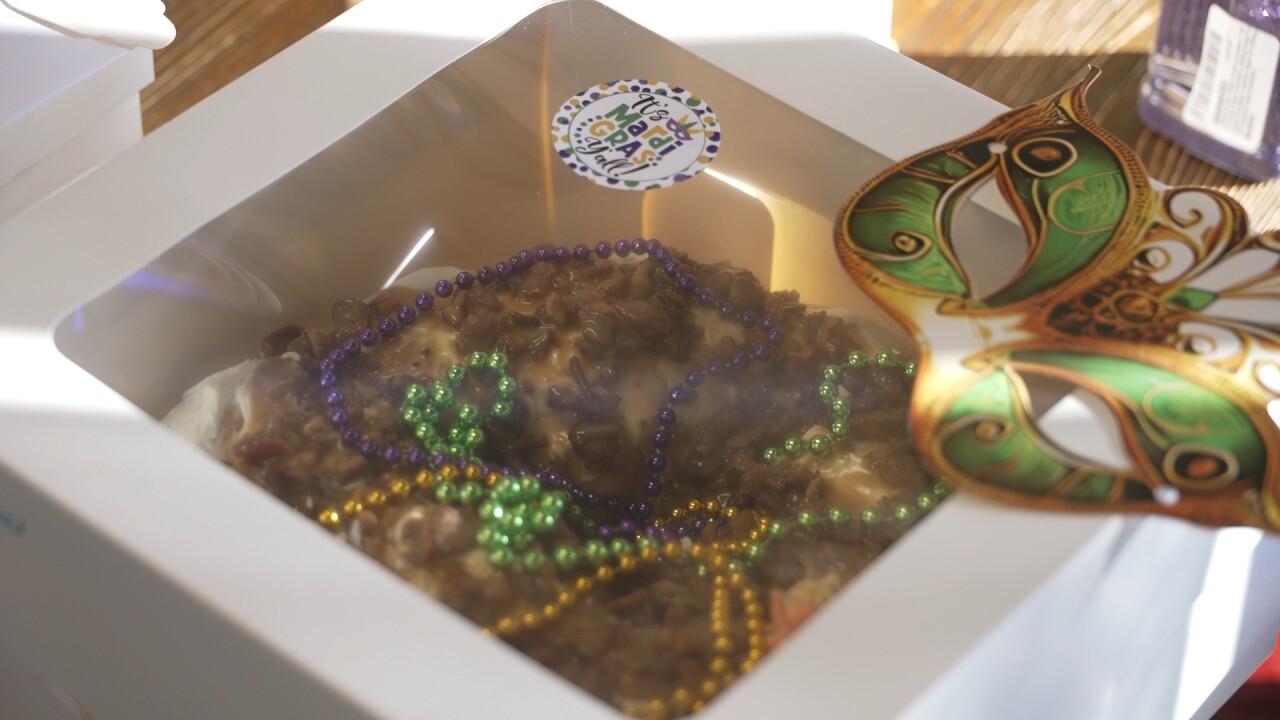
In New Orleans, more than 500,000 king cakes are sold and eaten during the season. In Billings, the scale is smaller, but the meaning remains. Robichaux bakes and decorates the cakes to order, producing up to 30 each week. Each season, she makes approximately 200 cakes, with roughly half of them baked during the week of Mardi Gras alone.
Every oval-shaped brioche-style cake features the traditional Mardi Gras colors: purple for justice, green for faith, and gold for prosperity and power. They are often topped with beads, coins, or masks. Cajun Phatty’s offers flavors ranging from classic cinnamon to Bavarian cream, praline and cream, Chantilly Bavarian, and strawberries and cream. Prices range from $35 to $50, with orders completed on Wednesdays.
The tradition dates back centuries to French and Spanish royalty, when the cakes were used to celebrate the biblical story of the Three Kings visiting baby Jesus on the Epiphany, or Jan. 6. Early versions often hid a bean or coin inside the cake.
"Whoever cut that piece had to present the king with the next one," said Robichaux.
Over time, the bean or coin became a small plastic baby symbolizing Jesus. Today, whoever finds the baby takes on a huge Mardi Gras responsibility.
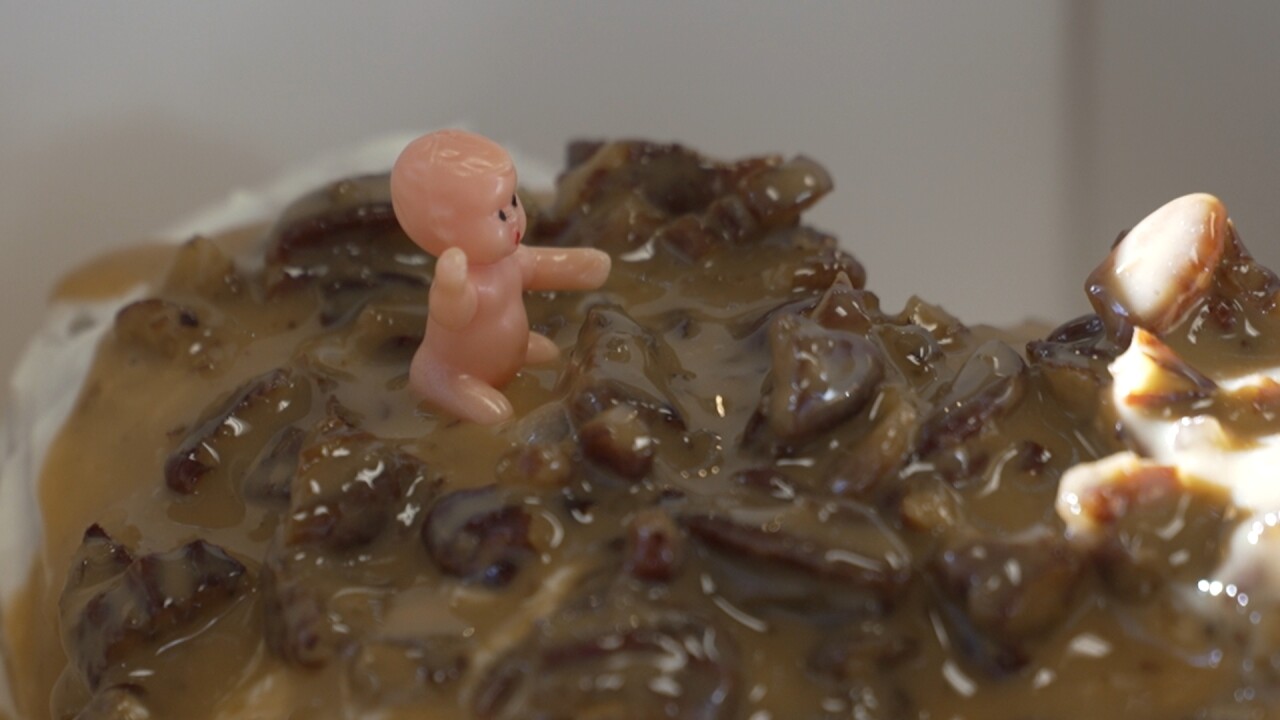
"They would insert the baby, and whoever cuts the piece again, they are to buy the next cake. They are to throw the next ball," Robichaux said.
That tradition can be a surprise for some first-timers.
“I didn't even know that she had babies in them, and I ate one. I swallowed it whole," said Missy Nichols, Cajun Phatty’s general manager. "So it's a lot of fun."
Nichols said customers are often impressed by the labor behind each cake. Robichaux frequently starts before dawn, preparing and shaping the dough by hand, and decorates each one herself.
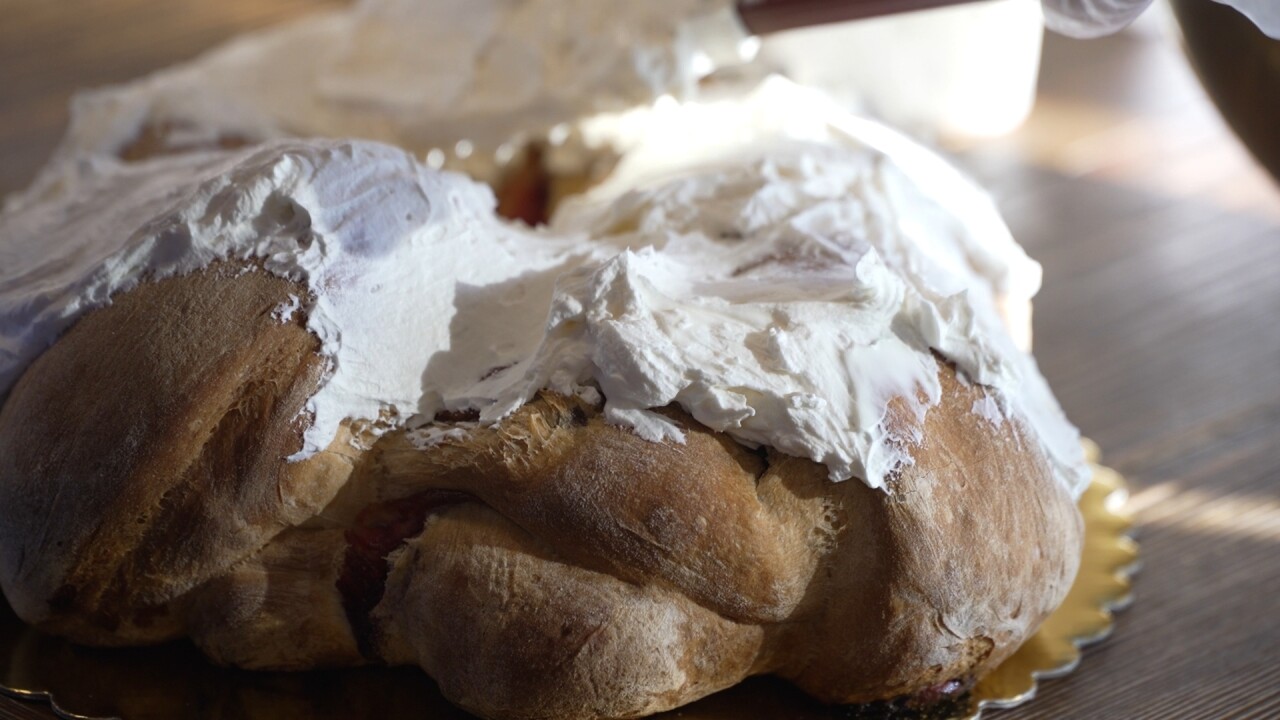
"She's in here at sometimes four o'clock in the morning, and then the dough begins to roll, knots at herself, stuffs at herself," said Nichols. "I think that's what people are most impressed with. I know I am.”
Beyond the baby, king cakes carry additional customs. The knife often stays in the cake box, and whoever hosts the cake is expected to continue the celebration.
The cakes mirror the vibrant celebration of Mardi Gras itself. For Robichaux, they represent more than a seasonal dessert, but help her preserve traditions that keep her connected to home.
"Living in it, you miss some of those things, like you just might not appreciate all the little things when you move away," she said. "It's always been more than just food. It's been people. It's been love. It's been traditions."
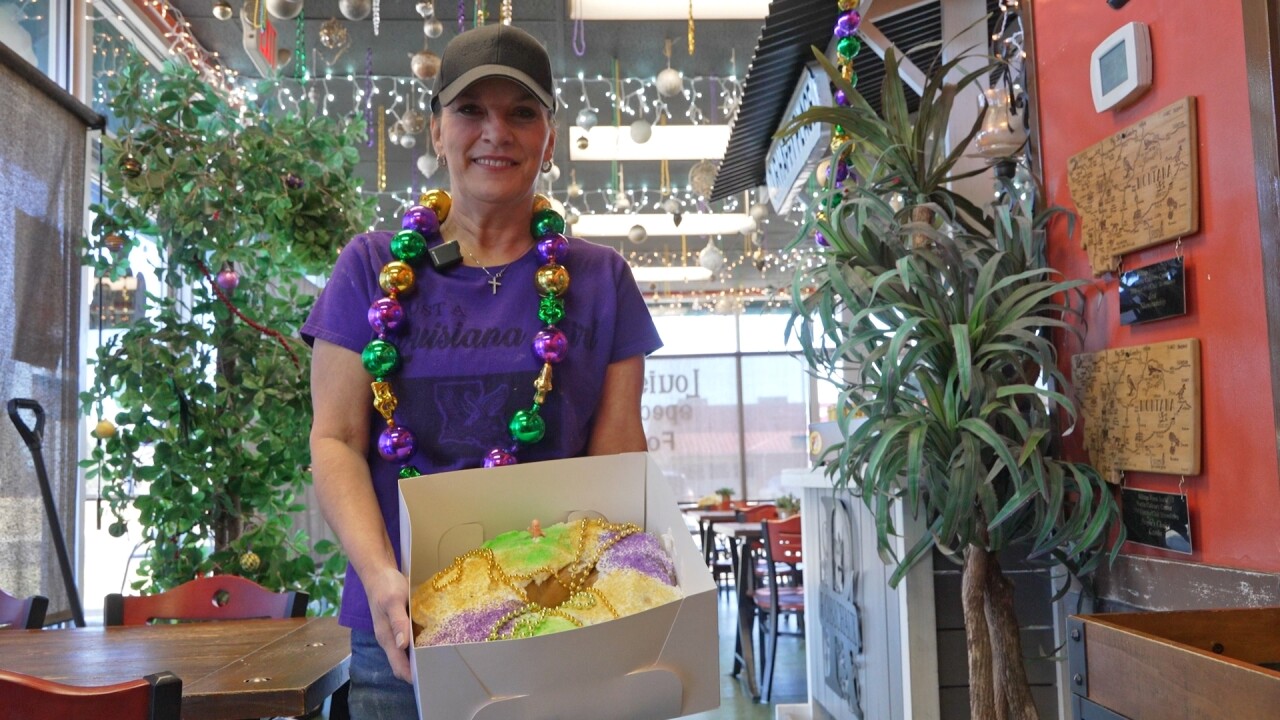
That spirit fills the restaurant each Mardi Gras season. From the music to the bright colors, it's those traditions that mean the most when shared with others.
"I hang on to, well, just the culture and people have adapted to me when they walk in," said Robichaux. “(We are) definitely more than a restaurant, and we feed you, that's secondary. We love you first, and we feed you next.”
For more information on how to order a king cake, click here.
