


BILLINGS — The floor of the Lincoln Center was nearly full Saturday afternoon for a discussion about money in politics and a proposed ballot initiative that could reshape how elections are funded in Montana.
Listen to former Montana politicians share their thoughts on corporate campaign spending:
The event centered on the Montana Plan, a proposal backed by the Transparent Election Initiative, which would remove state-granted powers that allow corporations to spend money in political campaigns. Supporters said the change would limit the influence of corporate and outside spending, as well as "dark money," or political spending by organizations that are not required to disclose the sources of their funding, in Montana elections.
Speakers included former U.S. Sen. Jon Tester, former Montana Gov. Marc Racicot, independent U.S. House candidate Gary Buchanan, and former state Commissioner of Political Practices, Jeff Mangan, who founded TEI. Organizers said the event's goal was to explain the initiative and highlight campaign finance as a nonpartisan issue.
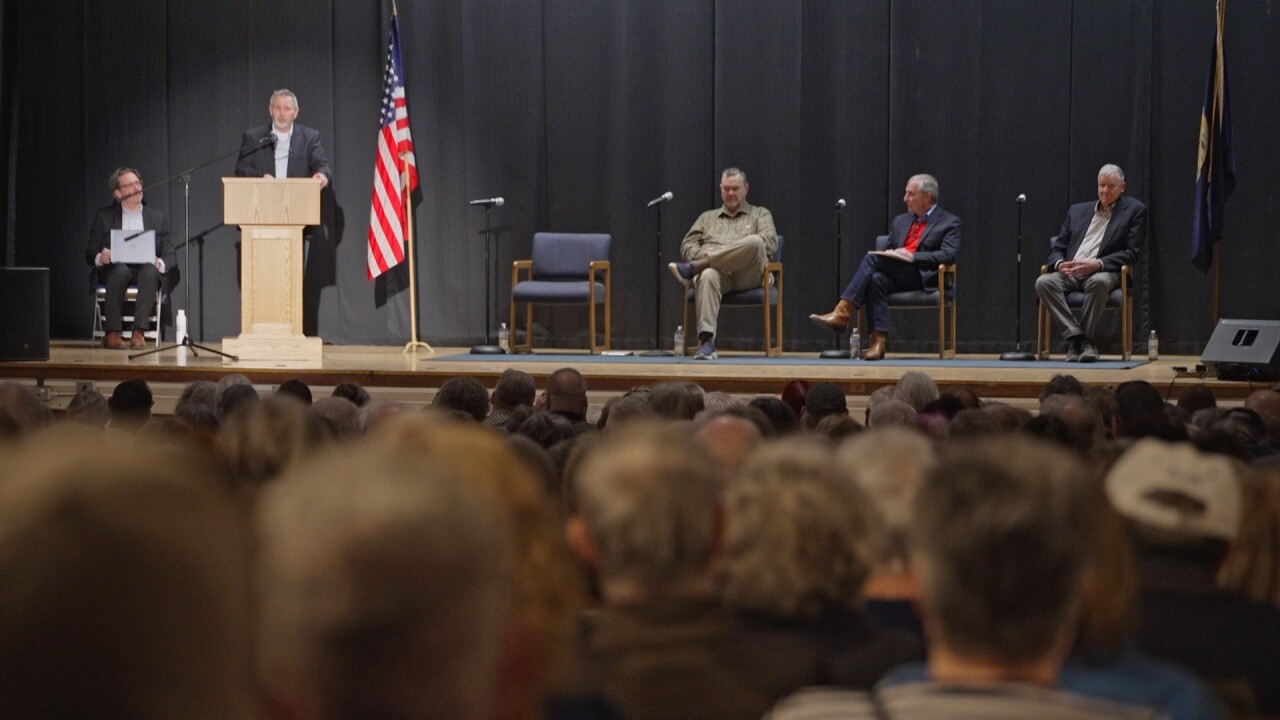
“It’s got a long history, that issue, in Montana,” Racicot said, referring to the state’s early restrictions on corporate involvement in elections.
The proposal comes more than a decade after the 2010 U.S. Supreme Court decision in Citizens United v. Federal Election Commission, which overturned long-standing campaign finance restrictions and allowed corporations and other outside groups to spend unlimited amounts independently in elections.
Since that ruling, Super PACs have spent more than $6.4 billion in federal elections nationwide, according to campaign finance data.

Under the Montana Plan, supporters said the state would withdraw the authority it grants corporations to engage in political spending, an approach they argue would limit the effect of Citizens United within Montana.
“Transparent Election Initiative is, of course, a ballot initiative that is going to make Citizens United in Montana moot,” said Claiten Gusler, a volunteer with the group. "Corporations in Montana can buy property. They can contribute in our elections, and we're able to, through the ballot initiative, just withdraw that one power."
Earlier this month, the Montana Supreme Court rejected the group's original proposed constitutional amendment, finding it violated a requirement that constitutional amendments address only one substantive change. In response, organizers filed two revised initiatives with the Montana Secretary of State days later.

Former Gov. Racicot, a Republican, and Tester, a Democrat who served three terms in the U.S. Senate, said rising campaign costs have changed how candidates run for office. Racicot said campaigns during his time in office relied more heavily on in-person outreach and grassroots efforts, rather than advertising funded by outside groups.
"For me, there were no political action committees. There was no limitless amount of money that could be contributed because I left office in 2001," said Racicot. "There's no longer any kind of personal process that's involved, and that, I think, is incredibly unhealthy for our democracy."
Tester pointed to the increasing cost of Senate races as evidence of that shift.
“When I ran 2006 for the U.S. Senate, my first run, it was $27 million. I had a primary, both sides, the primary, everything, $27 million," said Tester. "After Citizens United in 2010 and 2024, that race was over $250 million, over a quarter of a billion dollars.”
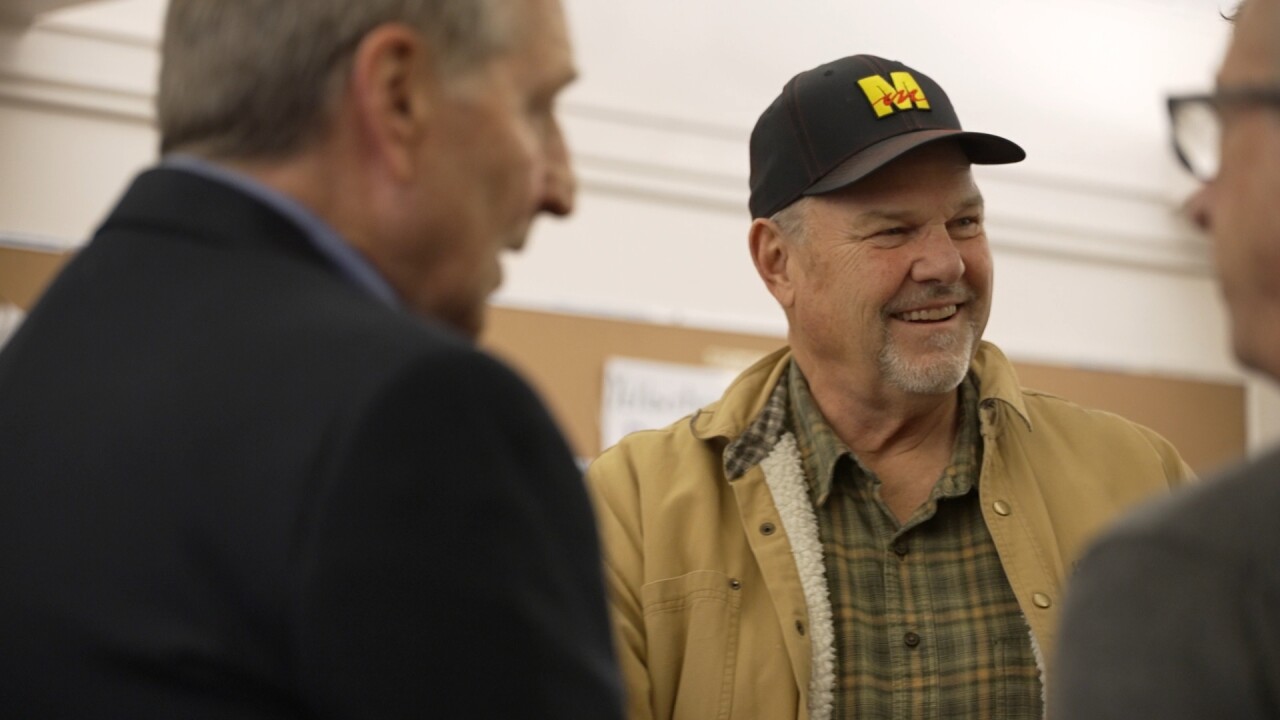
In the 2024 election cycle alone, Super PACs spent more than $2.7 billion nationwide. Montana’s U.S. Senate race reached a record $255 million in total spending, with political action committees accounting for more than half of that amount.
Related: 2024 political ad spending breaks records in Montana, but does it work?
Tester, who lost the race to Sen. Tim Sheehy, acknowledged that his campaign also benefited from outside spending.
“My opponent wasn't the only one that spent that money. I spent it, too. In fact, we may have raised more money than my opponent did that election," said Tester. "But the fact is this—these elections never end anymore because of this."
Campaign finance records show that 58 political action committees spent money on the Montana Senate race. Fourteen of those groups accounted for more than $118 million in outside spending. Opposition advertising made up most of that total, with more than $50 million spent opposing Tester and $48 million opposing Sheehy.

Supporters of the Montana Plan said the initiative has attracted interest from voters across the political spectrum, including conservatives. Gusler, a conservative himself, said he became involved after concluding that elected officials were increasingly influenced by outside money rather than constituents.
"(Montana's) been a red state for a long time. We get outspent in every election, three to one, every national election," said Gusler. “I think that the politicians that we elect, especially on the conservative side, their ideas will hold up a lot better in Montana."
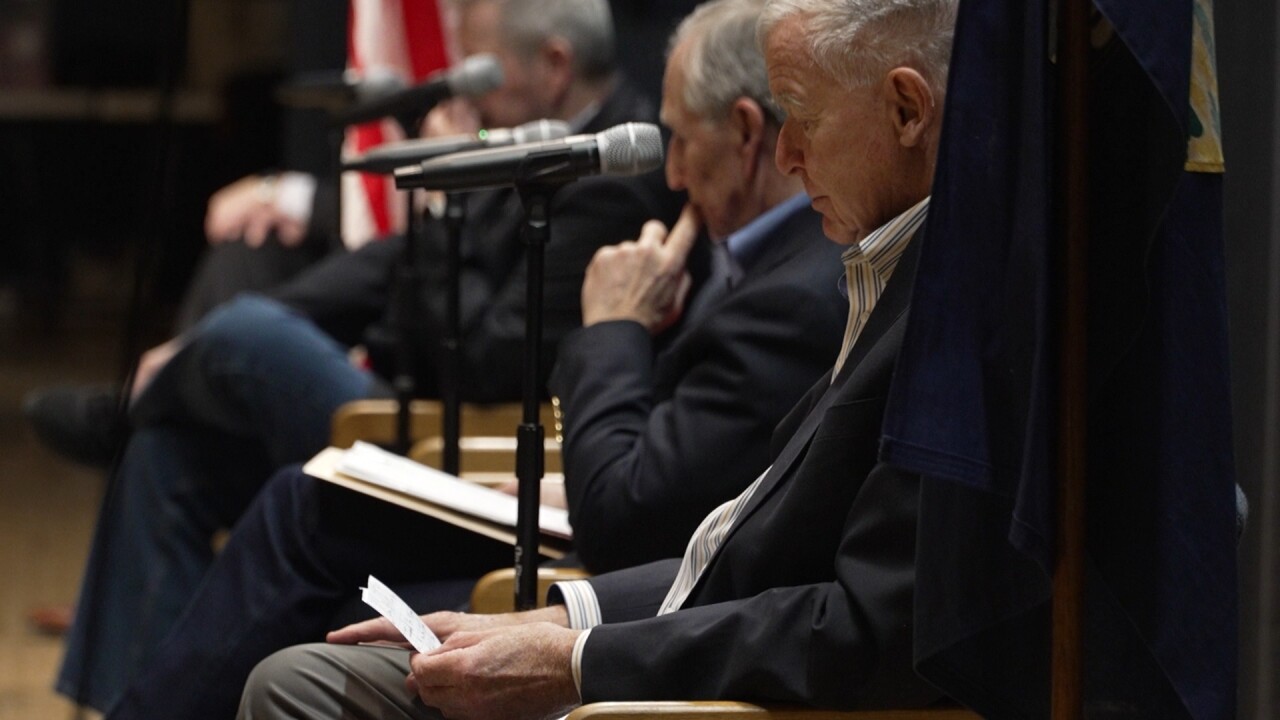
Also attending Saturday’s event was Democratic U.S. Senate candidate Reilly Neill, who hopes to challenge Sen. Steve Daines. Neill said she does not accept corporate donations and has already raised approximately $120,000 from individual donors in Montana.
Neill said she has held more than 40 roundtables and town halls across the state and believes in prioritizing direct engagement with voters.
"I think we're all sick of corporate dollars running our world. In Montana, in small communities, we depend on each other,” said Neill. “Our delegation needs to be on the ground listening, and that's worth more than gold.”

Before the Montana Plan can appear on the 2026 ballot, it must collect enough signatures and clear legal review. Organizers said Saturday’s discussion was an early step in building awareness and support for the proposal.
"I think this issue unites a lot of people, whether you're Democrat, Republican, or whatever party you belong to, or whether you're just a regular voter. I think they understand that what's gone on for the last 16 years now is really kind of ridiculous, to be honest with you, with all the money that's flowing in," said Tester. "There'll still be a lot of money coming into these campaigns, into the third-party groups too, but it just won't be done by corporations.”
