

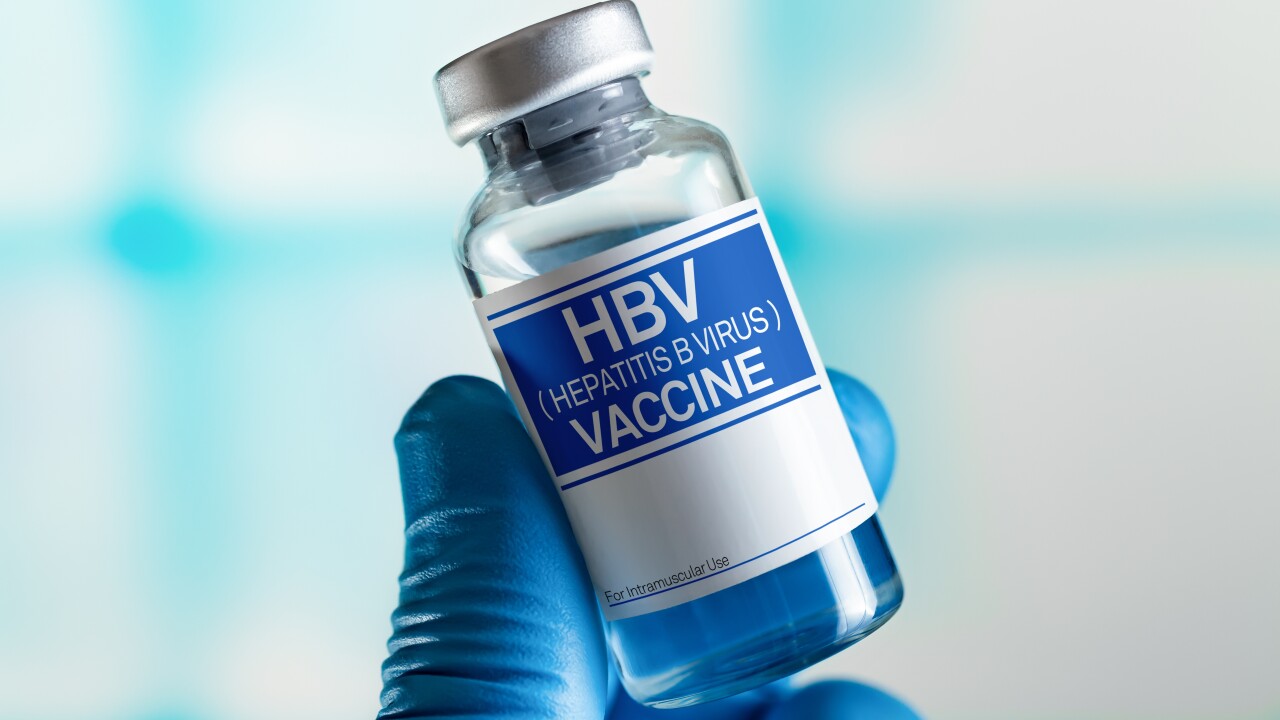


The Centers for Disease Control and Prevention will adopt a recommendation from its Advisory Committee on Immunization Practices to eliminate the universal recommendation for the hepatitis B vaccine at birth.
Earlier this month, the panel voted 8-3 to scrap the guidance in favor of “individual-based decision-making,” advising parents to consult their health care provider before vaccinating. Vaccine advocates warn the change could delay when infants receive their first dose.
The hepatitis B vaccine provides immediate antibodies to help prevent virus transmission. The CDC previously recommended nearly all newborns receive the shot as part of routine care.
RELATED STORY | CDC vaccine advisory panel changes its recommendations for MMRV vaccines
Under the new guidance, parents and physicians should weigh the risks and benefits when deciding on a birth dose.
Common side effects include pain where the shot was given, headache, fever, fatigue, irritability, and vomiting — typically lasting up to two days. Many experts say the benefits of the vaccine far outweigh the risks.
The American Academy of Pediatrics criticized the CDC’s decision and will continue to recommend the shot for newborns.
“This irresponsible and purposely misleading guidance will lead to more hepatitis B infections in infants and children,” AAP President Susan J. Kressly said. “I want to reassure parents and clinicians that there is no new or concerning information about the hepatitis B vaccine that is prompting this change, nor has children’s risk of contracting hepatitis B changed. Instead, this is the result of a deliberate strategy to sow fear and distrust among families.”
Current guidance calls for a two-dose series given at 2 months and between 6 and 18 months. The CDC still recommends a three-dose series, including a birth dose within 48 hours, for newborns whose mothers test positive for hepatitis B.
“This recommendation reflects ACIP’s rigorous review of the available evidence,” Acting CDC Director and Deputy Secretary of Health and Human Services Jim O'Neill said. “We are restoring the balance of informed consent to parents whose newborns face little risk of contracting hepatitis B.”
Omer Awan, a physician and senior public health contributor for Forbes, said universal newborn vaccination since 1991 has reduced infections among children and adolescents by 99 percent.
RELATED STORY | West Coast states, Massachusetts issue vaccine guidance amid CDC turmoil
“We’re going to start to see hepatitis B circulating much more commonly in the population,” he said. “And more and more people will, I’m afraid, be at risk for getting this infection that, quite frankly, is deadly. Hepatitis B can cause liver failure, liver cancer and, ultimately, death.”
Retsef Levi, a member of ACIP who does not have a medical background, explained his reasoning for voting for the change.
“If you are a baby born to a mother who tested negative for hepatitis B, you need to realize, as a parent, that your risk of infection throughout your early stage of life and probably throughout most of your childhood is extremely low,” he said.
